VICTORIAN INTERIOR DESIGN
Victorian interior design: 8 ways to make it feel modern
Published · EasyInterior
Victorian interior design comes from the houses built during Queen Victoria’s reign, from 1837 to 1901: high ceilings, plaster moldings, a fireplace in almost every room, bay windows, patterned tile and rich, dark colors. Many of these houses still stand in American and British towns, often with their period details hidden under carpet, paint and later remodels.
The eight ideas below show how to keep the character of a Victorian room while making it lighter and easier to live with: dark paint that shows off the moldings, a restored fireplace, a bay window seat, encaustic tile and antiques mixed with modern pieces. First, the before-and-after just below: a tired parlor in an 1890s house redesigned in the Victorian style in one step.
Before and after: a tired 1890s parlor in Victorian style
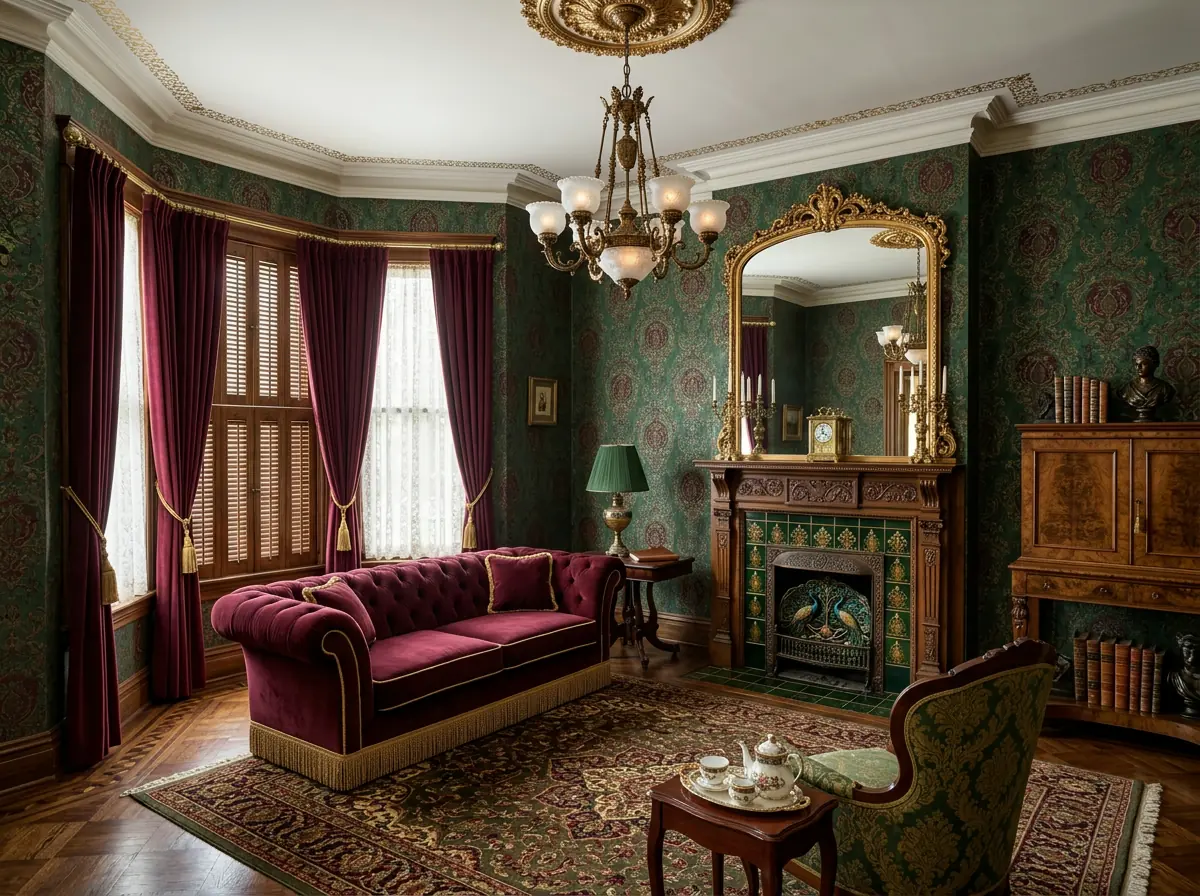
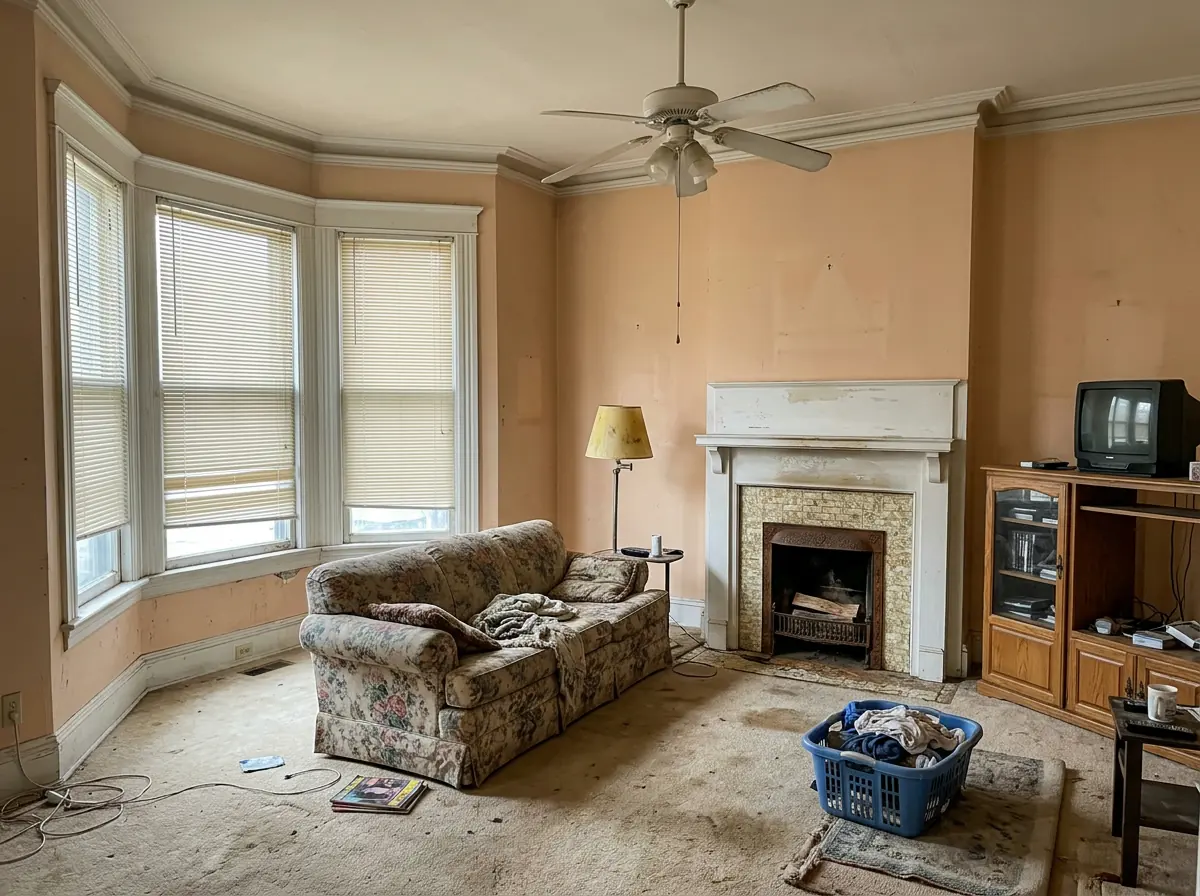
All images in this article were generated with AI. The “before” photo is an AI-generated example of a typical room in an old house; the “after” image was made from it with the same prompt EasyInterior’s interior redesign tool uses. The other images illustrate ideas and are not photos of real rooms.
8 Victorian interior design ideas
1. Dark paint that shows off the moldings
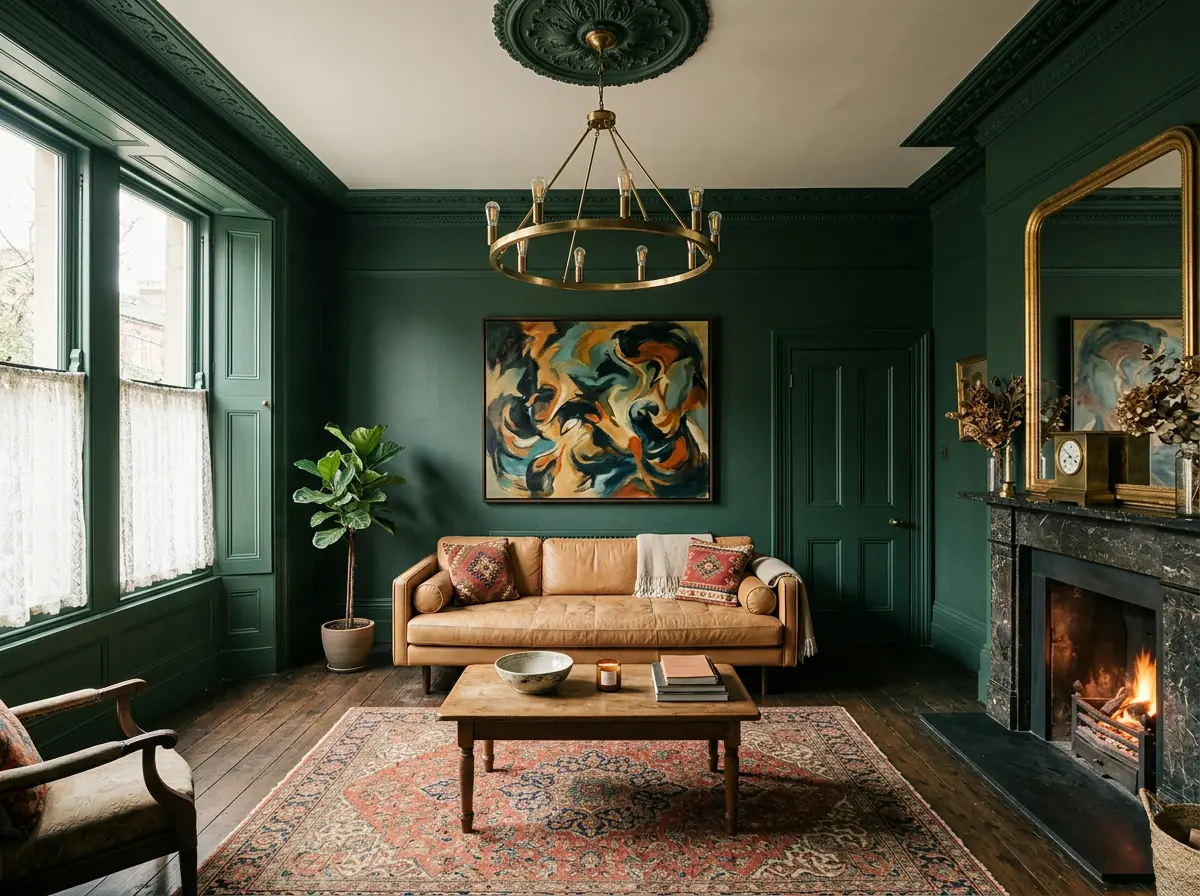
Victorian rooms were often painted or papered in deep, rich colors, and dark paint still suits them best. A modern way to use it is color drenching: walls, crown molding, window trim and even the ceiling medallion in one deep shade, such as bottle green, oxblood or inky blue. The ornate plasterwork then reads as texture and shadow.
Against a dark backdrop, modern furniture looks deliberate rather than out of place. A low camel leather sofa, a simple brass ring chandelier and a large abstract painting keep the room current, while a vintage rug on old floorboards and a marble fireplace connect it to the age of the house. A lighter ceiling keeps the room from feeling low.
Tip: Use an eggshell or satin finish on painted trim; it stands up to knocks and cleaning better than flat paint.
2. A restored fireplace as the focal point
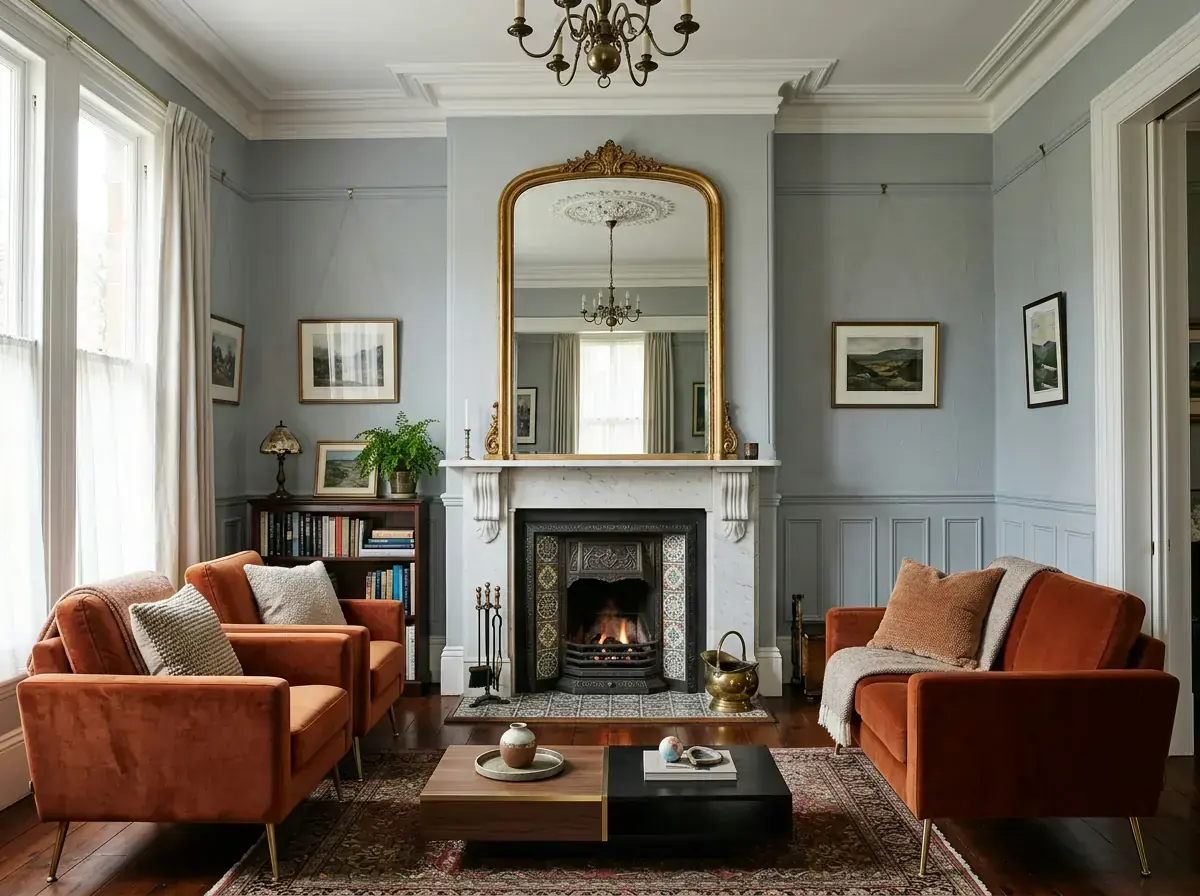
Most Victorian rooms were planned around a fireplace, and restoring it is often the biggest single improvement in an old house. Cast-iron inserts with colorful tile panels and marble or carved wood mantels were common, and many survive behind boards, paint or later surrounds.
Arrange the seating to face the fireplace rather than the TV, and hang a large gilt mirror above the mantel to bounce light around the room. Modern velvet armchairs and a low coffee table keep the look fresh, while soft gray-blue walls, white crown molding and a few landscape prints let the period details lead.
Tip: Have a chimney professional inspect the flue before you light a fire in an old fireplace, even if it looks sound.
3. A window seat in the bay window
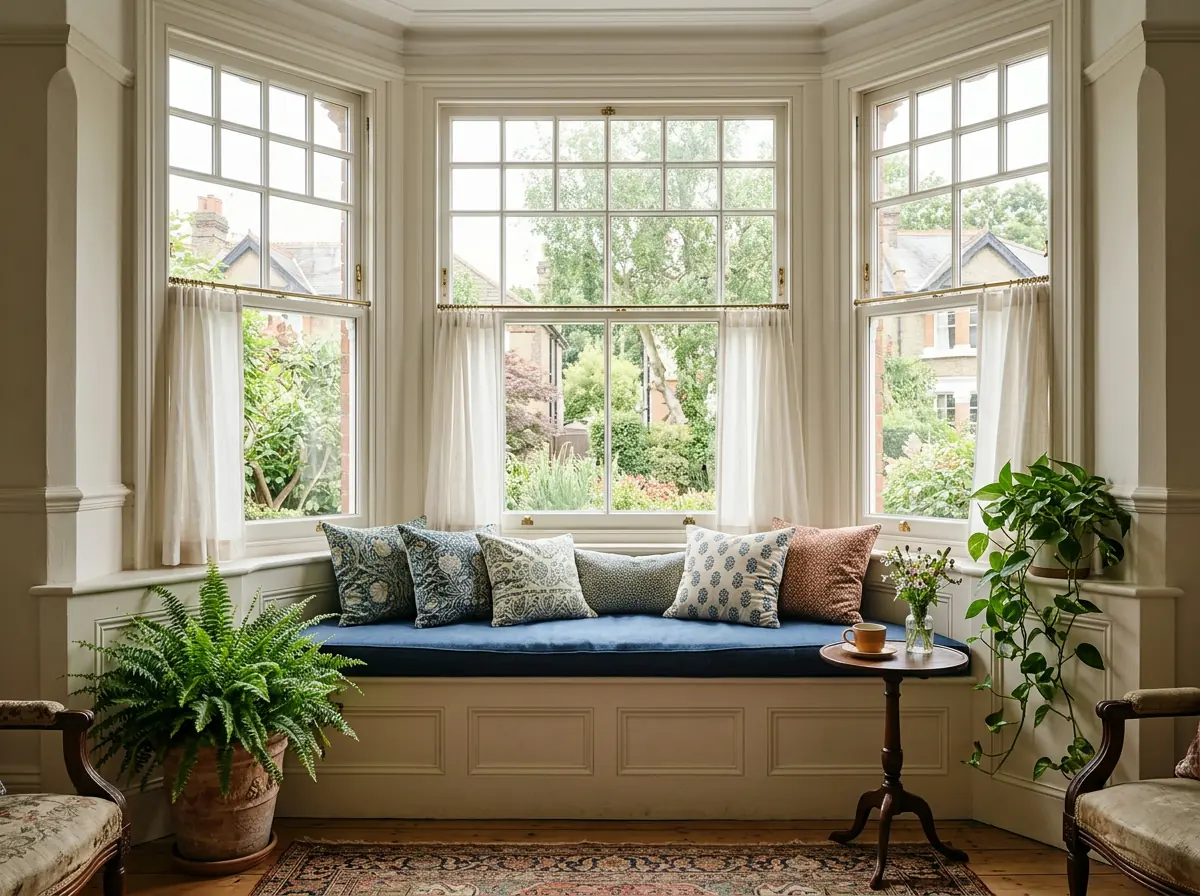
Bay windows are one of the signature features of Victorian houses, pushing out from the facade to catch more light. Building a window seat into the bay turns that light into a favorite spot: a place to read, have coffee or watch the street.
A paneled base painted to match the trim makes the seat look original, and it can hide drawers or a lift-up lid for storage. Top it with a thick cushion in a durable fabric, a row of patterned pillows and simple café curtains that keep the original sash windows visible. Ferns and trailing plants enjoy the bright light.
Tip: Check for a radiator or heating vent under the bay before building, and leave a grille in the seat front so warm air can still reach the room.
4. Encaustic tile in a Victorian hallway
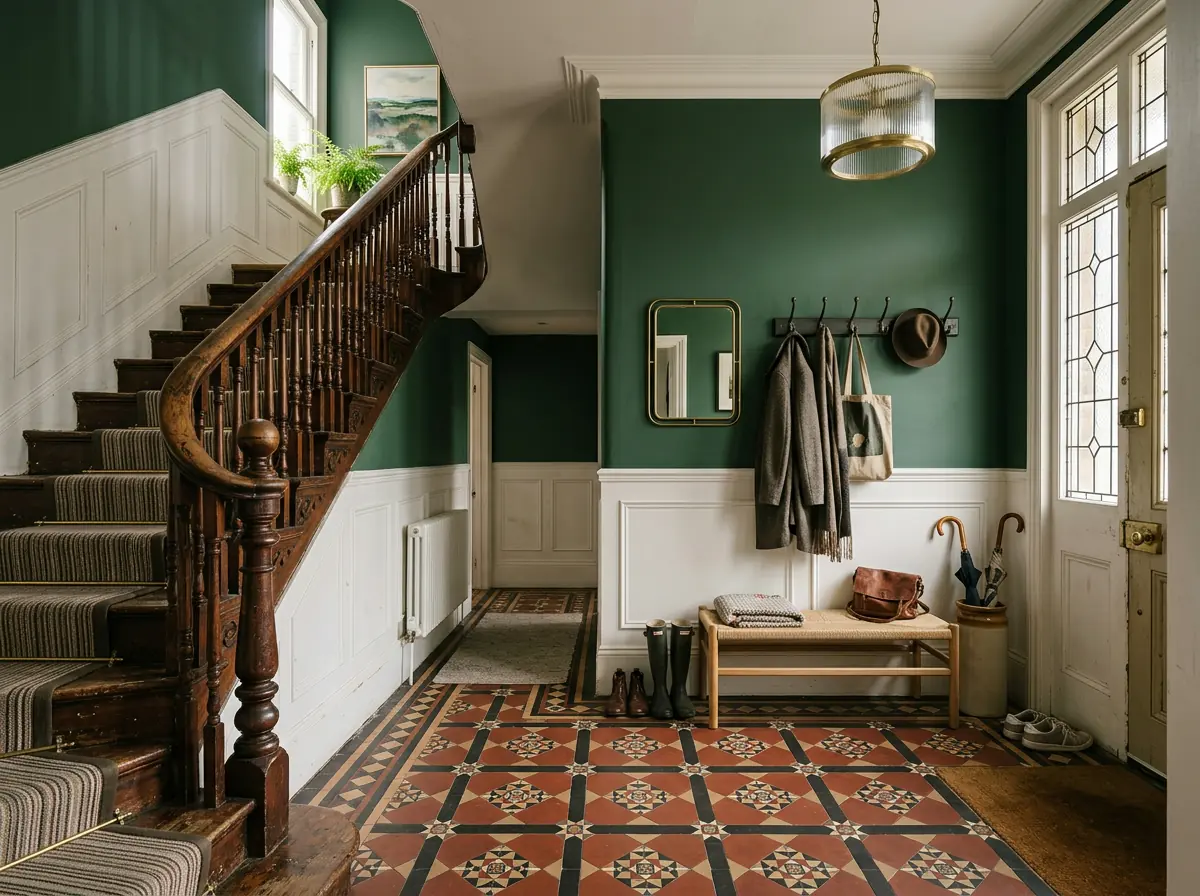
Geometric floor tiles in terracotta, black and cream, laid in intricate patterns, are a hallmark of Victorian entrance halls. Original floors are often hidden under carpet or vinyl, and many can be cleaned and repaired; where they are missing, new encaustic or porcelain tiles in traditional patterns are widely available.
Painted wainscoting protects the lower walls from bags and shoes, and a deep green above it makes the hall feel enclosed and welcoming. Keep the carved banister, then add a slim modern bench, a hook rail for coats and a simple glass pendant. That is all a Victorian hallway needs.
Tip: If you uncover old tiles, talk to a tile restorer before using strippers or sanders, because the wrong product can damage them for good.
5. Antiques mixed with modern pieces
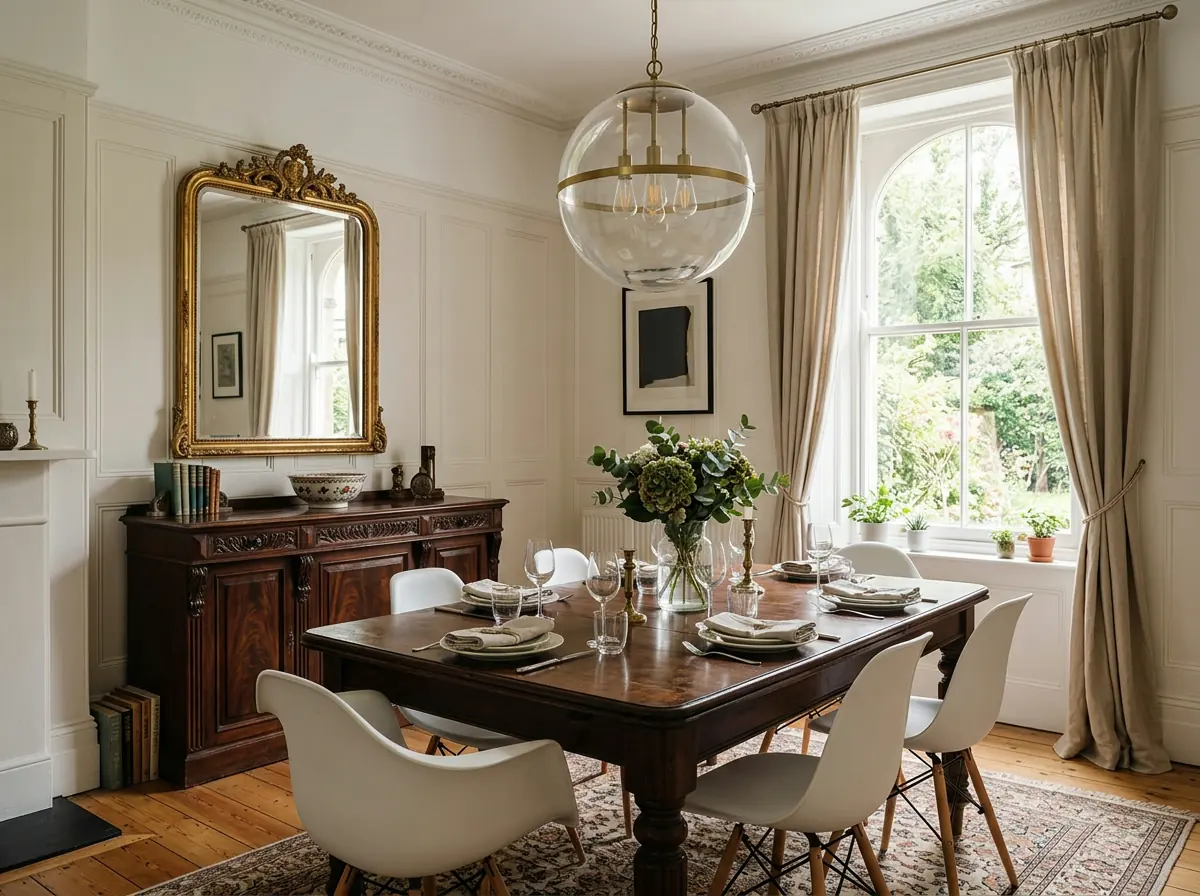
A room furnished only with Victorian antiques can feel like a museum. Mixing one or two strong antique pieces with modern furniture is the easiest way to make Victorian interior design feel current: the old pieces bring history and craftsmanship, the new ones bring lightness and comfort.
In a dining room, an antique mahogany table with turned legs looks fresh surrounded by simple white molded chairs, and a large glass globe pendant updates the ceiling. Keep a carved sideboard and an ornate gilt mirror for contrast, and paint the paneling warm white so the dark wood stands out.
Tip: Look for antique tables, sideboards and mirrors at estate sales and auctions, where large dark-wood pieces can cost less than new furniture.
6. A modern Victorian kitchen
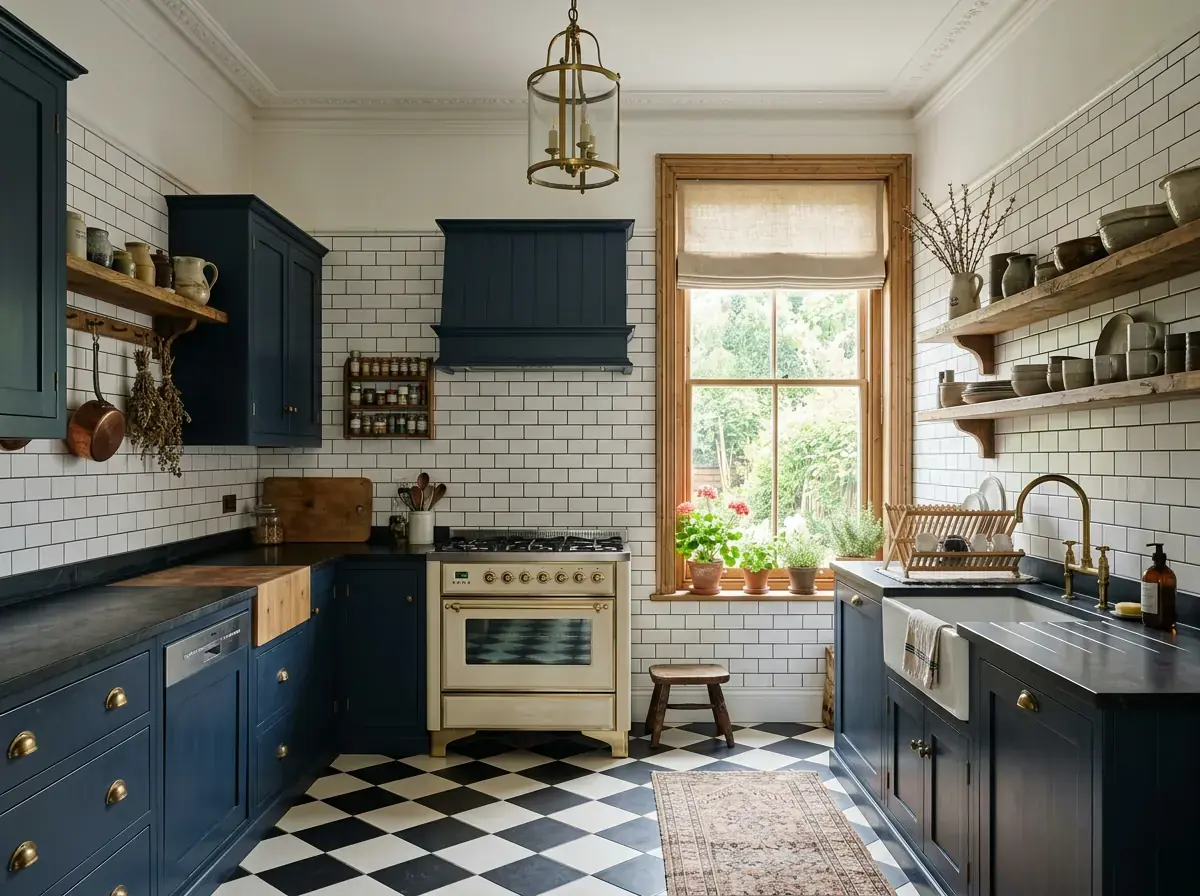
Victorian kitchens were service rooms, so a new kitchen in an old house is a chance to borrow the period look rather than copy it. Inset painted cabinets in deep navy or green with brass cup pulls, white brick-shaped tile with dark grout and a black-and-white checkerboard floor all suit the age of the house.
A freestanding range in cream or black looks like a piece of furniture rather than an appliance, and open wooden shelves with stoneware and jugs feel like an old pantry. Keep the high ceiling and crown molding, hang a lantern-style pendant and use a simple linen shade on the tall window.
Tip: Dark grout hides stains on a busy backsplash; behind the stove, use a stain-resistant epoxy grout where grease builds up.
7. A clawfoot tub and hexagon mosaic floor
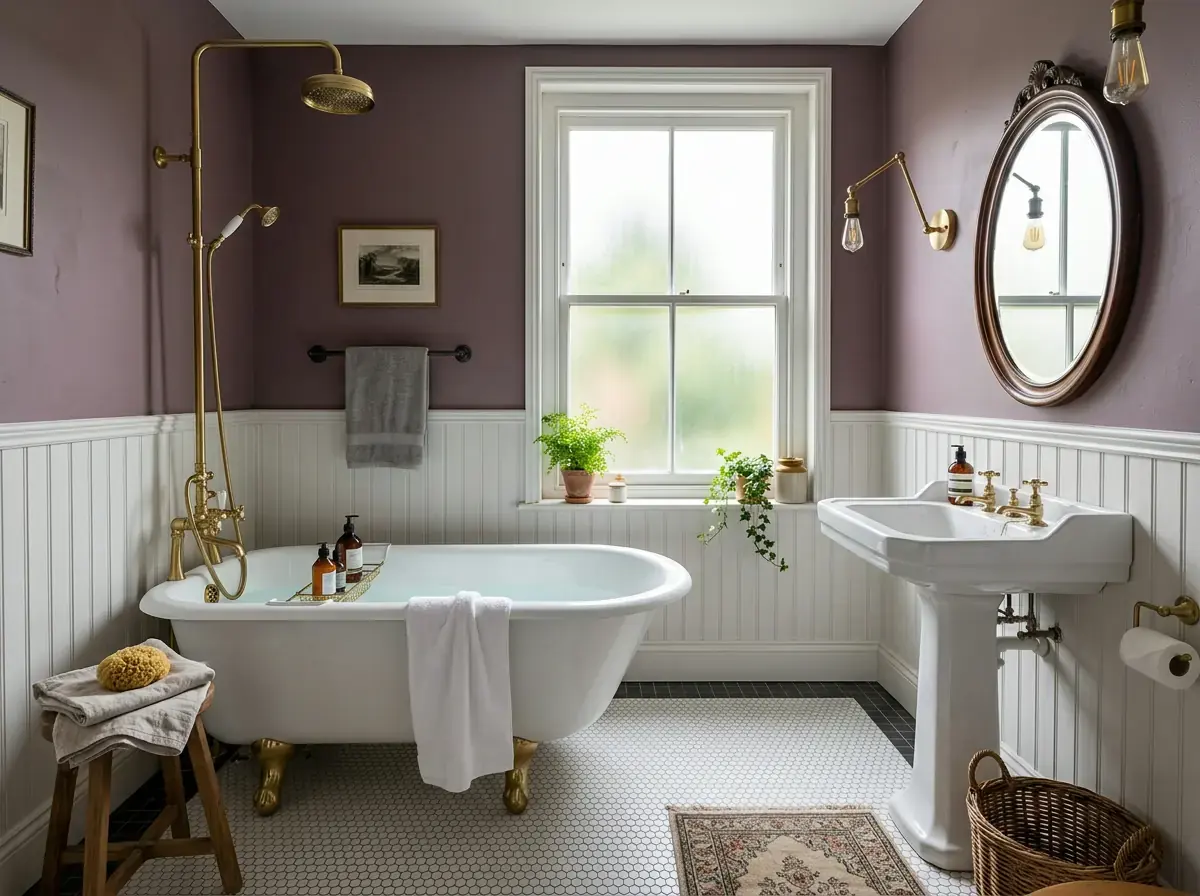
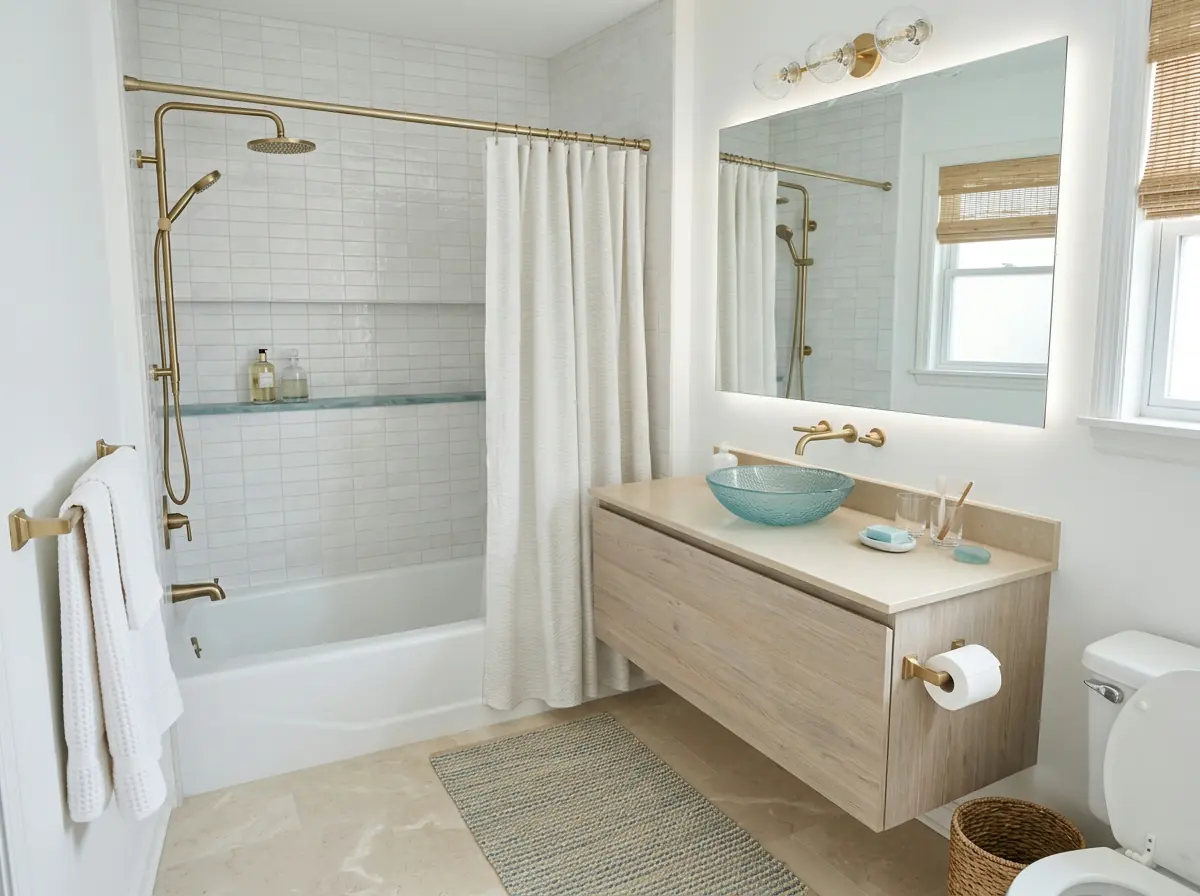
Indoor bathrooms became more common in the late Victorian period, and the look they had then still feels classic: a clawfoot tub, a pedestal sink and a white hexagon mosaic floor with a dark border. An exposed brass shower riser over the tub adds a shower without hiding the shape of the bath.
White beadboard wainscoting protects the lower walls from splashes, and a muted color above it, such as plum, sage or deep blue, gives the room character. Finish with an oval framed mirror, brass taps and a modern brass wall light, plus a wooden stool by the tub for towels.
Tip: Check that the floor can carry a cast-iron clawfoot tub full of water; older joists sometimes need reinforcing.
8. Botanical wallpaper in a Victorian bedroom
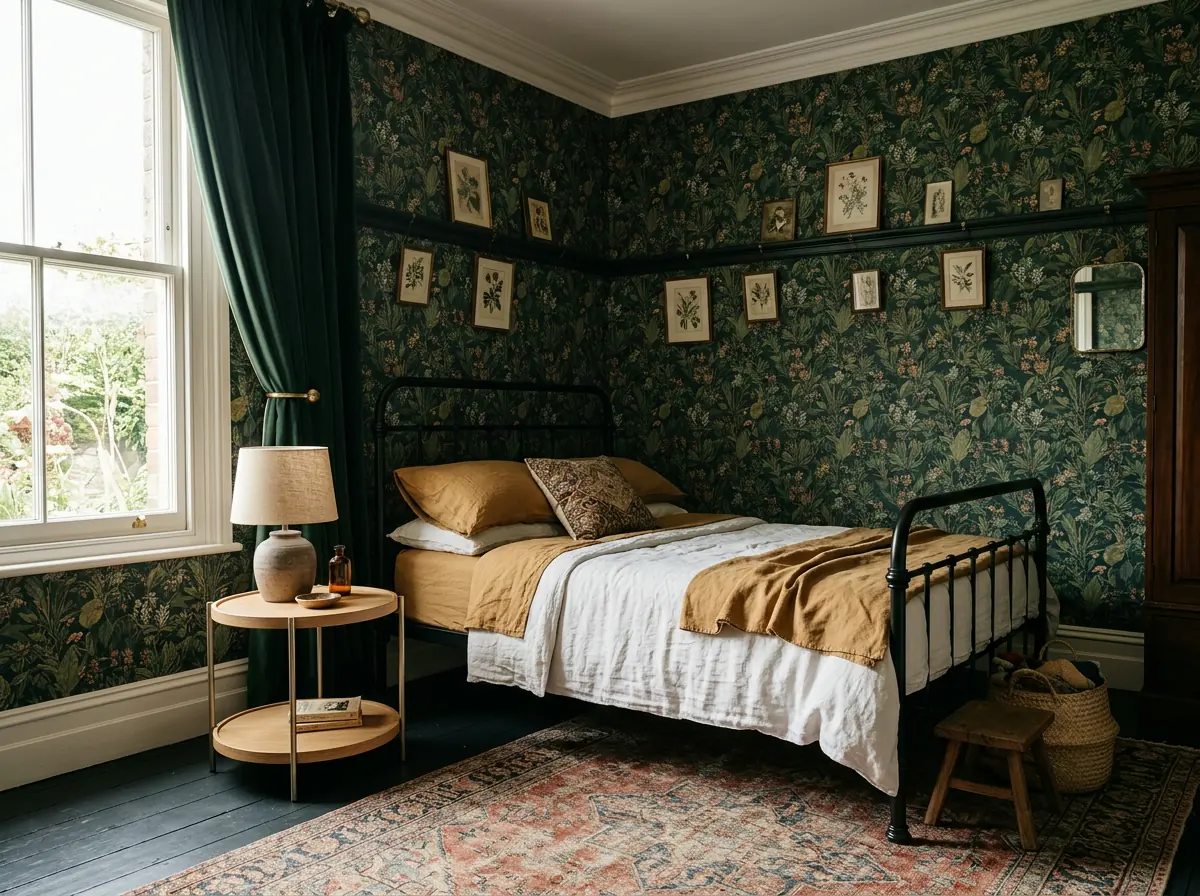
Patterned wallpaper was everywhere in Victorian houses, and dense botanical designs of leaves and flowers suit a modern bedroom especially well. On a dark ground such as deep green, the pattern reads as rich texture rather than busy decoration, and it makes the room feel cozy and enclosed.
Keep the furniture simple so the walls lead: a black iron bed frame, plain linen bedding in white and ochre and a small modern side table with a ceramic lamp. A picture rail lets you hang small framed prints without new holes in old plaster. Velvet curtains and painted floorboards with a faded rug complete the room.
Tip: Order a wallpaper sample and look at it in the room for a few days, because dark colors change a lot between daylight and lamplight.
How to plan a modern Victorian interior
- Find out which original details survive: moldings, fireplaces, floors, doors and tile.
- Repair and restore period features before adding anything new.
- Choose one deep paint color or one patterned wallpaper as the base for each room.
- Mix one or two antiques per room with simpler modern furniture.
- Check old wiring, plumbing, flues and floor joists before major work.
- Photograph your room and try the Victorian style on it with an AI tool before you buy paint or furniture.
See your room in Victorian style
Upload a photo, choose the Victorian style and see your room redesigned in seconds. 2 free credits, no credit card.
Redesign my roomVictorian interior design FAQ
What is Victorian style?
Victorian style is the architecture and interior design of Queen Victoria’s reign, from 1837 to 1901, in Britain and widely in the United States. Victorian interiors are known for high ceilings, ornate plaster moldings, fireplaces, bay windows, dark wood, patterned wallpaper and tile, heavy fabrics and rich colors, often drawing on revival styles such as Gothic, Italianate and Queen Anne.
Is a 1920 house Victorian or Edwardian?
A house built in 1920 is neither Victorian nor Edwardian. The Victorian era ran from 1837 to 1901, and the Edwardian era, named after King Edward VII, from 1901 to 1910, though some historians extend it to 1914. A 1920 house belongs to the period between the world wars; in the United States it might be a Craftsman bungalow or a Colonial Revival or Tudor Revival house.
How do you make a Victorian interior feel modern?
To make a Victorian interior feel modern, keep the architecture and simplify everything else. Restore moldings, fireplaces and floors, then use one strong paint color or a single wallpaper, mix a few antiques with clean-lined modern furniture, cut back on accessories and choose simple modern lighting. Let the period details be the decoration.
Can I see my own room in Victorian style?
Yes. Upload a photo of your room to EasyInterior’s AI interior design tool, choose the Victorian style and you see the same room redesigned in seconds. It is a quick way to picture paint, wallpaper and furniture in an old house before you start work.