MID-CENTURY MODERN BEDROOM
Mid-century modern bedroom: 8 ideas for warm wood, clean lines and color
Published · EasyInterior
A mid-century modern bedroom borrows from American homes of roughly the mid-1940s to the late 1960s: low furniture in walnut or teak, tapered legs, clean lines and a few strong colors such as mustard, teal and burnt orange. It feels warm rather than stark, and it works in a new build as well as in a ranch house.
The eight ideas below cover furniture, paint, lighting and textiles, with notes on what to buy first and what to skip. You can combine two or three of them or build the whole room around one. To see how far an ordinary bedroom can move, start with the before-and-after just below.
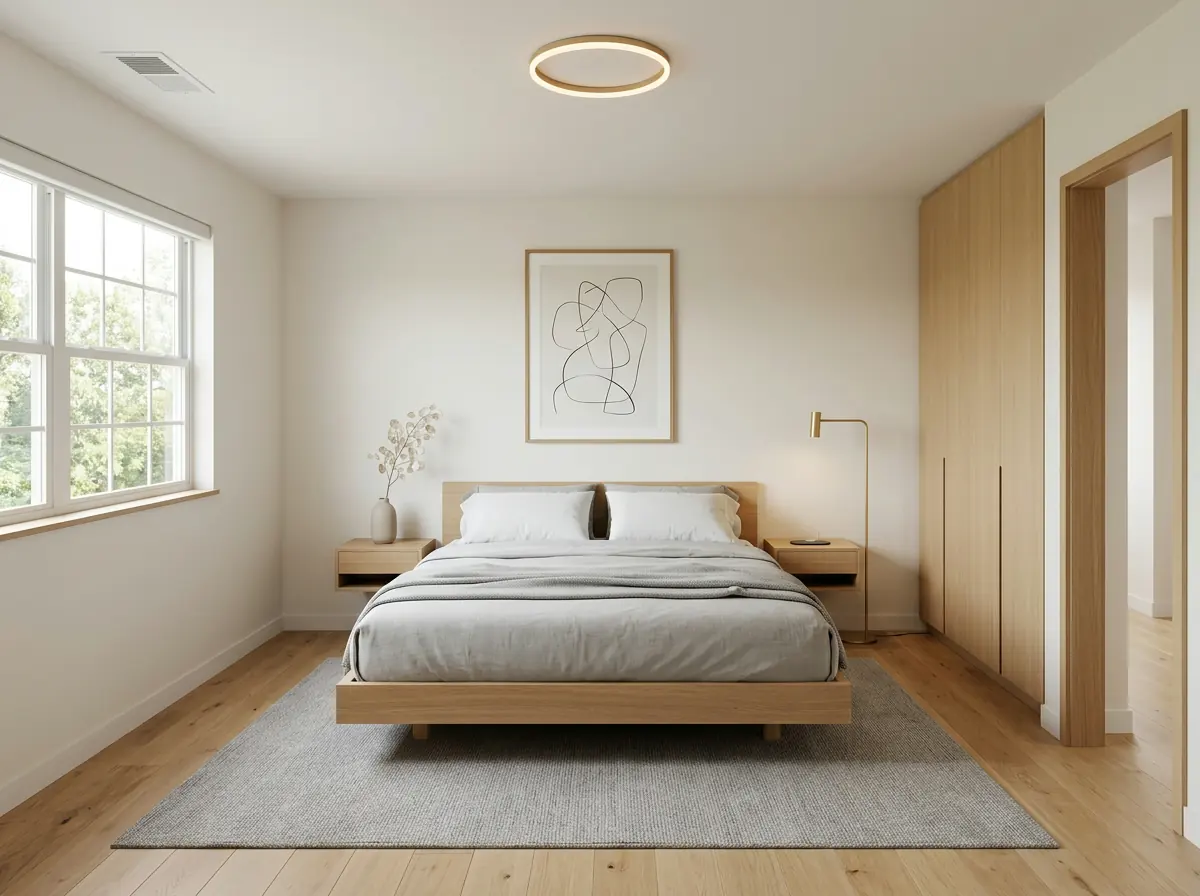
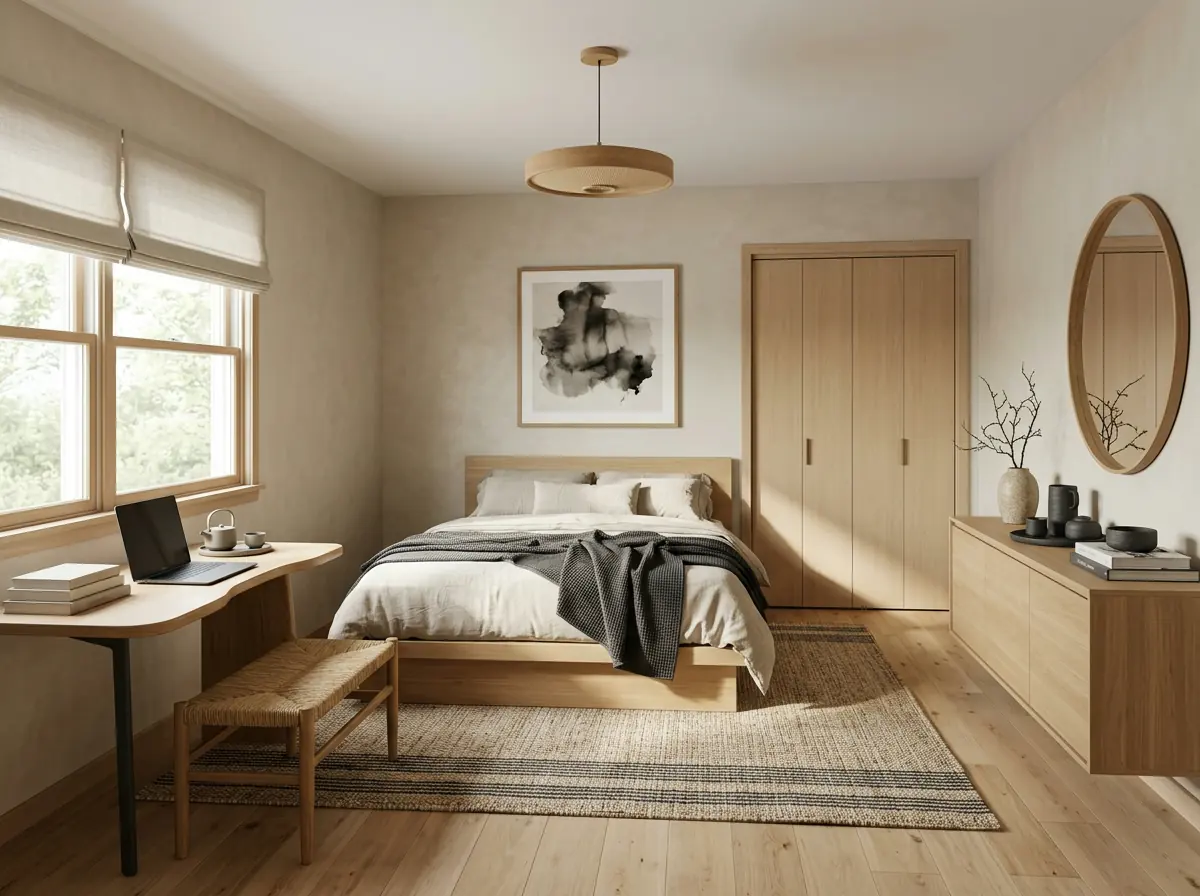
Before and after: a 2000s bedroom redesigned
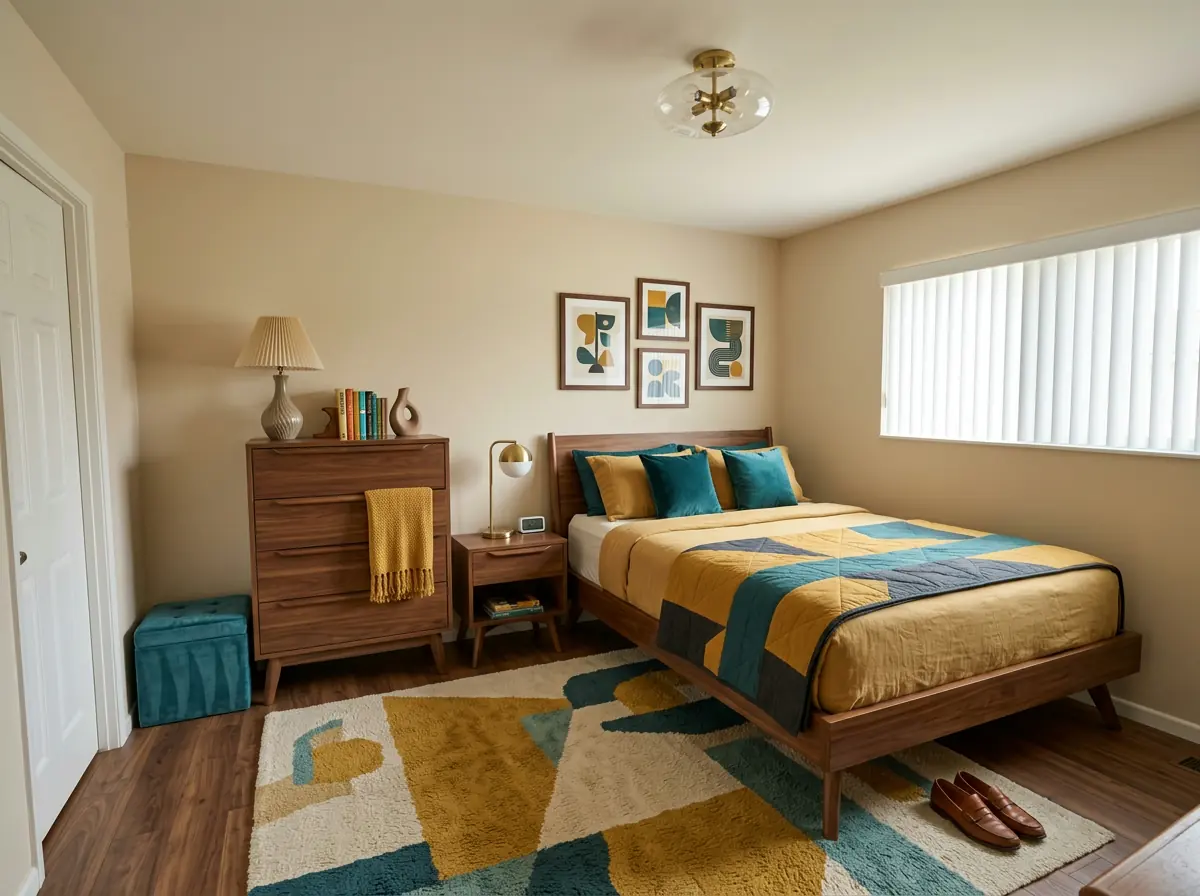

All images in this article were generated with AI. The “before” photo is an AI-generated example of a typical bedroom; the “after” image was made from it with the same prompt EasyInterior’s interior redesign tool uses. The other images illustrate ideas and are not photos of real rooms.
8 mid-century modern bedroom ideas
1. A low walnut platform bed with floating nightstands
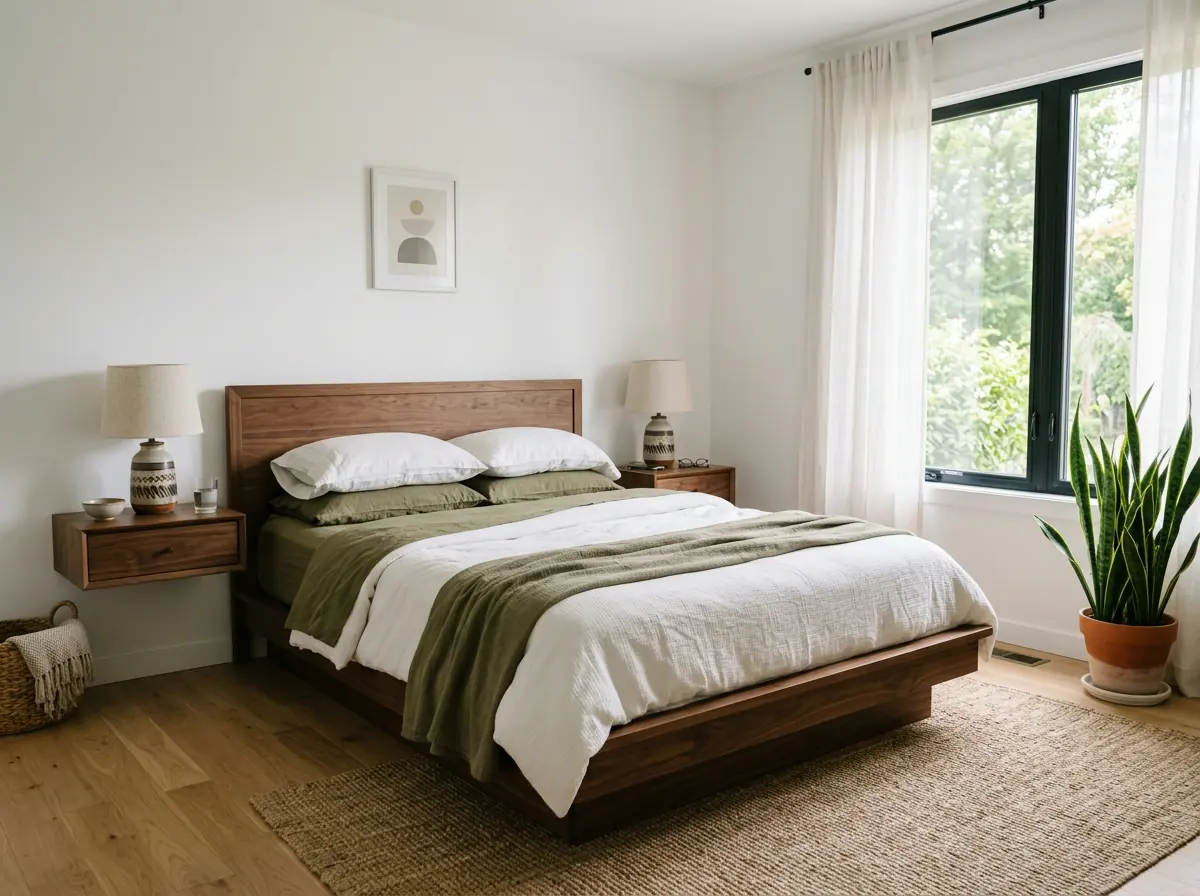
The bed sets the tone for the whole room. A mid-century modern bed sits low, on a simple platform or slim legs, with a plain wood headboard instead of tufting or carving. Walnut is the classic choice for its warm, dark grain; teak and oiled oak give a lighter version of the same look.
Wall-mounted nightstands with a single drawer keep the floor clear and make the room look larger, which matters when the bed fills most of one wall. Pair them with ceramic table lamps and keep the bedding simple: white or off-white linen with one accent color, such as olive green or rust.
Tip: Hang floating nightstands so the top is level with the top of the mattress, and screw them into studs rather than drywall anchors alone.
2. A long teak dresser and a sunburst mirror
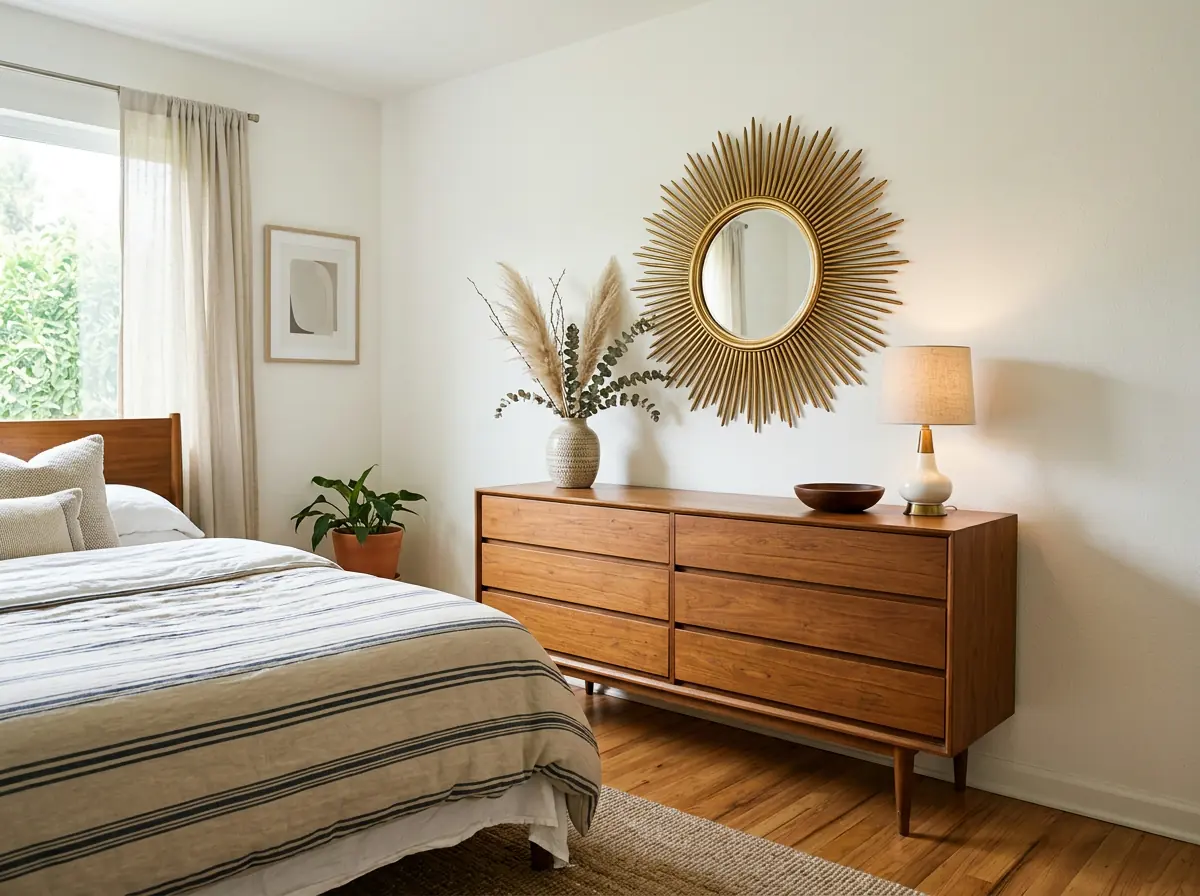
If you buy one piece of mid-century modern bedroom furniture, make it a long, low dresser, often listed secondhand as a lowboy. Six or nine drawers on short tapered legs give you plenty of storage and a wide top that doubles as a display surface. Vintage teak and walnut dressers are easy to find, and many new ones copy the shape.
A round sunburst mirror above it is the best-known accessory of the period. Center it over the dresser with the bottom edge 6 to 10 inches above the top, and keep the styling short: a lamp, a vase of dried stems and a small wooden bowl are enough.
Tip: When you shop for a vintage dresser, pull every drawer all the way out: smooth runners and solid joints matter more than surface scratches, which can be refinished.
3. A walnut slat accent wall
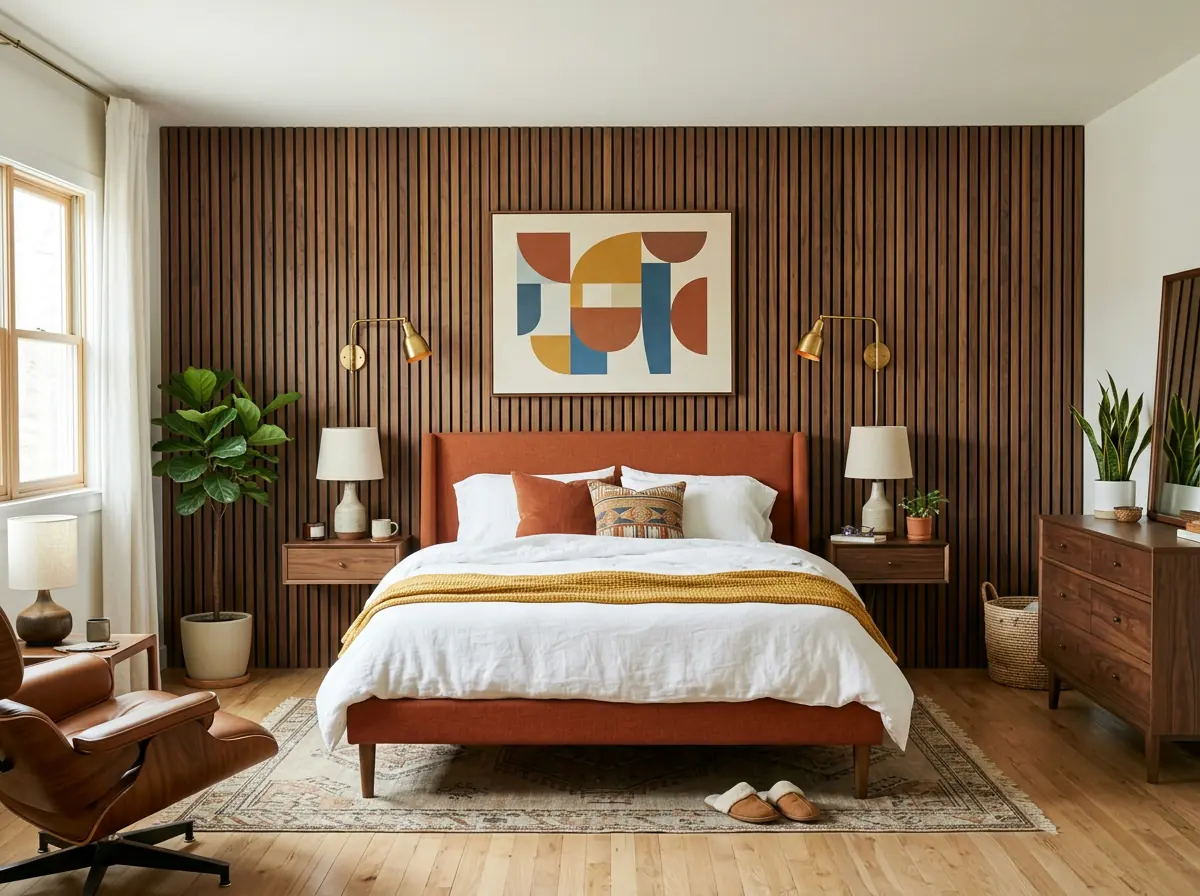
Wood paneling was everywhere in mid-century homes, from full walls of walnut veneer to the knotty pine of basement dens. The current version is a single accent wall of vertical slats behind the bed. It adds warmth and texture, works as an oversized headboard and hides small flaws in the wall behind it.
Slat panels on a felt backing are sold ready to install and also soften echo in a sparsely furnished room. Keep the other walls white or warm white so the wood stands out, and bring in color through the bed and textiles: a rust or caramel upholstered frame, white bedding and a mustard throw.
Tip: Plan the slats around outlets and sconce wiring before you mount anything; cutting panels to fit afterward is slow and fiddly.
4. Mid-century modern bedroom paint colors
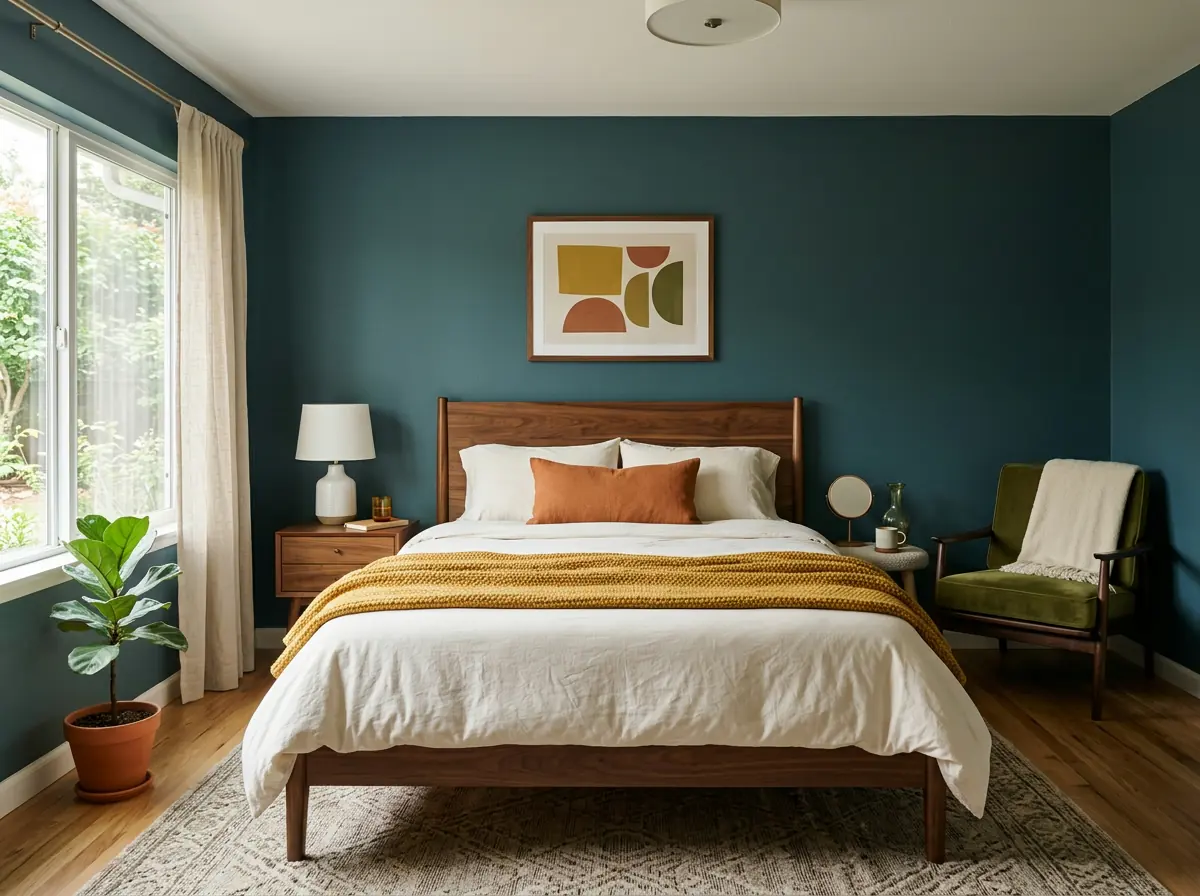
Mid-century color is warmer and more saturated than the gray-and-white look of many newer homes. Good wall choices are deep teal, olive green, warm white and soft mustard, with burnt orange and rust used in smaller doses. Dark walls suit a bedroom because you use it mostly in the evening, when a deep color feels cozy rather than gloomy.
Count the wood as part of the palette. Walnut and teak already read as warm brown, so pick a wall color that contrasts with them: teal, blue-green and olive make wood glow, while beige tends to swallow it. Then add one or two accent colors through bedding, a lumbar pillow or an armchair.
Tip: Paint a large sample on the wall behind the bed and look at it in morning light and under lamps at night before you commit.
5. Sputnik chandeliers and mushroom lamps
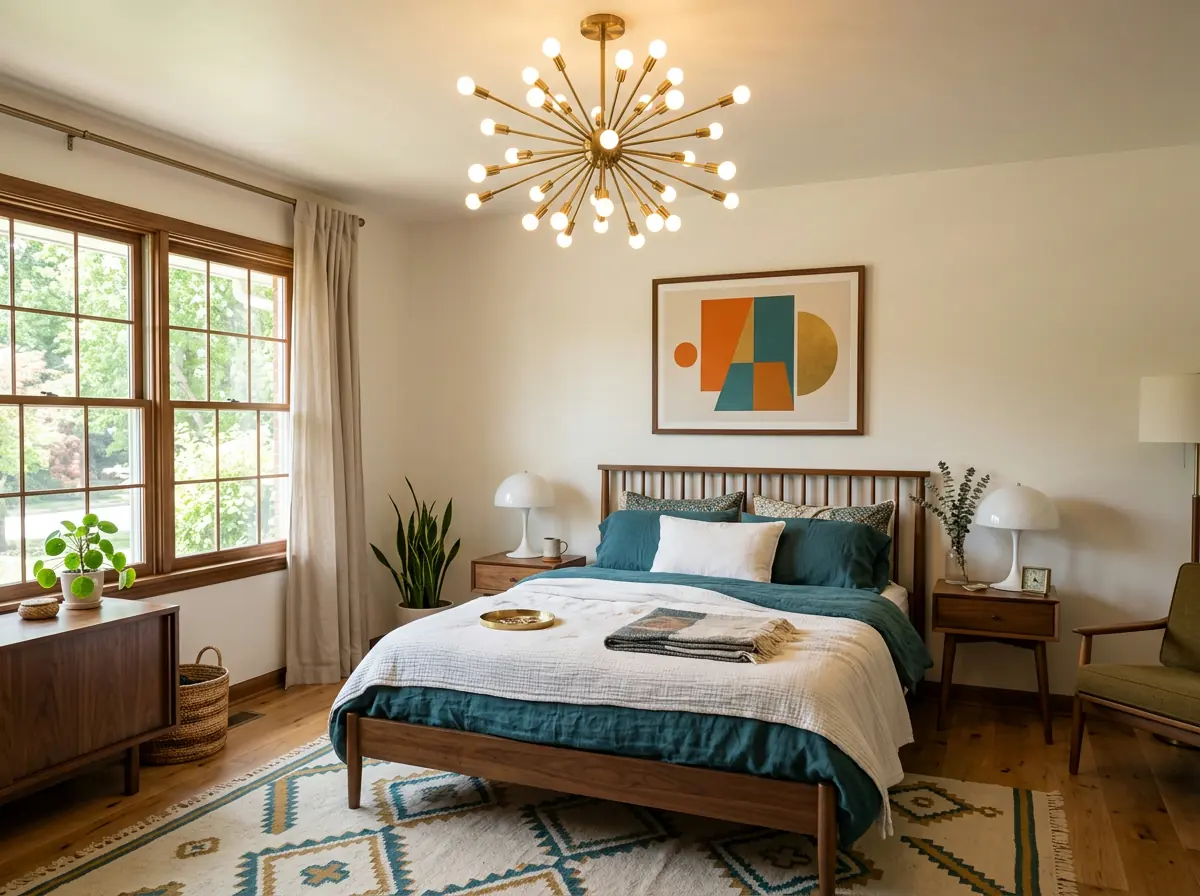
Lighting is the quickest way to signal the style. A sputnik chandelier, with brass arms radiating from a central ball, takes its name from the satellite launched in 1957 and reads as mid-century at a glance. Under a standard 8-foot ceiling, choose a semi-flush version or a smaller diameter so it does not hang low over the bed.
Bedside lamps carry the same idea at a smaller scale. Mushroom-shaped lamps, white glass globes and ceramic bases with linen shades all fit. Use warm bulbs of about 2700K throughout, and put the ceiling fixture on a dimmer so it becomes a soft feature in the evening instead of a source of glare.
Tip: Count the sockets before you buy: a fixture with a dozen or more exposed bulbs needs low-wattage LED globes to stay comfortable to look at.
6. A reading corner with a wood-frame armchair
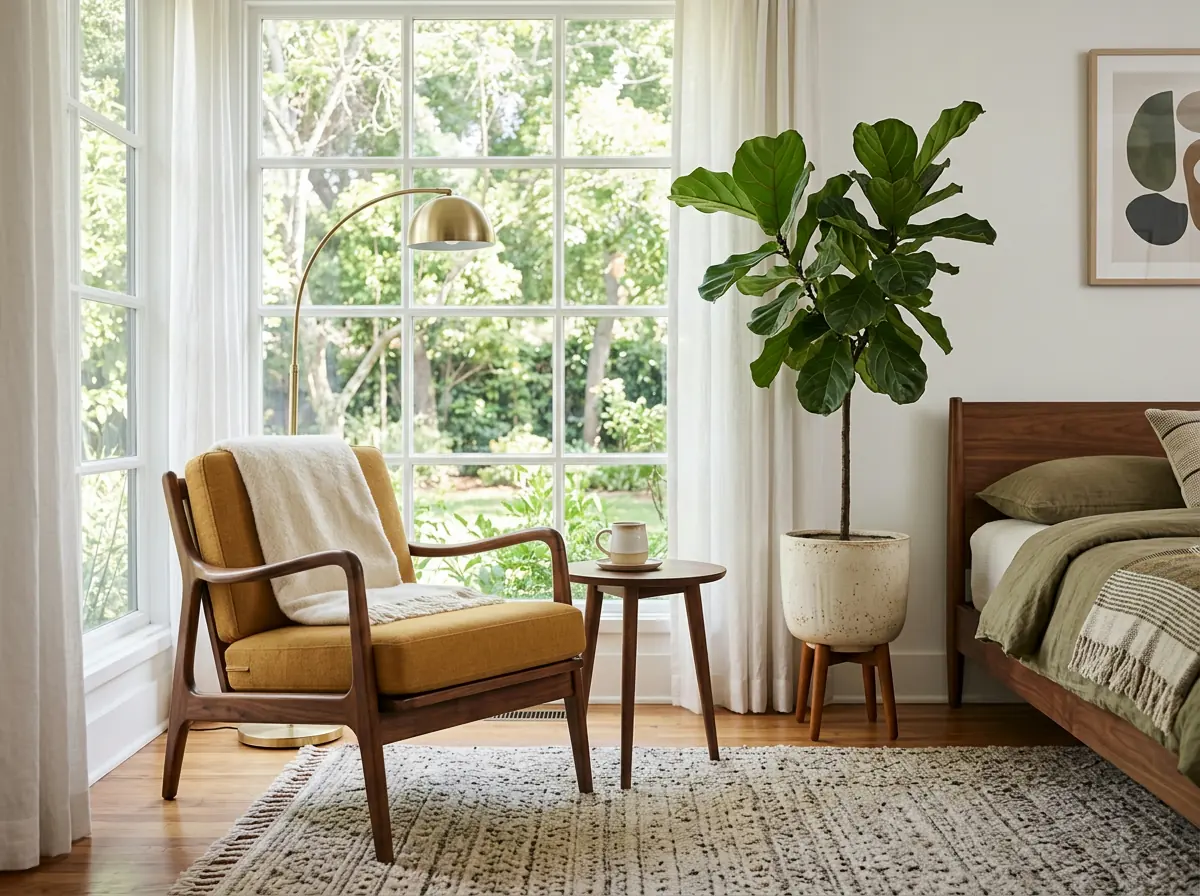
If the bedroom has a spare corner, one armchair turns it into a place to read or drink a morning coffee. Mid-century lounge chairs have exposed wood frames, open arms and loose seat and back cushions, which keeps them visually light enough for a bedroom. Mustard, rust or olive upholstery adds color without painting a whole wall.
Finish the corner with a small round side table, a slim or arc floor lamp aimed over the seat and a large plant. Fiddle-leaf figs, snake plants and rubber plants suit the style, especially in planters raised on tapered wooden legs. Big windows and greenery were part of mid-century design, which aimed to bring the outdoors in.
Tip: Leave about 30 inches of clear floor in front of the chair so the corner does not block the way to the closet or window.
7. A graphic rug and abstract art
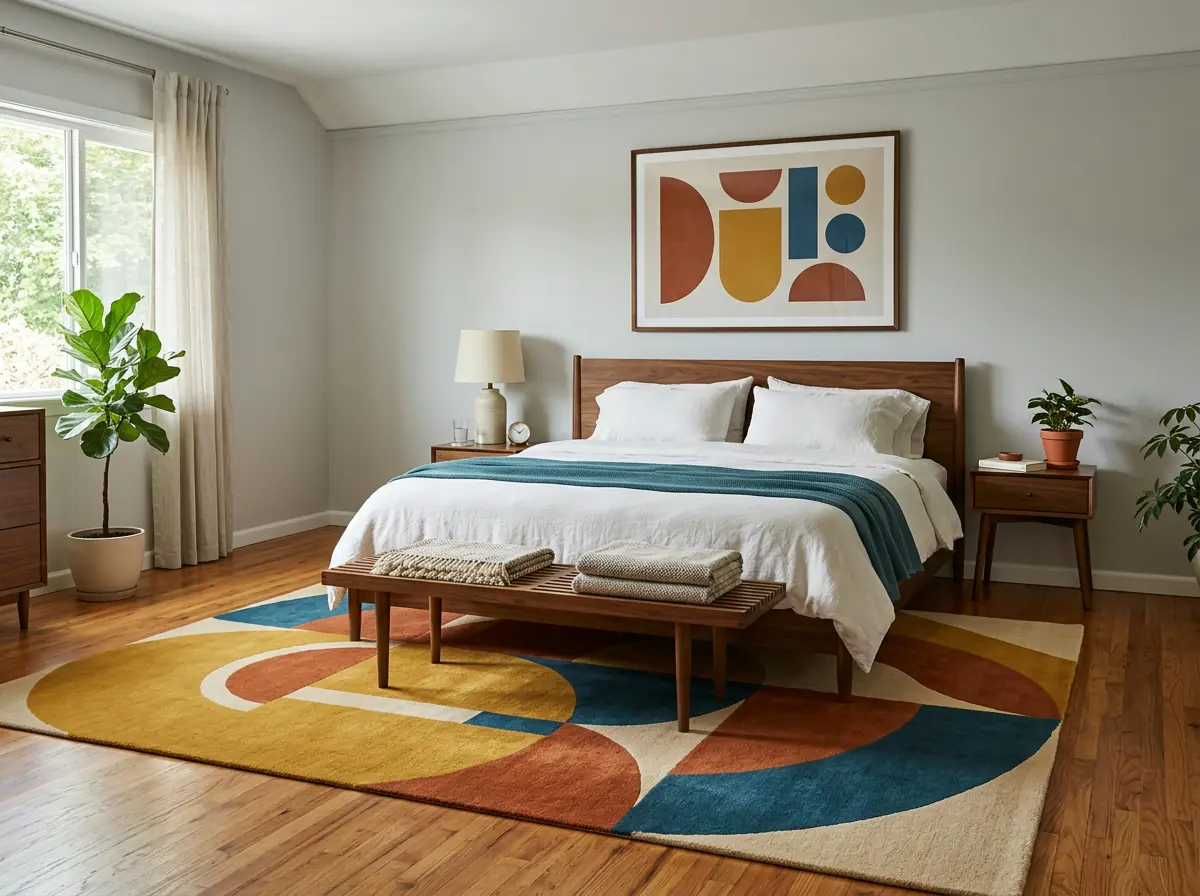
Mid-century graphics are bold and simple: circles, arcs, half-moons and blocks of flat color. A large rug with this kind of pattern can carry all the color in a room that otherwise has pale walls and wood furniture. Size it so it extends 18 to 24 inches beyond each side of the bed, so it reads as part of the layout rather than a mat.
Repeat two or three of the rug colors in a framed abstract print above the bed and in a throw. A slatted wooden bench at the foot of the bed gives you a place to sit and lay out clothes, and its open top keeps the rug pattern visible.
Tip: Choose the rug before the paint: there are thousands of wall colors but only a few rugs you will love, and matching paint to a rug is far easier than the reverse.
8. Leggy furniture for a small bedroom
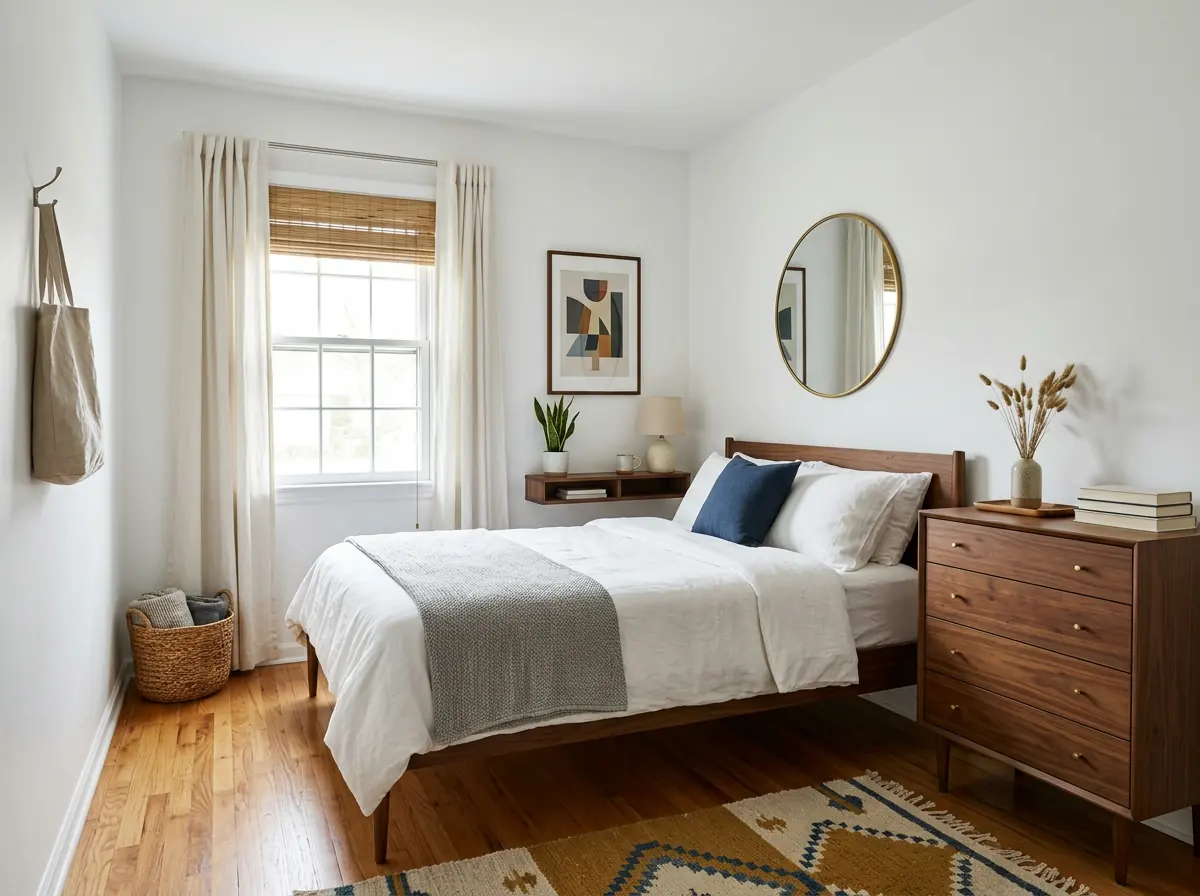
Mid-century furniture suits small bedrooms because most of it stands on legs. When you can see the floor under the bed and dresser, the room reads as larger than it is. Choose a bed without a footboard, a compact four-drawer dresser and, if space is tight, a narrow wall shelf in place of a second nightstand.
A round mirror near the window bounces daylight back into the room, and white walls with one wood tone keep it calm. Skip bulky upholstered pieces and large patterns here; one patterned rug and a single accent pillow give a room of about 100 square feet enough color.
Tip: Mount the curtain rod high and wide, close to the ceiling and past the window frame, so both the window and the ceiling look bigger.
How to plan your bedroom makeover
- Measure the room and mark the windows, doors, outlets and the wall where the bed has to go.
- Choose one main wood tone, such as walnut or teak, for the large pieces.
- Pick two or three accent colors from the mid-century range: teal, mustard, olive or rust.
- Buy the bed and dresser first; lighting, rugs and art are easier to add later.
- Check secondhand listings for vintage dressers and nightstands before you buy new.
- Photograph your bedroom and try a few styles on it with an AI tool before you buy anything.
Try mid-century modern on your own bedroom
Upload a photo, choose Mid-Century Modern and see your bedroom redesigned in seconds. 2 free credits, no credit card.
Redesign my bedroomMid-century modern bedroom FAQ
What makes a bedroom modern?
A modern bedroom is defined by clean lines, little ornament, low and simple furniture, a limited color palette and uncluttered surfaces. Mid-century modern is one branch of it: it keeps the clean lines but adds warm wood, tapered legs and stronger accent colors than a minimalist or contemporary bedroom.
Is mid-century modern still popular?
Yes. The style has been revived steadily since the 1990s, original pieces are still sought after on the vintage market, and most furniture retailers sell new beds, dressers and lights in mid-century shapes. Its warm wood and simple lines also mix easily with other styles, which is part of why it has lasted.
What colors go with mid-century modern?
Warm wood tones such as walnut and teak form the base, paired with mustard yellow, burnt orange, teal, olive green and warm white. A simple formula is one wall color, two accent colors in textiles and art, and small touches of brass or black in lamps and hardware.
Can I see my own bedroom in mid-century modern style?
Yes. Upload a photo of your bedroom to EasyInterior’s AI interior design tool, choose Mid-Century Modern and you see the same room redesigned in seconds, with the windows and doors where they are. Use it to test paint colors and furniture ideas before you buy anything.