RUSTIC LIVING ROOM IDEAS
Rustic living room ideas: 8 warm looks, from cabin to modern rustic
Published · EasyInterior
A rustic living room is built from materials that show their age: wood with knots and saw marks, rough stone, worn leather, wool and iron. It is warm, relaxed and forgiving, because scuffs and dents only add character. The style comes from cabins, farmhouses and mountain lodges, but it adapts well to a suburban house or a city apartment.
The eight rustic living room ideas below range from heavy beams and a stone fireplace to a lighter modern rustic look and a small cottage room. Each one covers what it involves, what to watch out for and one practical tip. A before-and-after of an ordinary carpeted living room redesigned in the rustic style is just below.
Before and after: a suburban living room goes rustic
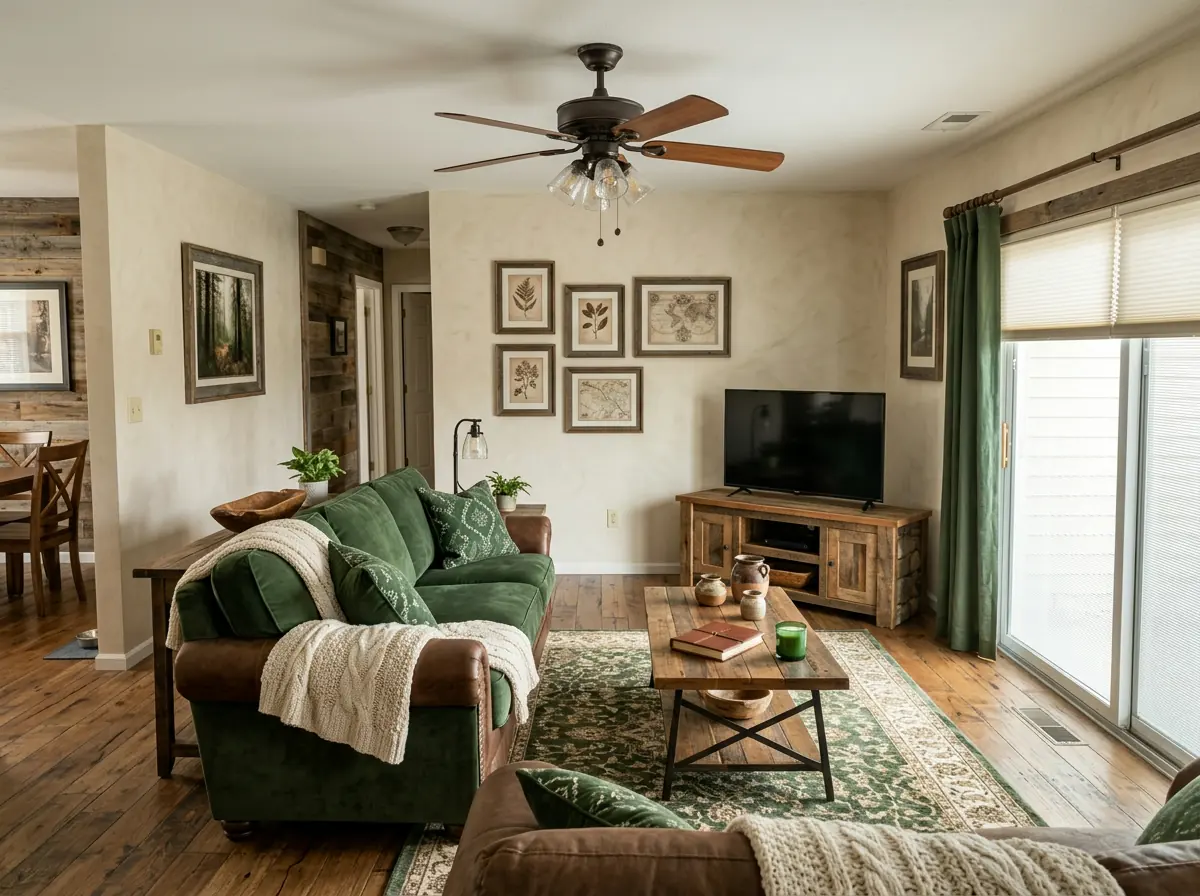
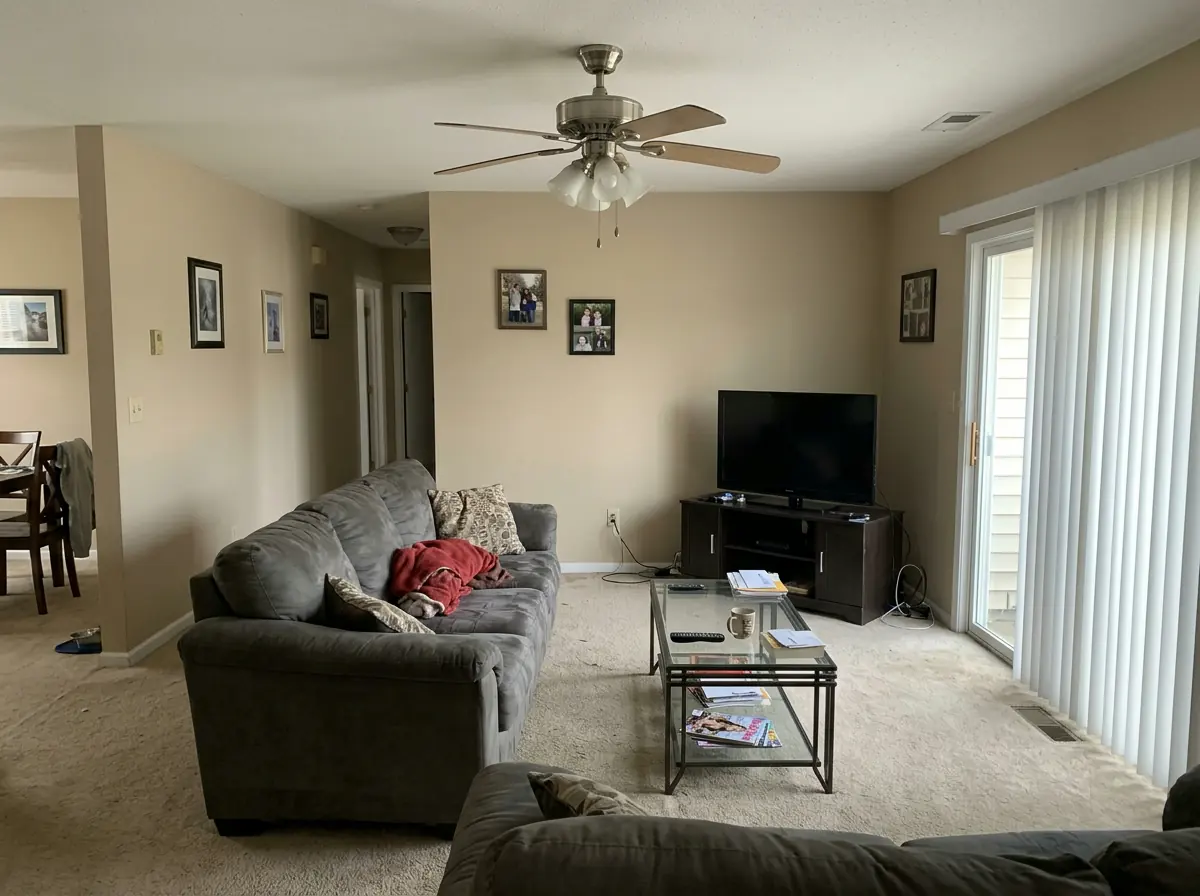
All images in this article were generated with AI. The “before” photo is an AI-generated example of a typical living room; the “after” image was made from it with the same prompt EasyInterior’s interior redesign tool uses. The other images illustrate ideas and are not photos of real rooms.
8 rustic living room ideas
1. Reclaimed wood ceiling beams
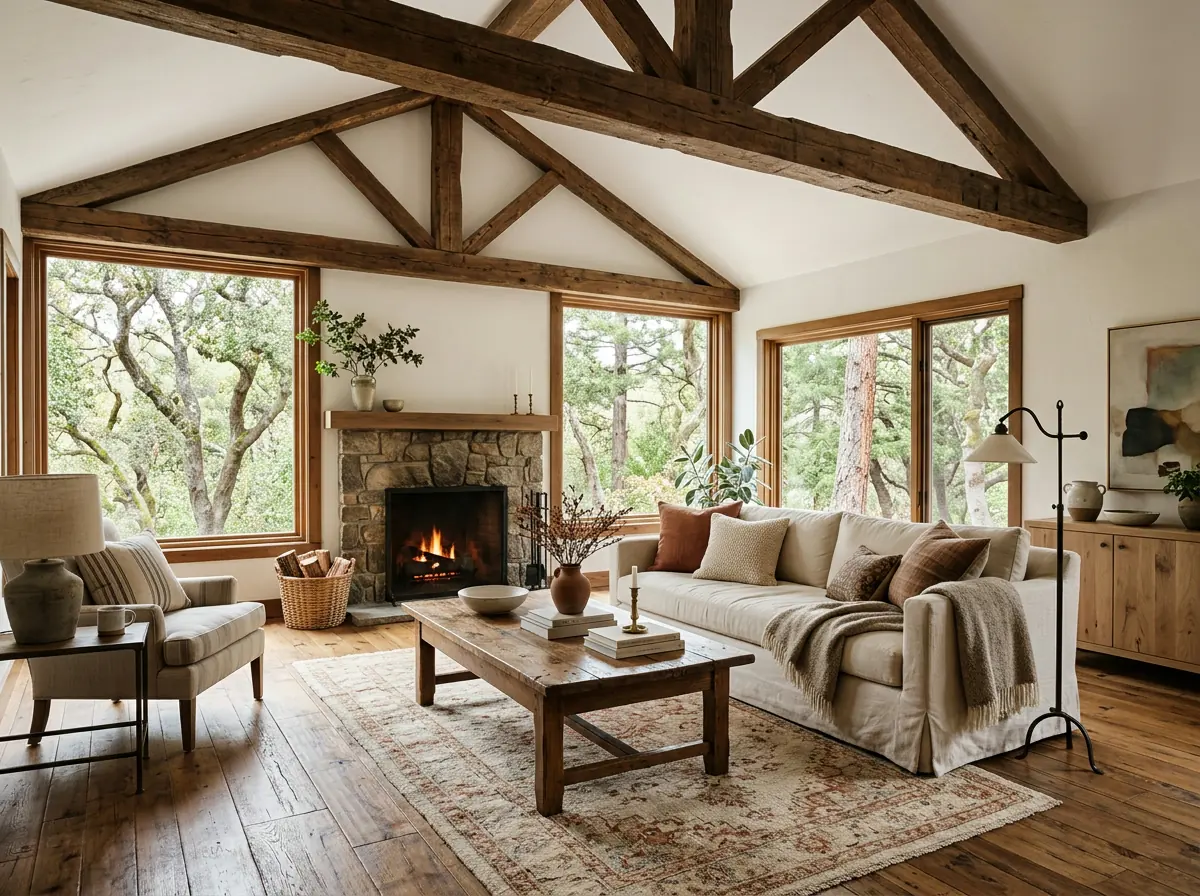
Exposed wood beams are the strongest rustic signal a room can have. Dark, rough-hewn beams against a white vaulted ceiling add height and structure, and they let you keep the rest of the room fairly light: a cream linen sofa, a solid wood coffee table, a wool rug in cream and rust. Large windows and wide-plank floors complete the cabin feel.
In most homes, beams are added as decoration rather than structure. Hollow box beams made from reclaimed boards or good faux wood are much lighter than solid timbers and easier to fix to the ceiling joists. If you want solid reclaimed wood, buy it kiln-dried from a supplier, since old timber can carry insects or moisture, and have a carpenter plan the fastening.
Tip: On a flat ceiling of standard height, choose slimmer beams and space them evenly; chunky beams make a low room feel lower.
2. A stone fireplace as the focal point
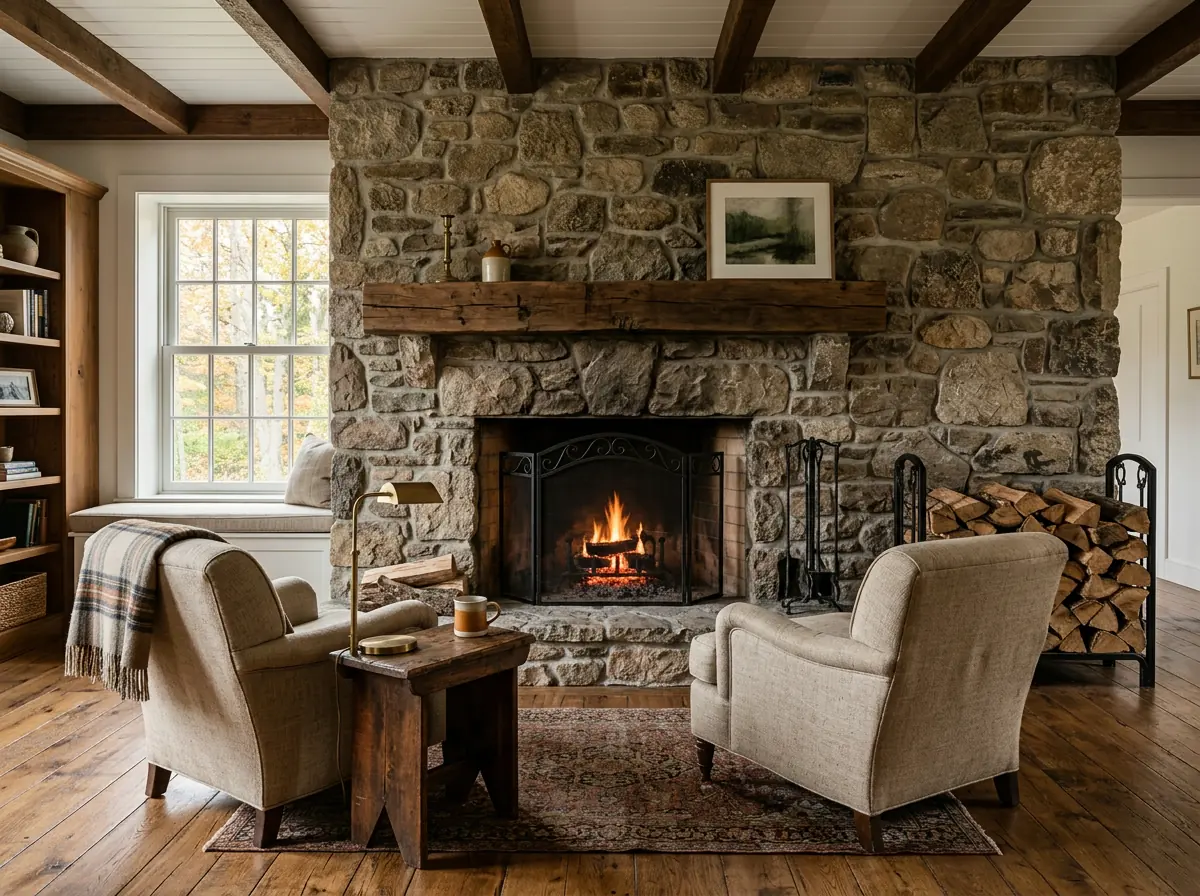
A floor-to-ceiling stone fireplace anchors a rustic living room like nothing else. Fieldstone with a thick reclaimed wood mantel, a black metal screen and a log holder beside the hearth sets the tone, and two armchairs facing the fire turn it into a conversation area. If you can, arrange the main seating toward the fireplace rather than the TV.
Natural stone is heavy and usually needs a proper footing; manufactured stone veneer is much lighter and is often used to reface an existing brick surround. Building codes set a minimum distance between the firebox opening and a wood mantel, so confirm the clearance with your installer before adding a thick beam. Have the chimney inspected once a year if you burn wood.
Tip: Keep throws, baskets and the firewood stack well away from the opening, and use the screen whenever the fire is lit.
3. Leather sofa and wool throws
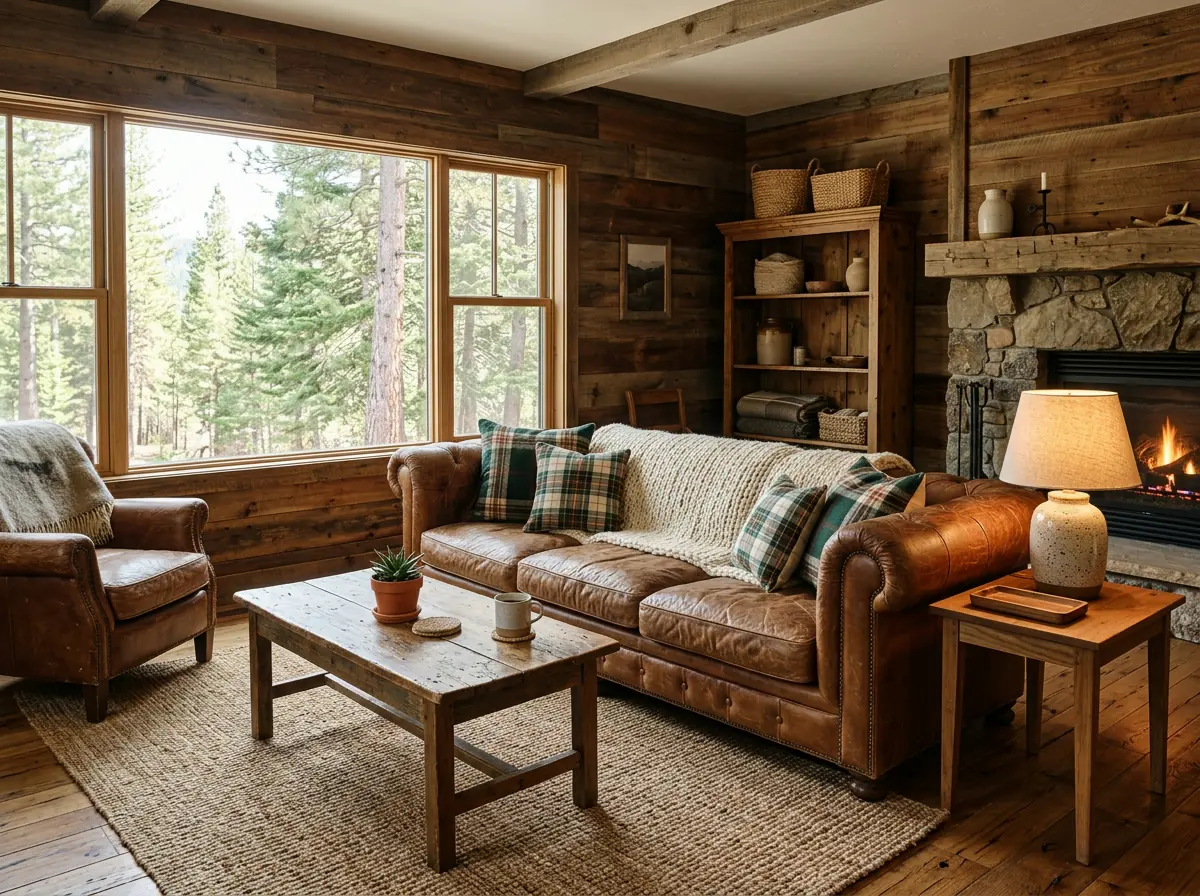
Leather and wool are the rustic textiles. A cognac leather sofa that looks better with every scratch, plaid wool pillows in forest green and cream, and a chunky knit throw over the back give a room instant warmth. Add a reclaimed wood coffee table, a jute rug and wood-paneled walls, and the space feels lived-in from day one.
Aniline leather develops a soft patina but marks easily; protected or pigmented leather resists spills better, which matters with kids and pets. Wool throws and pillows add the texture that keeps a brown leather sofa from looking flat. Mix one pattern, such as plaid or a simple check, with solids and knits so the sofa does not look busy.
Tip: Keep leather out of direct sun and condition it once or twice a year so it does not dry out and crack.
4. Modern rustic with white walls
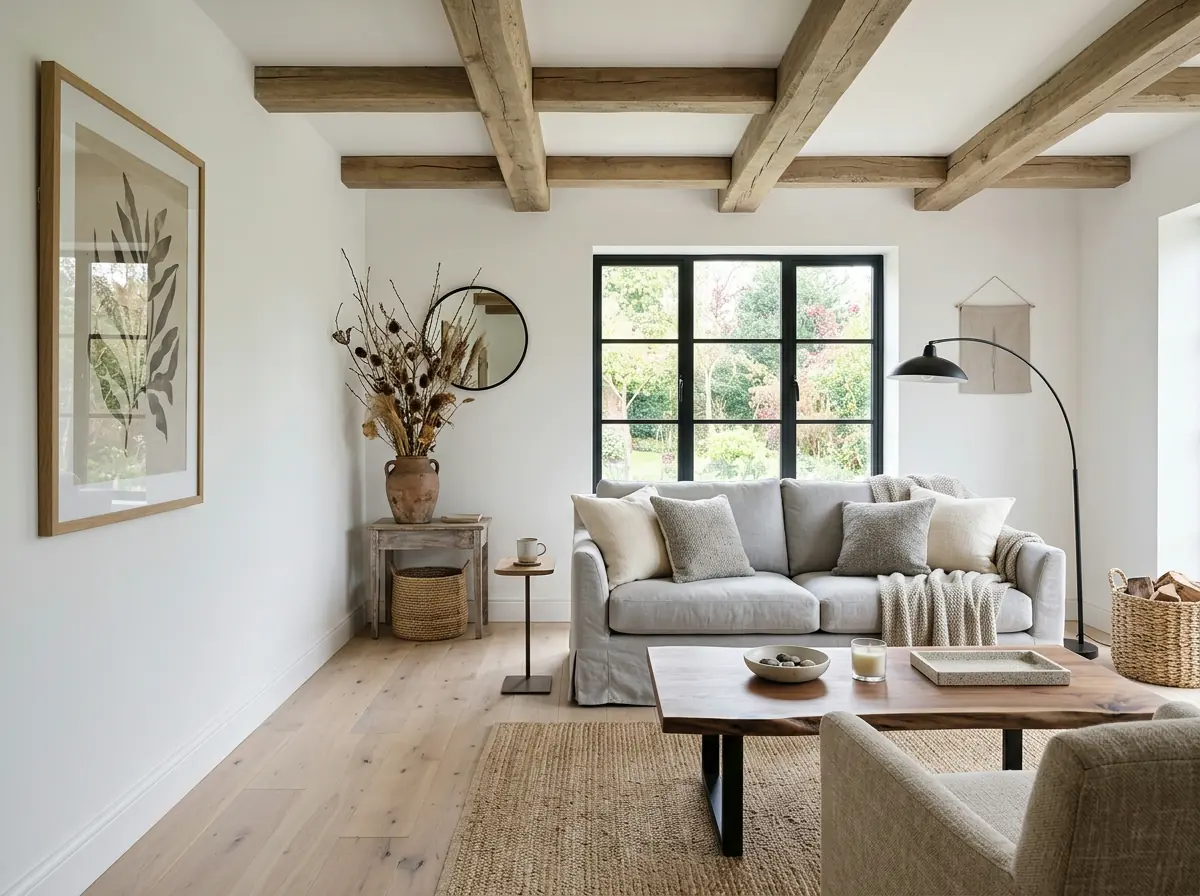
Modern rustic keeps the warmth of wood and natural texture but drops most of the heaviness. White walls, light oak floors and a few weathered ceiling beams set the frame; a light gray slipcovered sofa, a live-edge wood coffee table and a black metal floor lamp add just enough contrast. Decor stays minimal: dried branches in a clay vase, a jute rug, a basket of logs.
A modern rustic living room works well in new builds and apartments where heavy logs and stone would feel out of place. A warm white paint usually sits more comfortably next to natural wood than a stark, cool white. Black window frames and metal accents keep the look crisp, and slipcovers make a pale sofa practical because they can be washed.
Tip: Use two wood tones at most, for example pale oak floors and weathered beams, so the room looks planned rather than mismatched.
5. A barn-wood accent wall
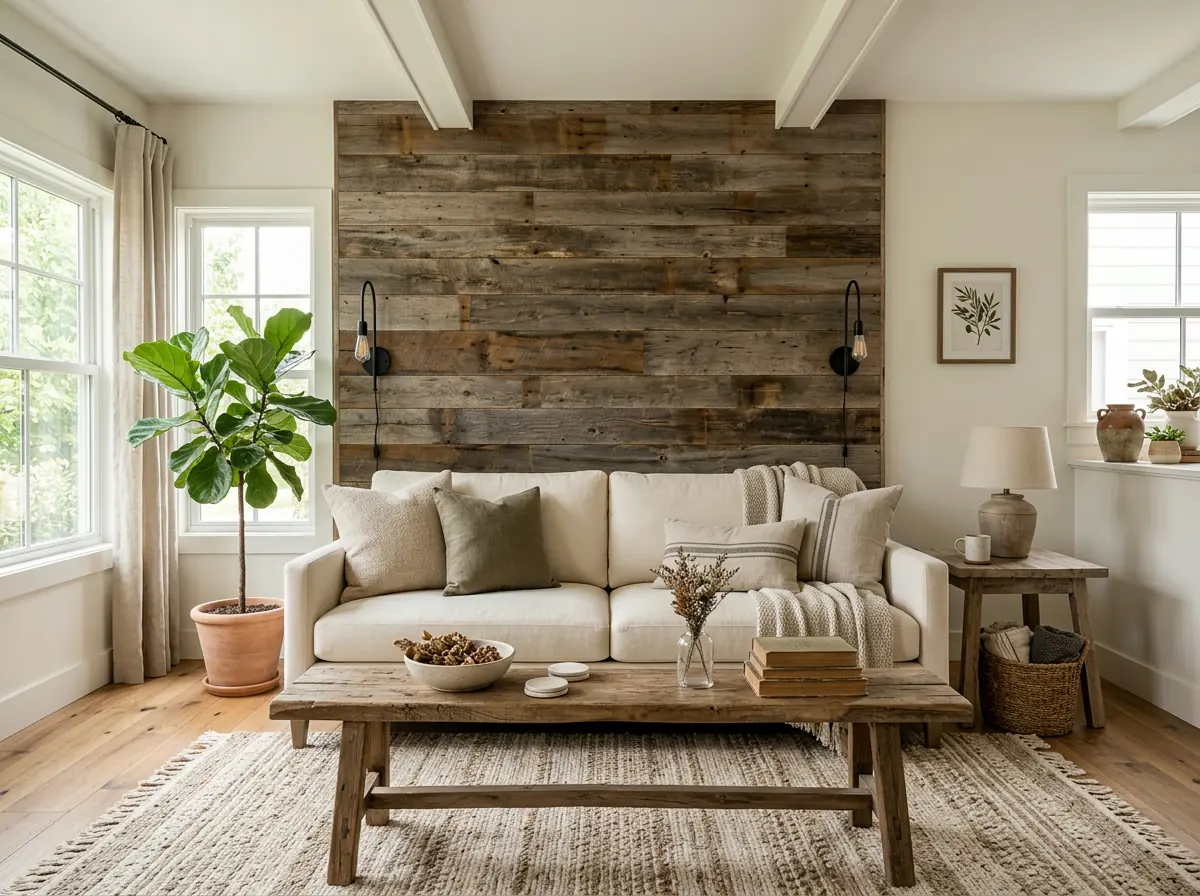
Barn wood is the classic answer for rustic living room walls. One accent wall of reclaimed horizontal planks in mixed brown and gray behind the sofa adds texture and age without darkening the whole room. Keep the other walls warm white, add a black iron sconce on each side of the sofa and use a sturdy wooden bench as the coffee table.
Real reclaimed boards should be cleaned, checked for nails and kiln-dried or treated against insects before they come indoors, and old painted boards may contain lead paint, so do not sand them. Lighter options include thin reclaimed-wood panels, peel-and-stick planks or new boards stained gray. Let any wood sit in the room for a few days before installation so it adjusts to the humidity.
Tip: Mix plank widths and stagger the joints from row to row, as on a floor, so the wall does not look like a repeating pattern.
6. Rustic living room ideas for small spaces
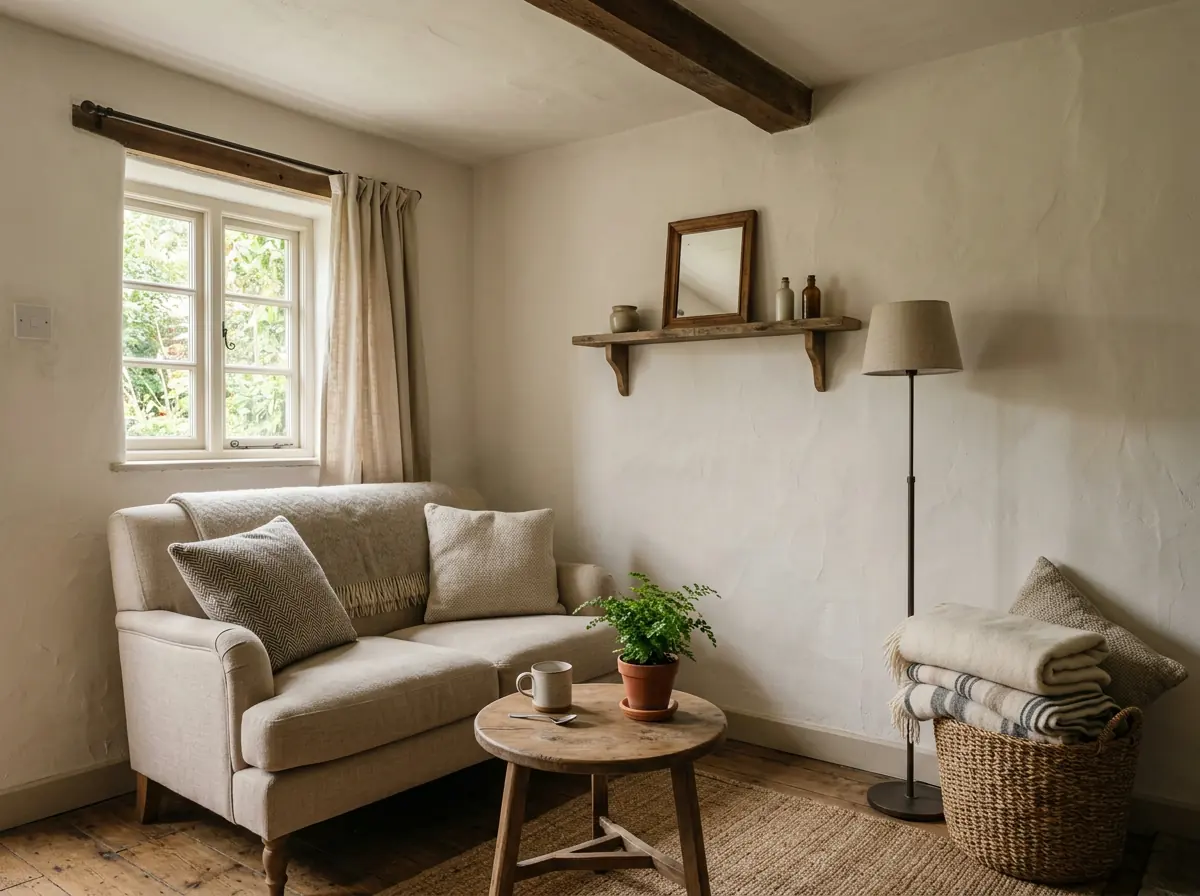
Rustic style suits small rooms better than people expect, as long as the walls stay light and the furniture is in scale. A compact loveseat in oatmeal linen, a small round wood coffee table, one narrow wall shelf and a basket of blankets fill a cottage-sized room without crowding it. A single dark ceiling beam adds character without taking any floor space.
Choose pieces with visible legs so you can see the floor underneath; it makes the room feel larger. A wall shelf, a slim floor lamp and a round table are easier to walk around than bulky storage and square corners. Limit heavy materials to one or two touches, such as the beam and the coffee table, and let textiles do the rest.
Tip: Hang curtains a little higher and wider than the window frame; a small window looks bigger and lets in more daylight.
7. Iron and wood shelving
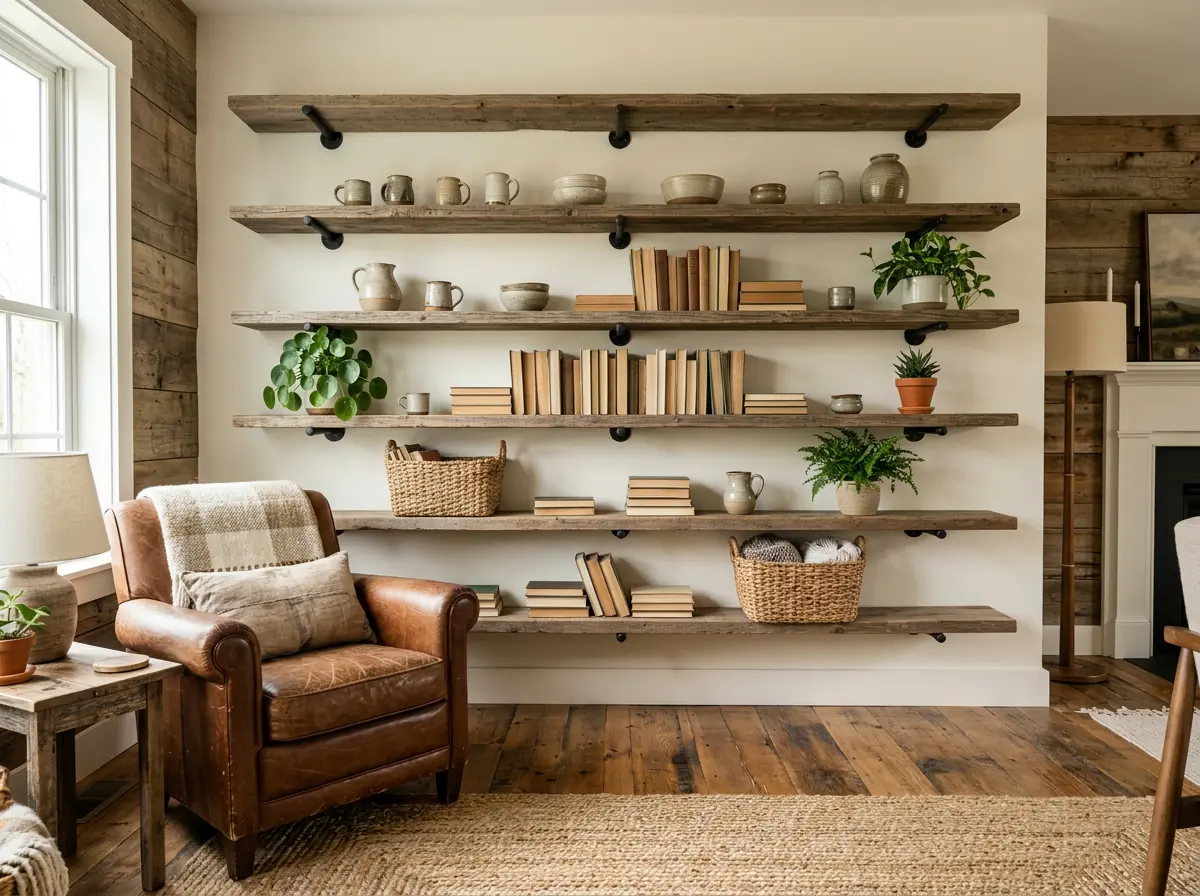
Open shelves of thick reclaimed planks on black iron pipe brackets combine two rustic materials in one practical piece. They hold stoneware jugs, books, baskets and plants, and they turn an empty wall into a display. With a leather armchair, a side table and a lamp in front, the same wall becomes a reading corner.
Shelves loaded with books and pottery are heavy, so fix every bracket into wall studs or use anchors rated for the load. Leave some empty space on each shelf and group objects by color and material, for example stoneware on one shelf and books on the next. A mix of upright and stacked books keeps the arrangement from looking like a store display.
Tip: Leave about 12 to 15 inches between shelves for books, and more where tall jugs or vases will stand.
8. Warm lighting with lanterns
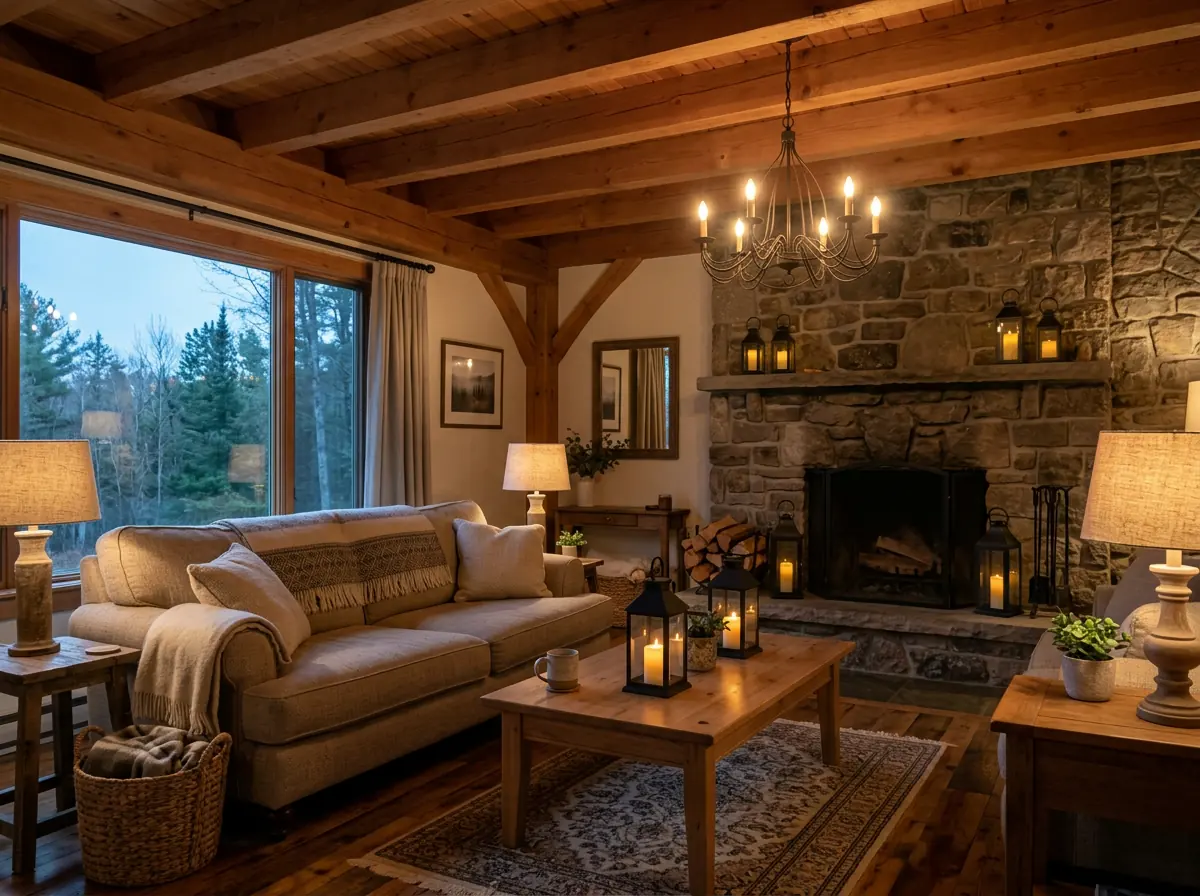
Lighting decides whether a rustic living room feels cozy or gloomy after dark. Layer it: a wrought iron chandelier for general light, table lamps with linen shades at seating height, and black metal lanterns with candles on the mantel, hearth and coffee table. Warm light picks out the grain of wood beams and the texture of stone in a way bright overhead spotlights cannot.
Use warm white bulbs, around 2700 kelvin or lower, and put the chandelier and lamps on dimmers. Flameless LED candles inside lanterns give a similar glow without an open flame next to wool throws, curtains or curious pets. Several low lamps around the room feel more inviting than a single bright ceiling light.
Tip: Aim for a light source in every part of the room you use in the evening, so no corner falls into darkness.
How to plan a rustic living room
- Look at what you already have: wood floors, beams or a fireplace are a head start.
- Pick your version: classic cabin, farmhouse-leaning or modern rustic with white walls.
- Choose one focal point, such as a stone fireplace, a barn-wood wall or ceiling beams.
- Limit the palette to two wood tones plus cream and one accent such as forest green or rust.
- Photograph the room and try the rustic style on it with an AI tool before you buy wood, stone or furniture.
- Finish with textiles and warm, dimmable lighting rather than more decor.
Try a rustic look on your own living room
Upload a photo, choose the Rustic style and see your living room redesigned in seconds. 2 free credits, no credit card.
Redesign my living roomRustic living room FAQ
What is a rustic interior design?
Rustic interior design is a style built on natural, rough or aged materials, such as wood with knots and saw marks, stone, leather, wool and iron, in warm, earthy colors. It comes from cabins, farmhouses and mountain lodges and values comfort and character over polish. Modern versions keep the materials but use lighter walls and less decor.
What is a farmhouse style living room?
A farmhouse style living room is a lighter, more casual cousin of rustic, with white or cream walls, shiplap, slipcovered sofas, vintage finds and black metal accents. Rustic usually uses more raw wood, stone and darker tones, while farmhouse leans clean and bright. Many rooms mix the two.
How can I make my living room look more stylish?
Pick one style and remove what does not fit it, then add a clear focal point, layered lighting and a rug large enough for at least the front legs of the sofa and chairs. Mixing textures such as wood, linen, wool and metal makes even simple furniture look intentional. Clearing surfaces often does more than buying new decor.
Can I see my own living room in rustic style?
Yes. Upload a photo of your living room to EasyInterior’s AI interior design tool, choose the Rustic style and you get a redesigned version of the same room in seconds. Use it to test wood tones, colors and layouts before you buy anything.