JAPANDI BEDROOM IDEAS
Japandi bedroom: 8 ideas for a calm, natural room
Published · EasyInterior
A Japandi bedroom combines the calm, low-to-the-ground simplicity of Japanese interiors with the warmth and practicality of Scandinavian design. Expect light or dark wood, linen in earthy neutrals, soft diffused light and very few objects, each chosen with care. It is minimal, but it never feels cold, which is why it works so well in a room meant for rest.
The eight ideas below show the elements that make a bedroom read as Japandi, from a low oak bed and a paper pendant to shoji-style panels and handmade ceramics. Use one or two of them, or build the whole room around them. First, the before-and-after just below: a dated 1990s bedroom redesigned in the Japandi style in one step.
Before and after: a 1990s bedroom turned Japandi
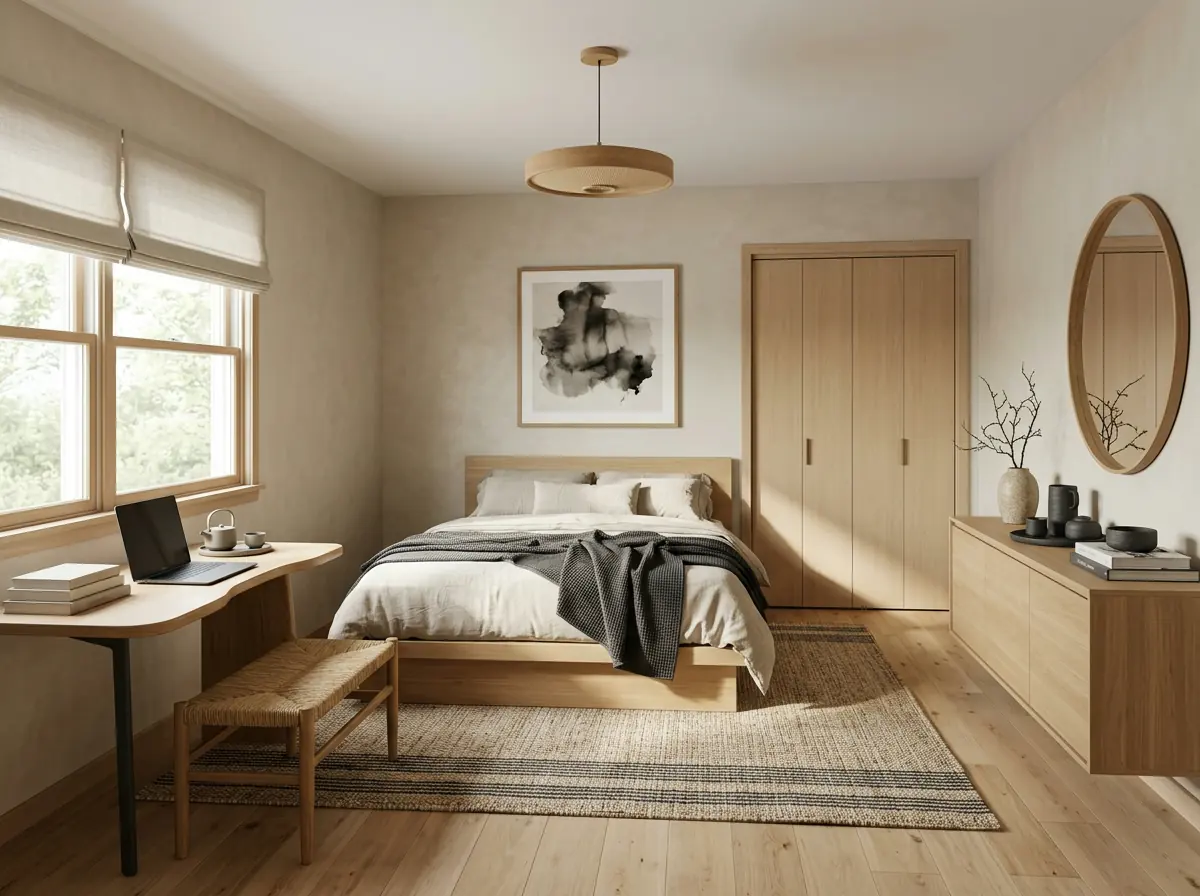
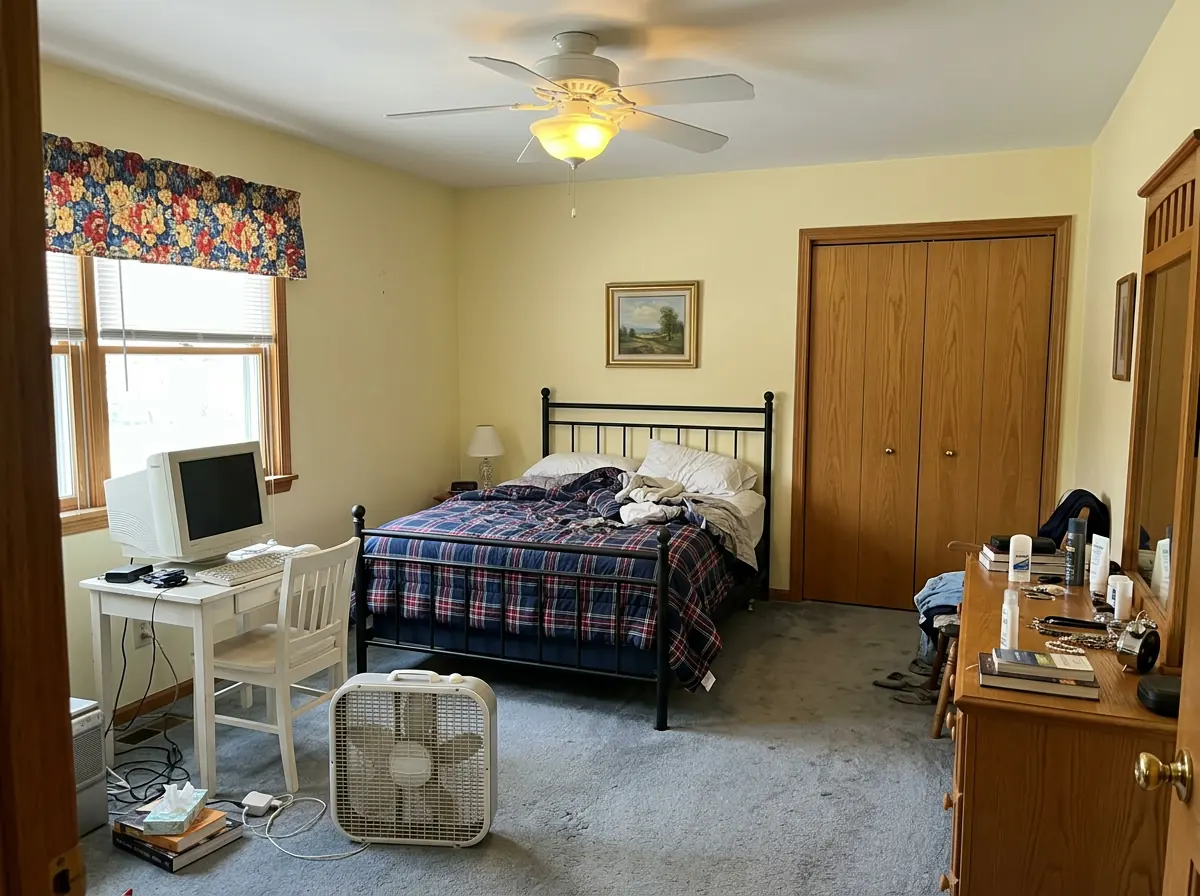
All images in this article were generated with AI. The “before” photo is an AI-generated example of a typical bedroom; the “after” image was made from it with the same prompt EasyInterior’s interior redesign tool uses. The other images illustrate ideas and are not photos of real rooms.
8 Japandi bedroom ideas
1. Low Japandi bedroom furniture in oak
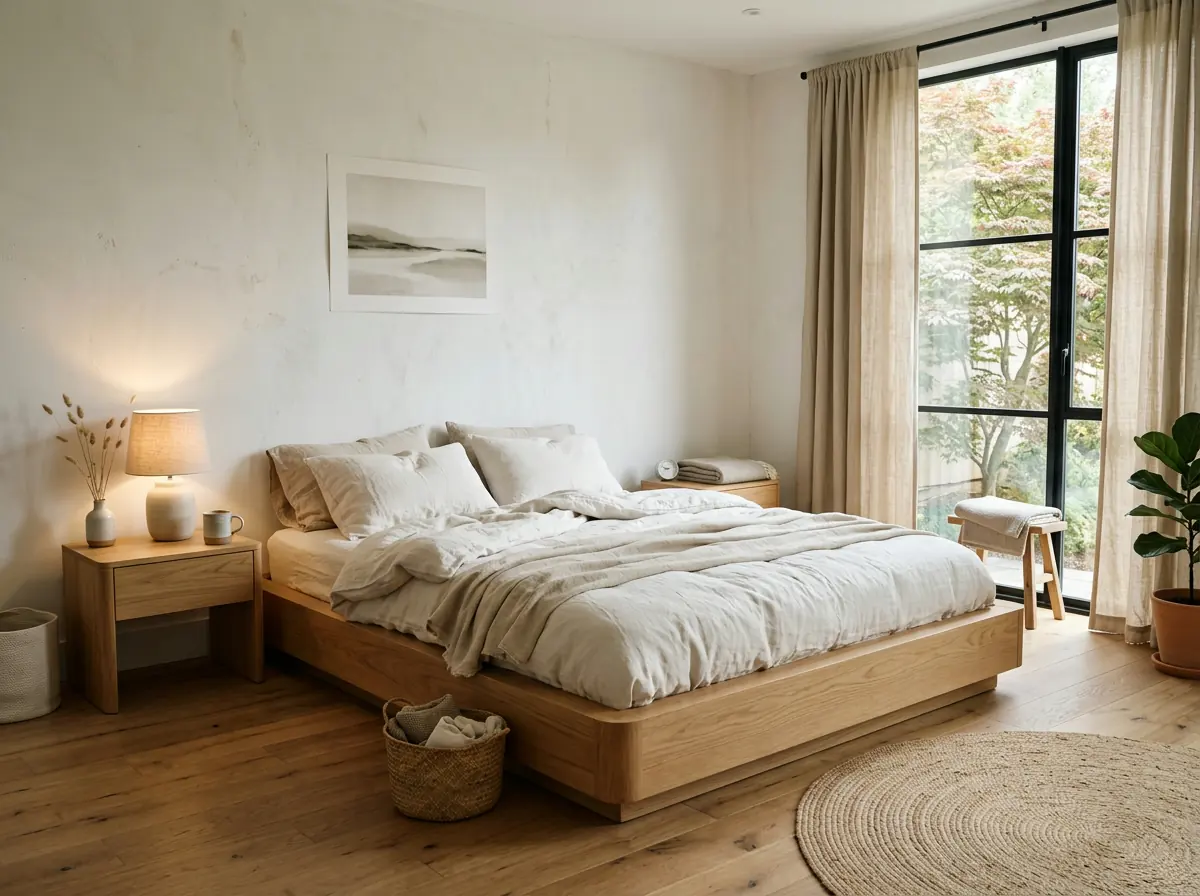
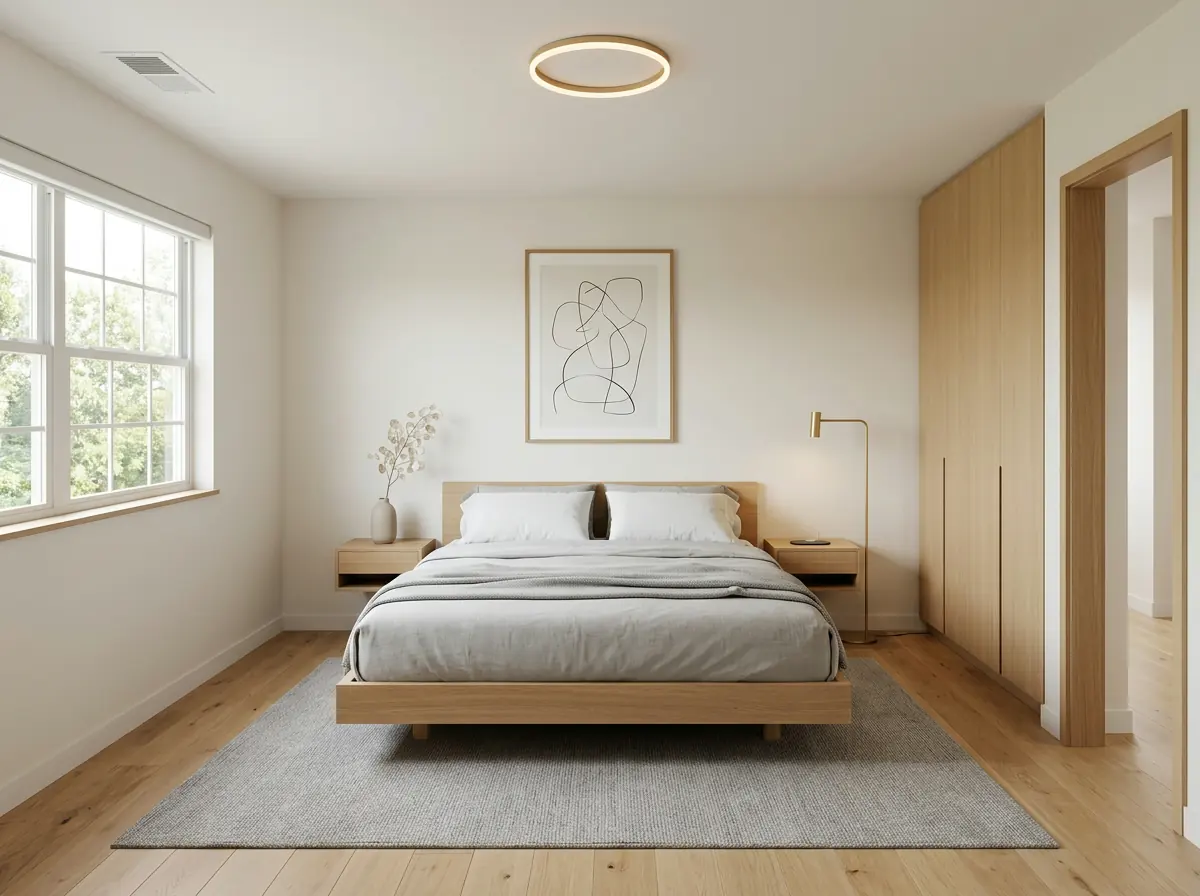
The bed sets the tone in a Japandi bedroom, and the defining feature is height: a low platform frame that keeps the mattress close to the floor, a nod to the traditional Japanese futon. Solid oak or ash with rounded edges and visible grain brings in the Scandinavian side of the mix.
Keep the rest of the Japandi bedroom furniture equally low and simple: nightstands at mattress height, a bench instead of an armchair and no ornate hardware. Clean joinery and an oiled or matte finish matter more than decoration. Choose fewer pieces of better quality rather than a full matching set.
Tip: If getting up from a very low bed is hard for you, pick a frame where the top of the mattress sits about knee height; it still looks low.
2. A paper pendant light
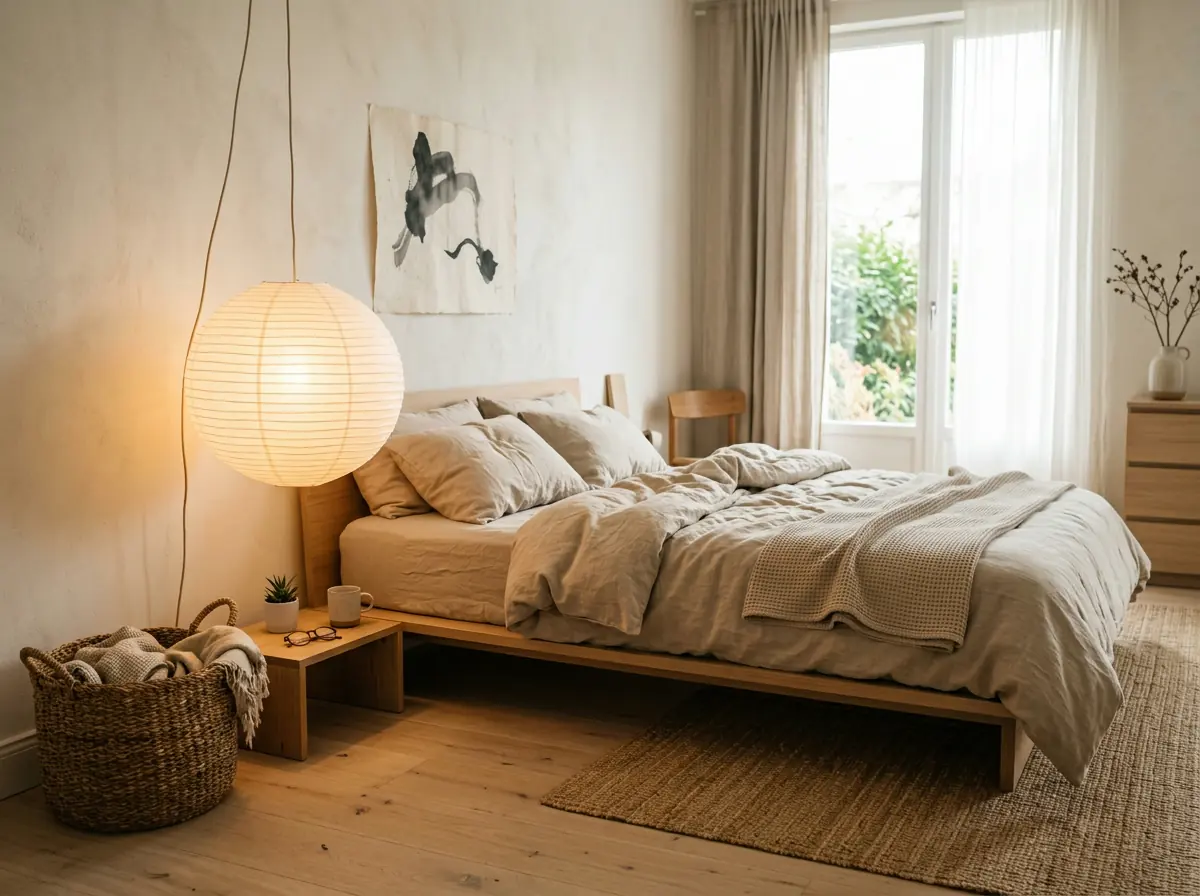
A round paper lantern is one of the quickest ways to make a bedroom feel Japandi. Paper diffuses the bulb into a soft, even glow with no glare, which suits a room you mostly use in the morning and evening. Hang it low over a nightstand or to one side of the bed instead of in the center of the ceiling.
Paper shades come in many shapes and sizes, and many are affordable, so you can go large without much risk. A big globe can be the main light in a small room; in a larger one, combine it with a paper table lamp or a low floor lamp on the other side of the bed.
Tip: Use an LED bulb in a paper shade: it runs much cooler than an old incandescent bulb and is safer next to paper.
3. Shoji-style sliding panels
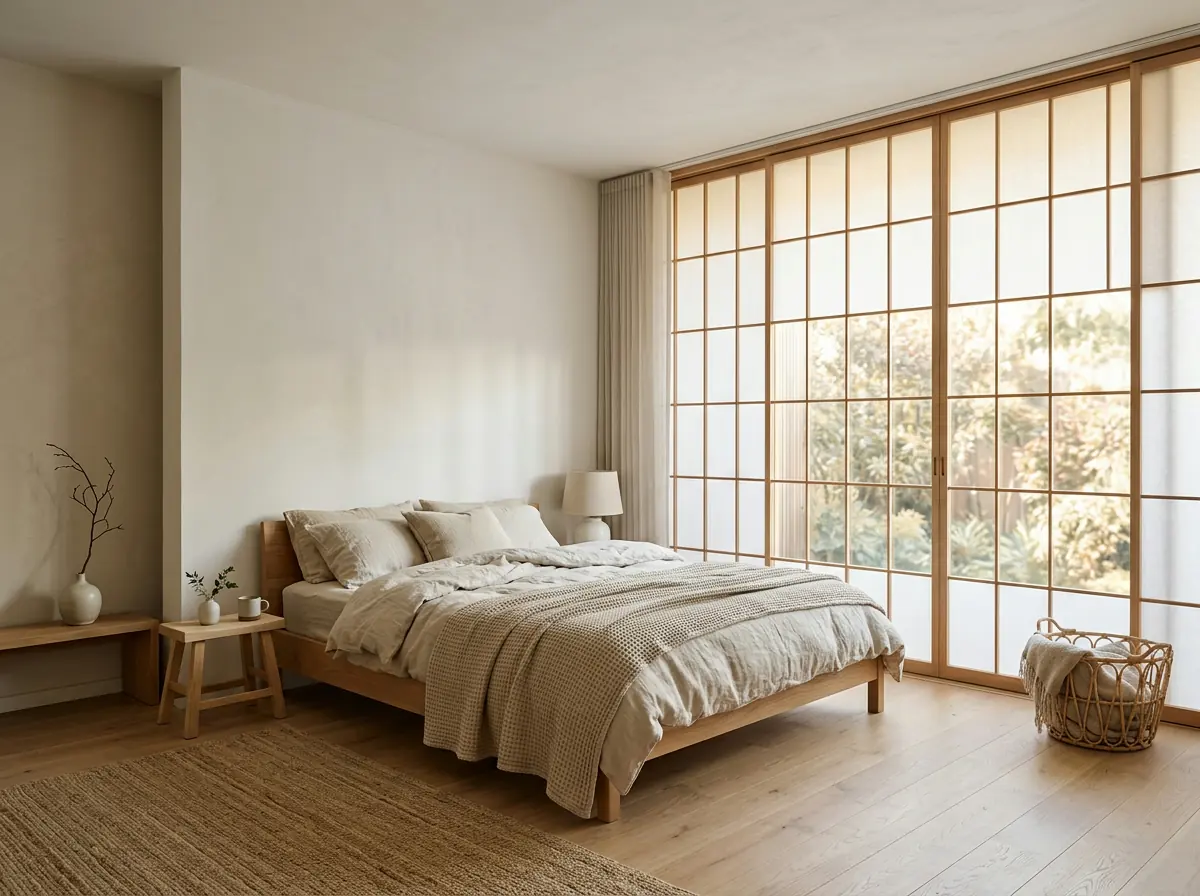
In traditional Japanese houses, shoji are sliding screens made of a wooden lattice covered in translucent paper. They let light in while blocking views, and they do the same in a Japandi bedroom: a wall of shoji-style panels in front of a window turns harsh daylight into a soft glow and gives privacy without heavy curtains.
You can use them over windows, as closet doors or as a sliding divider between the bed and a dressing area. Modern versions often use plastic-laminated paper or acrylic sheets, which are much tougher than plain paper and easy to wipe clean. Pale wood frames keep the look light.
Tip: Panels hung from a ceiling-mounted track look more built-in than ones that run on a floor rail.
4. A tatami-style rug and floor seating
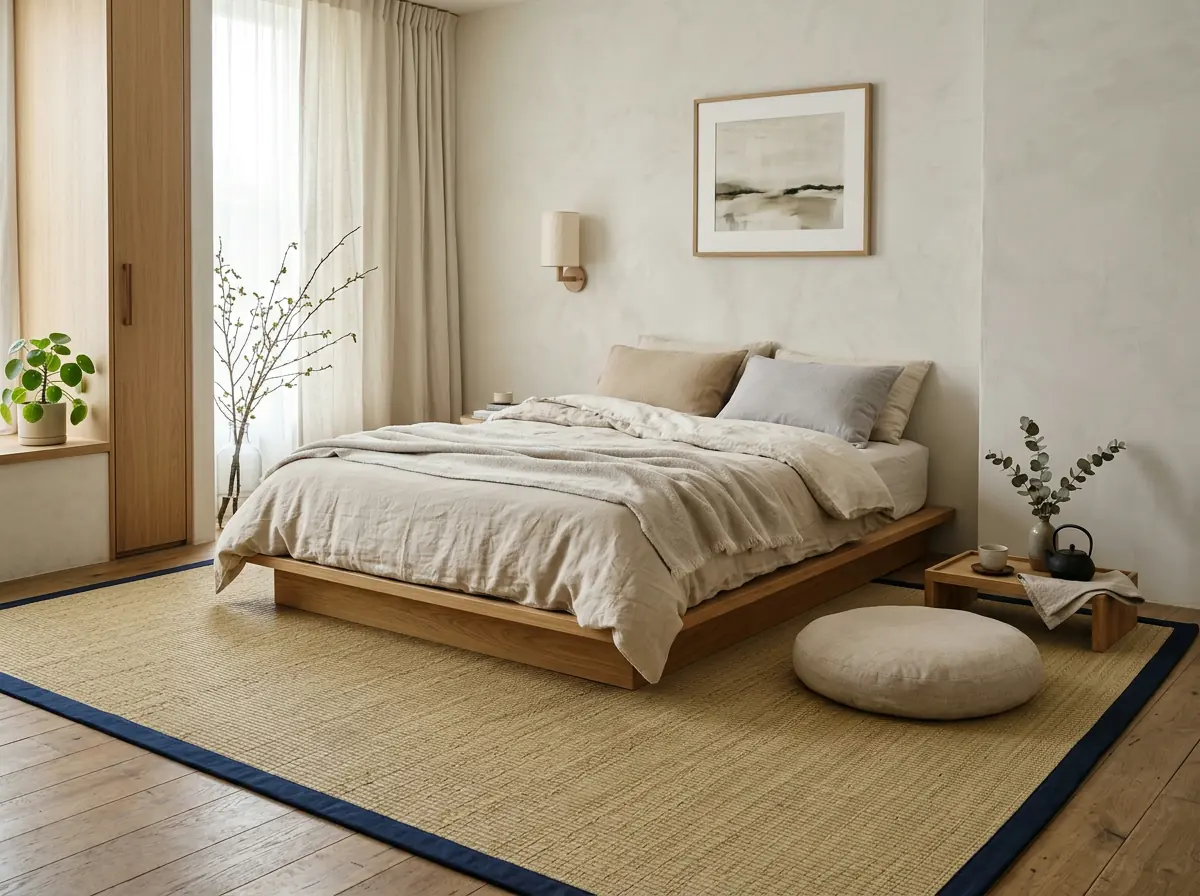
Traditional Japanese bedrooms have tatami floors: mats of woven rush with fabric-bound edges. A large rug in rush, seagrass or a similar natural weave with a dark cloth border brings that look into a bedroom with an ordinary floor, and it feels good underfoot.
Add a reason to sit low: a round floor cushion and a small wooden tray table make a corner for tea or reading in the morning. Natural-fiber rugs are hard-wearing but do not like water, so keep this setup away from the bathroom door and blot spills quickly.
Tip: Put a thin non-slip pad under a woven rug so it does not shift when you step out of bed.
5. Handmade ceramics with a wabi-sabi feel
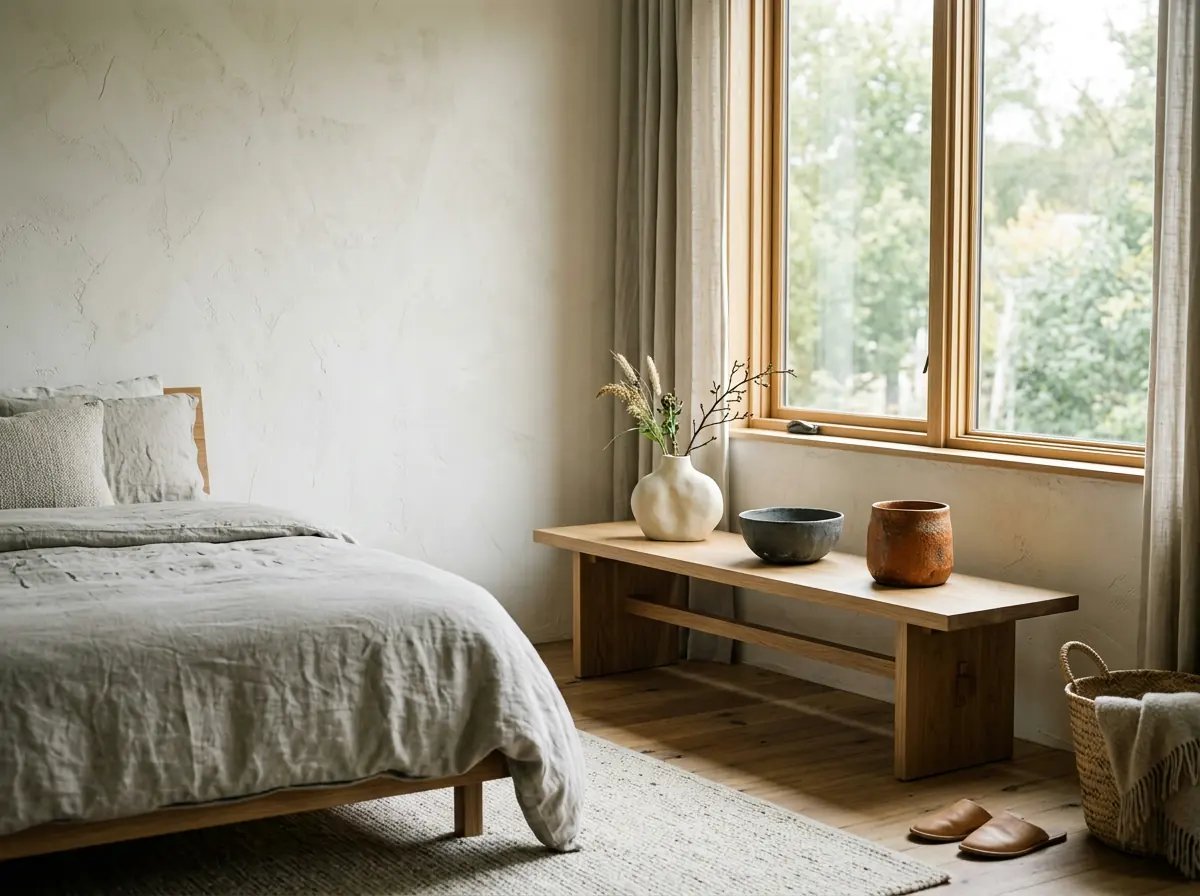
Japandi borrows from wabi-sabi, the Japanese idea of finding beauty in imperfect, impermanent and simple things. In a bedroom that means a few handmade objects instead of many decorative ones: stoneware with uneven shapes, matte glazes and visible marks of the maker, set on a low bench or windowsill.
Group them in odd numbers and vary height and color slightly: a cream vase, a charcoal bowl and a rust-colored pot read as a set without matching. A hand-troweled plaster wall behind them repeats the same quiet texture. Leave empty space around the group so each piece can be seen.
Tip: Buy ceramics one at a time from local potters or craft markets; a collection built slowly looks more personal.
6. Dark wood for a modern Japandi bedroom
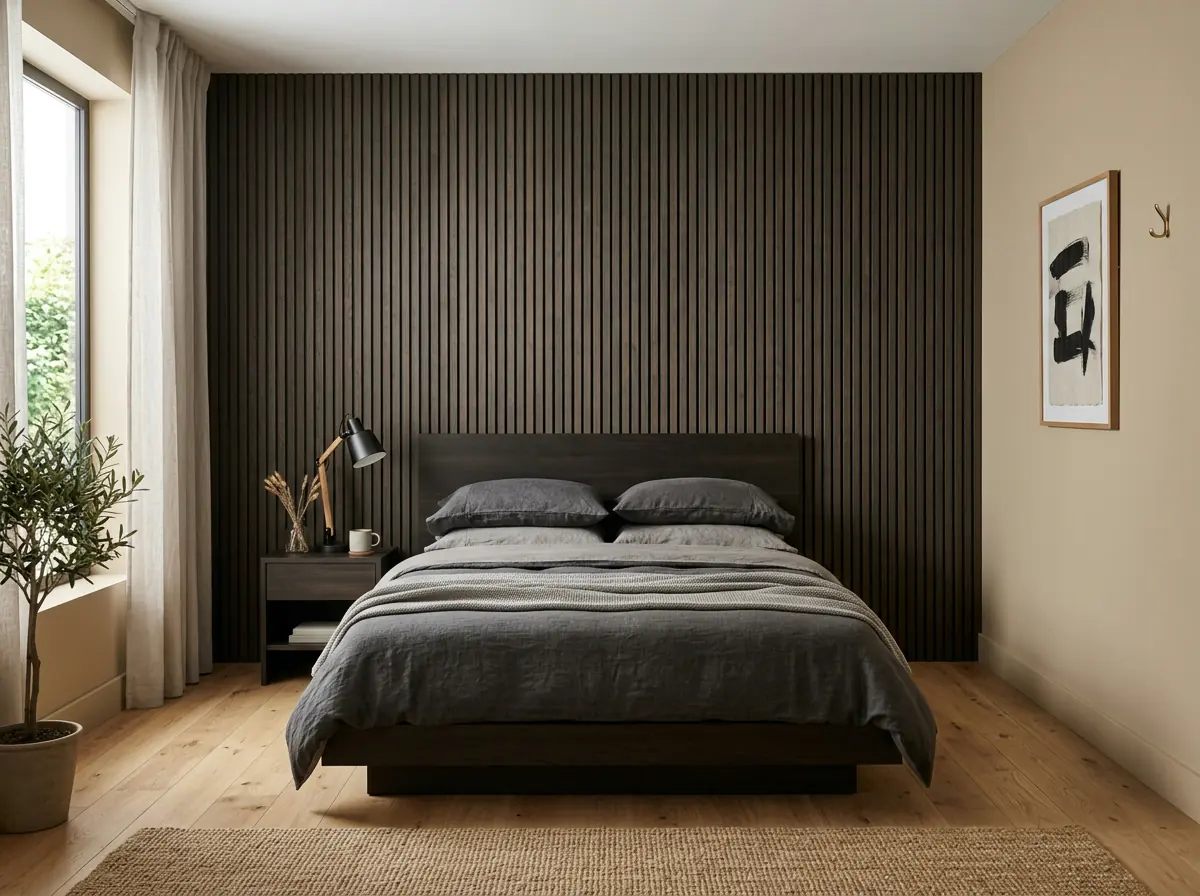
Japandi is not only pale oak. A modern Japandi bedroom often uses darker wood, such as smoked oak, stained ash or walnut, for a moodier, more grounded room. A wall of vertical slats behind the bed works as a headboard and adds rhythm, while charcoal and stone gray linen keep the palette quiet.
Balance the dark tones with something light, or the room will feel heavy: a pale floor, warm beige walls on the other sides or white curtains. One black-and-cream artwork and a simple metal and wood lamp are enough decoration. This version suits bedrooms used mostly at night and anyone who likes a cocooning feel.
Tip: Slat panels with an acoustic felt backing also soften echo, which helps in bedrooms with hard floors.
7. Linen bedding in earth tones
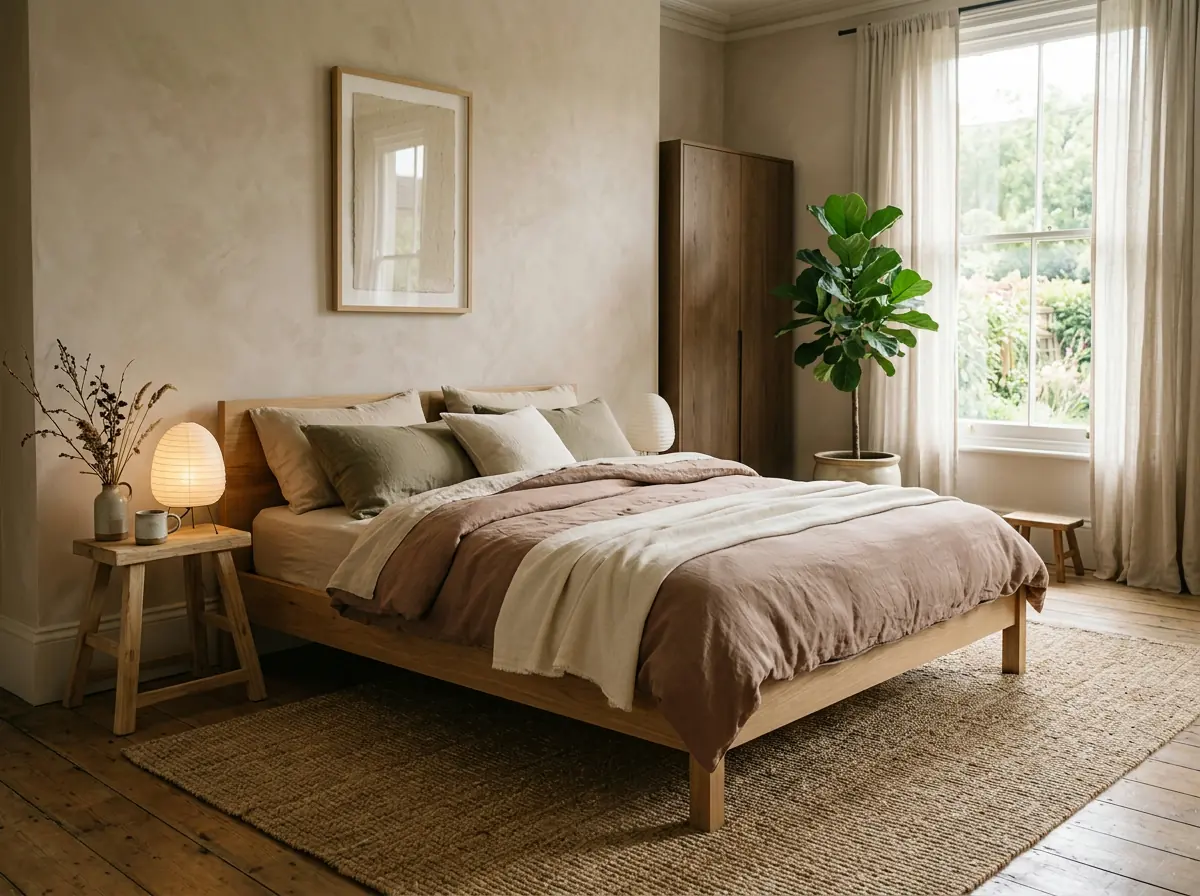
Color in a Japandi bedroom comes mostly from textiles, and the palette is taken from nature: clay, sand, muted olive, stone, cream and charcoal. Washed linen bedding in two or three of these tones, layered loosely, gives the bed depth without any pattern.
Linen is breathable, gets softer with every wash and looks good slightly rumpled, which suits the relaxed side of the style. Repeat one of the bedding colors on the wall with a soft limewash or clay paint, and finish with a jute or wool rug and one large green plant.
Tip: Choose no more than three bedding colors and keep patterns off the bed; texture does the work.
8. A bonsai or a single branch
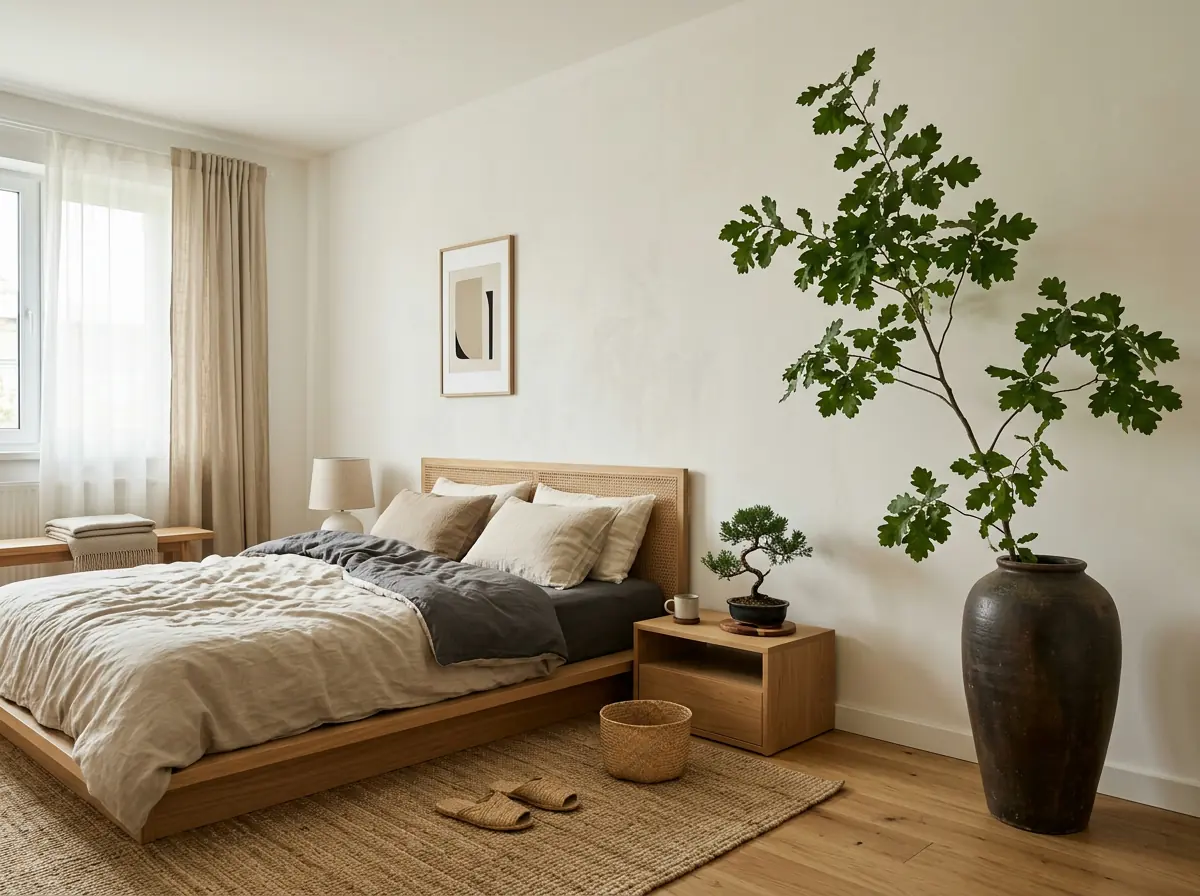
Instead of many plants, a Japandi bedroom usually has one or two carefully chosen pieces of greenery. A single tall branch in a heavy floor vase brings height and movement to an empty corner, and a small bonsai on the nightstand adds a living sculpture at eye level when you lie down.
Branches can change with the seasons: blossom in spring, leafy stems in summer, bare twigs in winter. A bonsai needs a bright spot and careful watering, and many common species prefer to live outdoors, so ask the seller which kinds cope with indoor conditions.
Tip: A ficus or jade bonsai copes with indoor life far better than a juniper, which needs to spend the winter outside.
How to plan a Japandi bedroom
- Clear the room first: Japandi needs empty surfaces and space around each piece.
- Choose one main wood tone, light oak or dark wood, and one dark accent such as black or charcoal.
- Pick a low bed and low, simple furniture with natural finishes.
- Build the palette from natural materials: linen, wool, paper, jute, stoneware and plaster.
- Replace harsh overhead light with diffused sources such as paper shades and warm bulbs.
- Photograph your bedroom and try the Japandi style on it with an AI tool before you buy furniture.
Try a Japandi look on your own bedroom
Upload a photo, choose the Japandi style and see your bedroom redesigned in seconds. 2 free credits, no credit card.
Redesign my bedroomJapandi bedroom FAQ
What is wabi-sabi vs Japandi?
Wabi-sabi is a Japanese philosophy that finds beauty in imperfection, age and simplicity, while Japandi is an interior design style that blends Japanese minimalism with Scandinavian comfort and function. Japandi borrows wabi-sabi ideas, such as handmade ceramics and natural textures, but it is cleaner and more ordered. A wabi-sabi room is more rustic, with raw plaster, worn wood and visible signs of age.
What is in a Japanese bedroom?
A traditional Japanese bedroom has tatami mats on the floor, a futon that is laid out at night and folded into a built-in closet during the day, and sliding paper screens (shoji) and sliding doors (fusuma). There is little furniture, and decoration is often limited to an alcove (tokonoma) with a hanging scroll or a flower arrangement.
What does a zen bedroom look like?
A zen bedroom is quiet and uncluttered: a low bed, a neutral palette, natural materials such as wood, linen, paper and stone, soft diffused light and very few objects. Screens and electronics are kept out of sight, and a plant, a branch or a view of greenery connects the room to nature. A Japandi bedroom is one practical way to get there.
Can I see my own bedroom in Japandi style?
Yes. Upload a photo of your bedroom to EasyInterior’s AI interior design tool, choose the Japandi style and you see the same room redesigned in seconds. Use it to compare light and dark wood versions before you buy furniture.