ART DECO INTERIOR DESIGN
Art Deco interior design: 8 ideas, room by room
Published · EasyInterior
Art Deco interior design is glamour with structure: bold geometric patterns, curved and fluted furniture, polished brass, black lacquer, velvet, mirror and terrazzo. The name comes from the 1925 Paris exhibition of decorative arts, and the style peaked in the 1920s and 1930s in everything from ocean liners and movie theaters to apartment lobbies. Today it works best in measured doses: a few strong pieces, a clear palette and good materials.
The eight ideas below show how the style works in different rooms, from a living room built around a curved velvet sofa to a fluted green kitchen and a mirrored home bar. Use one idea in a single room or combine several across the house. First, the before-and-after just below: a dated 1990s living room redesigned in the Art Deco style in one step.
Before and after: a 1990s living room turned Art Deco
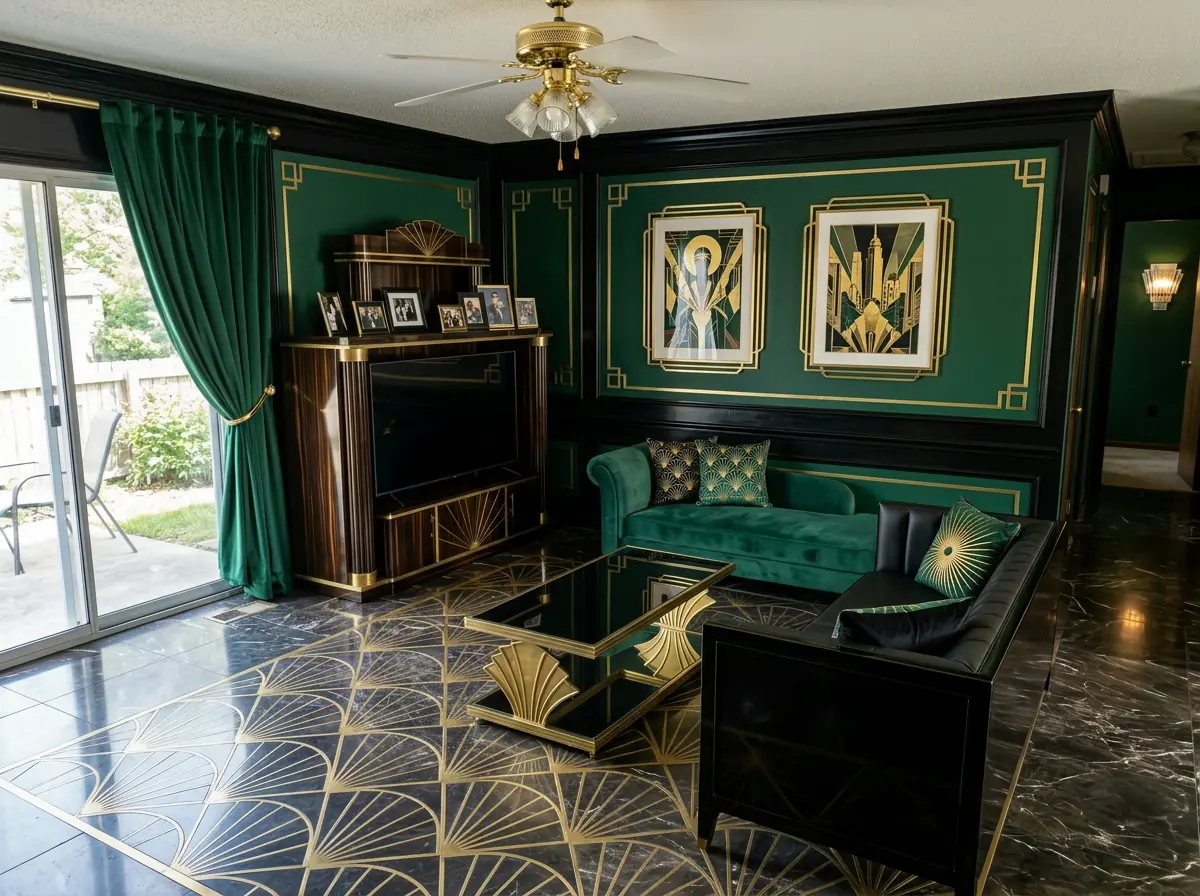
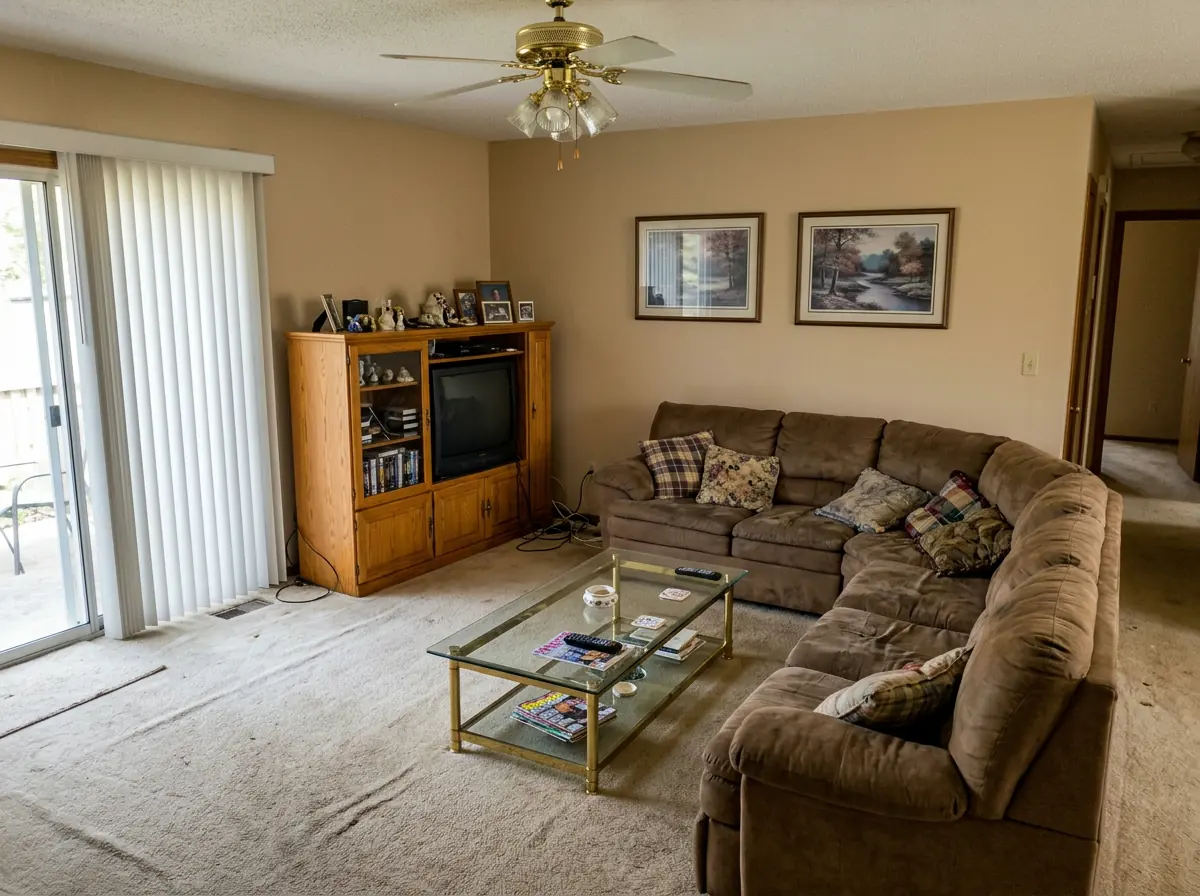
All images in this article were generated with AI. The “before” photo is an AI-generated example of a typical living room; the “after” image was made from it with the same prompt EasyInterior’s interior redesign tool uses. The other images illustrate ideas and are not photos of real rooms.
8 Art Deco interior design ideas
1. An Art Deco living room built around a curved sofa
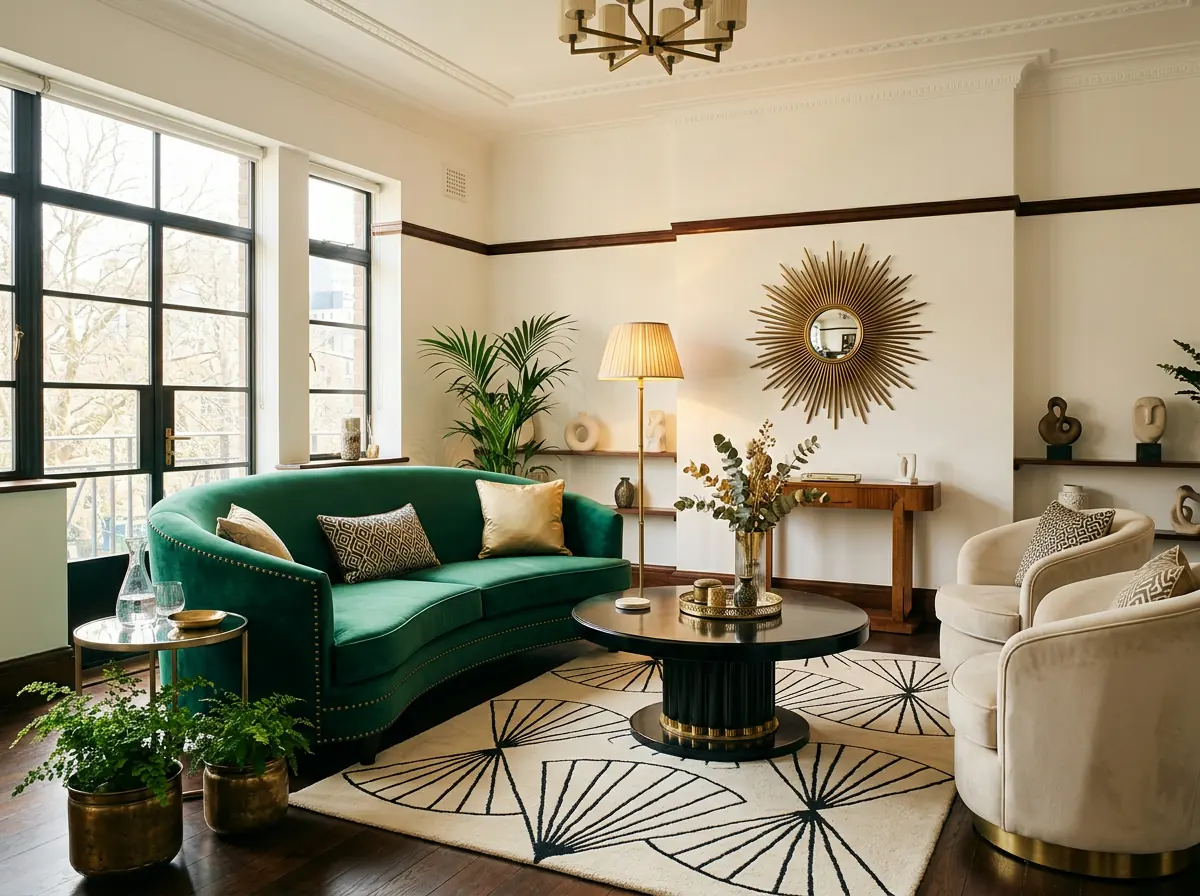
In an Art Deco living room, the sofa sets the tone. A curved or rounded sofa in a saturated velvet, such as emerald, sapphire or deep rust, brings in the soft, streamlined shapes of the 1930s. Pair it with a round coffee table on a fluted or stepped base and two curved armchairs to form a conversation group.
Then add the geometry: a rug with a fan or stepped pattern, a sunburst mirror on the wall and a brass floor lamp with a pleated shade. Keep the walls fairly calm, warm white with a dark picture rail, so the furniture shapes stand out. Plants in brass pots add life without fighting the style.
Tip: Velvet shows wear on arms and seat edges first, so choose a performance velvet for a sofa that gets daily use.
2. A bedroom with a tall channel-tufted headboard
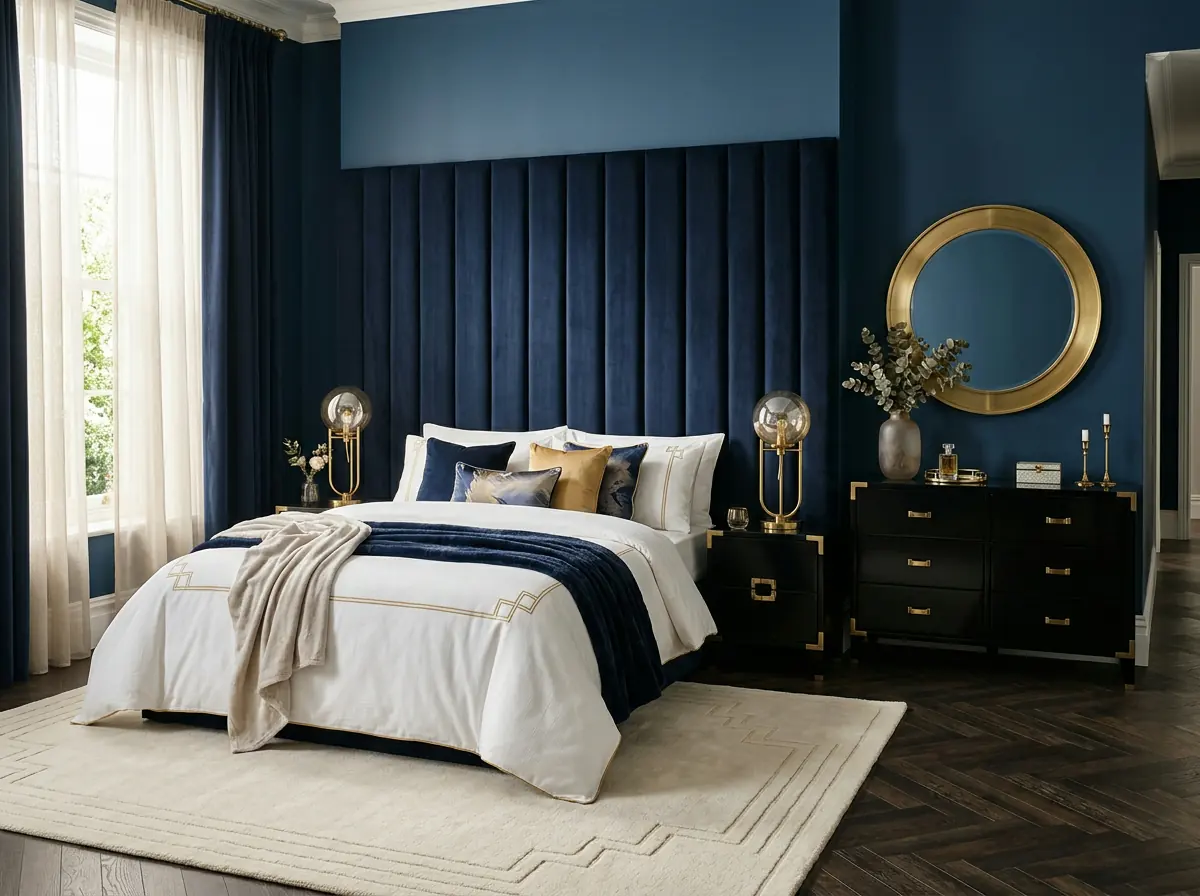
Channel tufting, upholstery stitched into vertical ribs, is one of the easiest ways to bring Art Deco into a bedroom. Run it tall, well above the usual headboard height, in a deep velvet such as navy or forest green, and the bed becomes the architectural focal point of the room.
Black lacquered nightstands and a matching dresser with brass handles and corner caps add the gloss and contrast typical of the style. Choose white or cream bedding with a thin geometric border, glass globe lamps on brass bases and a round brass mirror. Deep blue walls make the room feel cocooning at night.
Tip: A wall-mounted upholstered panel can be made to any height and is easier to fit than a freestanding extra-tall headboard.
3. Art Deco bathroom tile in green and black
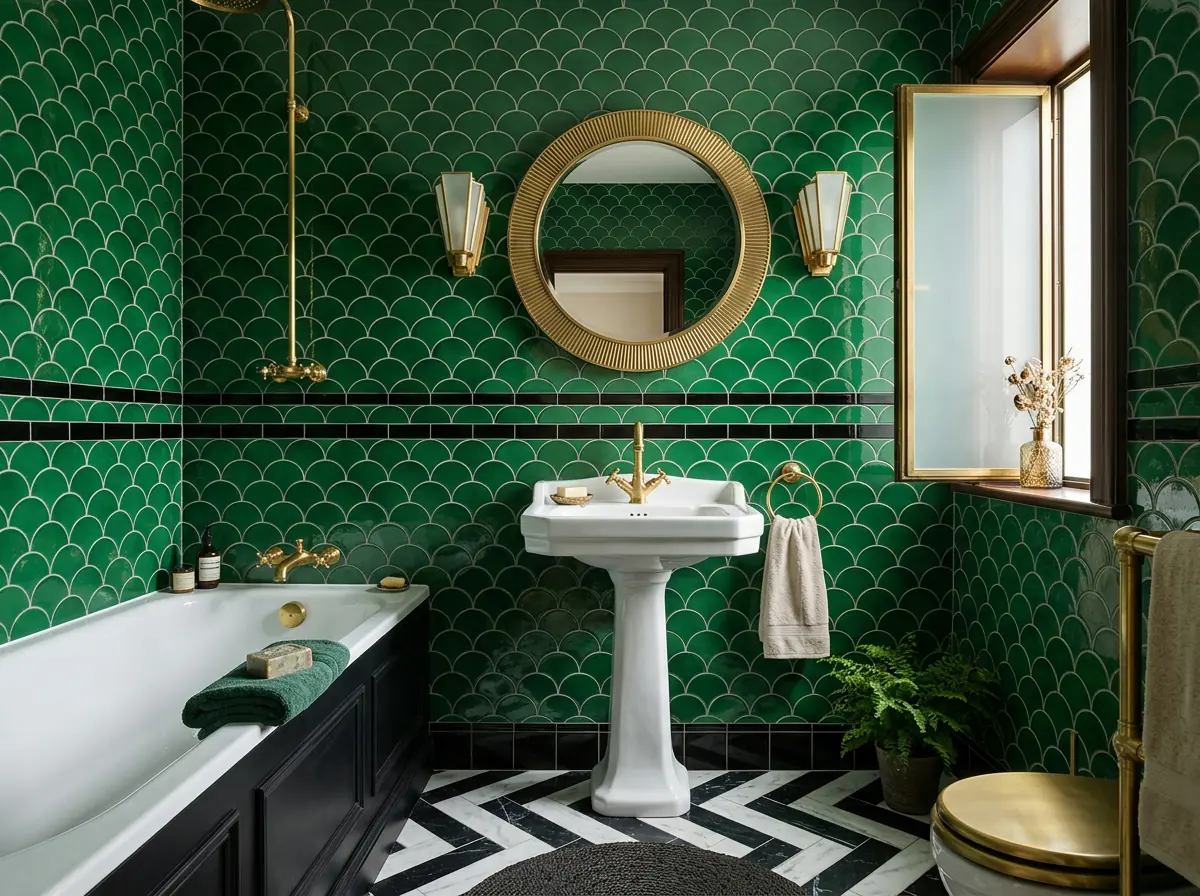
Bathrooms of the Art Deco era were known for bold tile: glossy colored walls, black trim lines and geometric floors. Fan-shaped scale tiles in deep green, edged with a thin black border, give an instant period look, and a black-and-white chevron or checkerboard floor adds graphic contrast underfoot.
Keep the fixtures classic: a white pedestal sink, a tub with a black paneled front and polished brass taps. A round mirror with a ribbed brass frame and stepped brass sconces with frosted glass complete the look. In a small bathroom, use the bold tile on one or two walls and keep the rest plain white.
Tip: Glossy tile wipes clean more easily than matte tile, but grout lines show more, so pick a grout close to the tile or border color.
4. A dining room with a mirrored wall and tiered chandelier
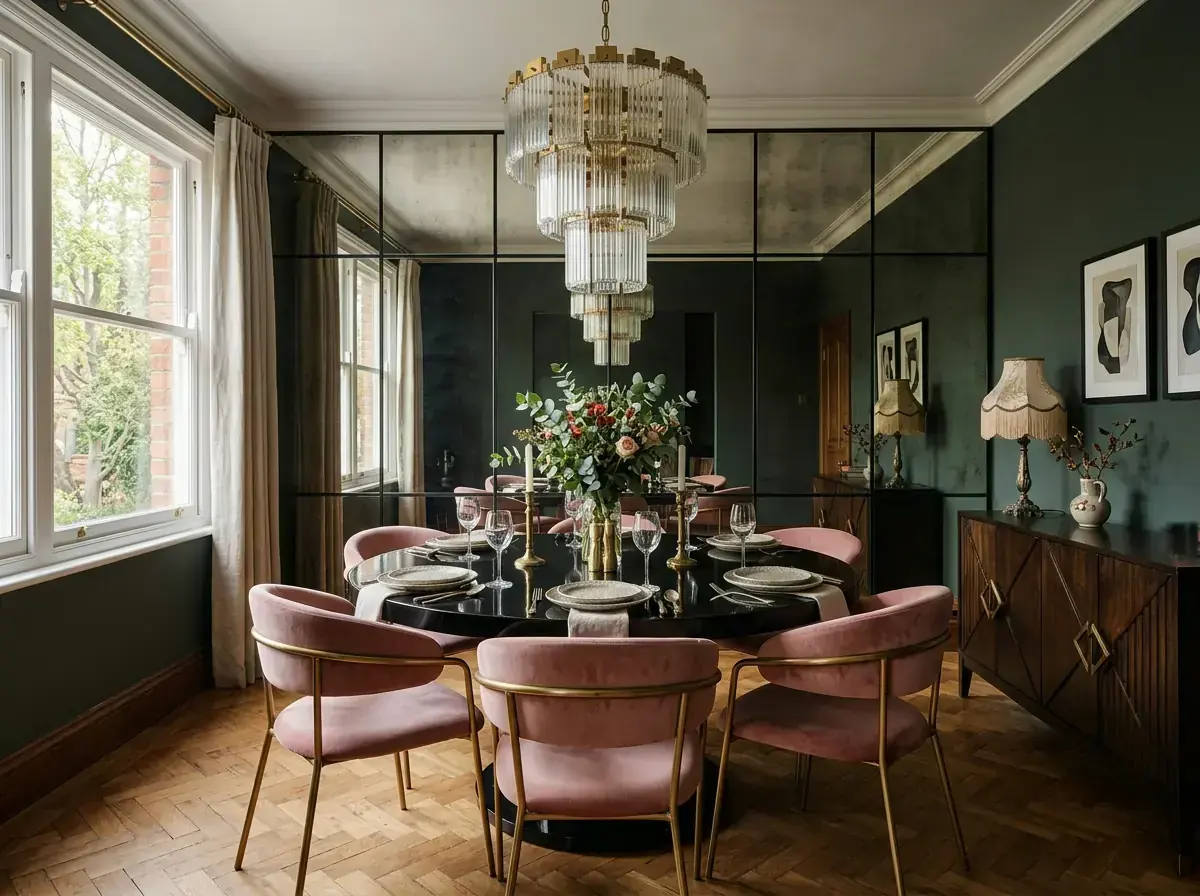
Art Deco was made for evening entertaining, and the dining room is where it shines. A round lacquered table with curved-back velvet chairs suits conversation, and a tiered chandelier of glass rods and brass becomes the jewelry of the room, especially when it hangs low over the table.
Cover one wall in antiqued mirror panels to double the light from the chandelier and make the room feel larger. Dark green or navy walls, a herringbone floor and a sideboard with geometric doors add depth. Dusty pink velvet against dark green is a pairing that suits the style and still looks fresh.
Tip: Antiqued mirror hides fingerprints and uneven walls better than clear mirror, and it gives a softer reflection.
5. A terrazzo entryway with brass inlay
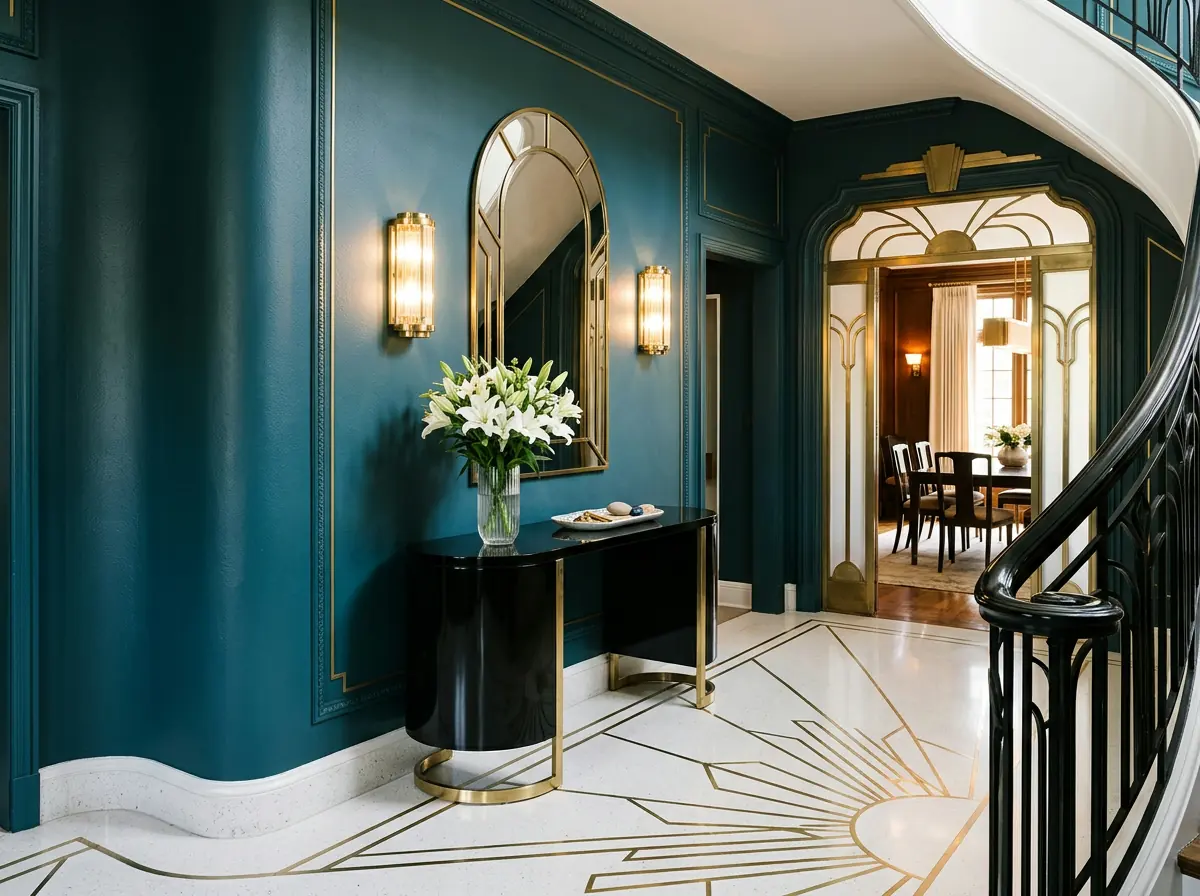
Lobbies were the showpieces of Art Deco buildings, with patterned floors, polished metal and dramatic lighting. In a house, the entry is a good place for a bold move because you pass through it rather than live in it. A terrazzo floor with a brass inlay in a sunburst or stepped pattern is the most striking option.
If a new floor is not possible, the same mood comes from the furniture: a curved black lacquered console with brass legs, a tall arched mirror and a pair of fluted glass wall sconces. Paint the walls deep teal or green and add a single vase of white flowers. In a small space, strong color feels intentional rather than heavy.
Tip: Poured terrazzo with metal inlay is a specialist job; porcelain tile with a terrazzo look gives a similar effect for less.
6. Fluted green cabinets in the kitchen
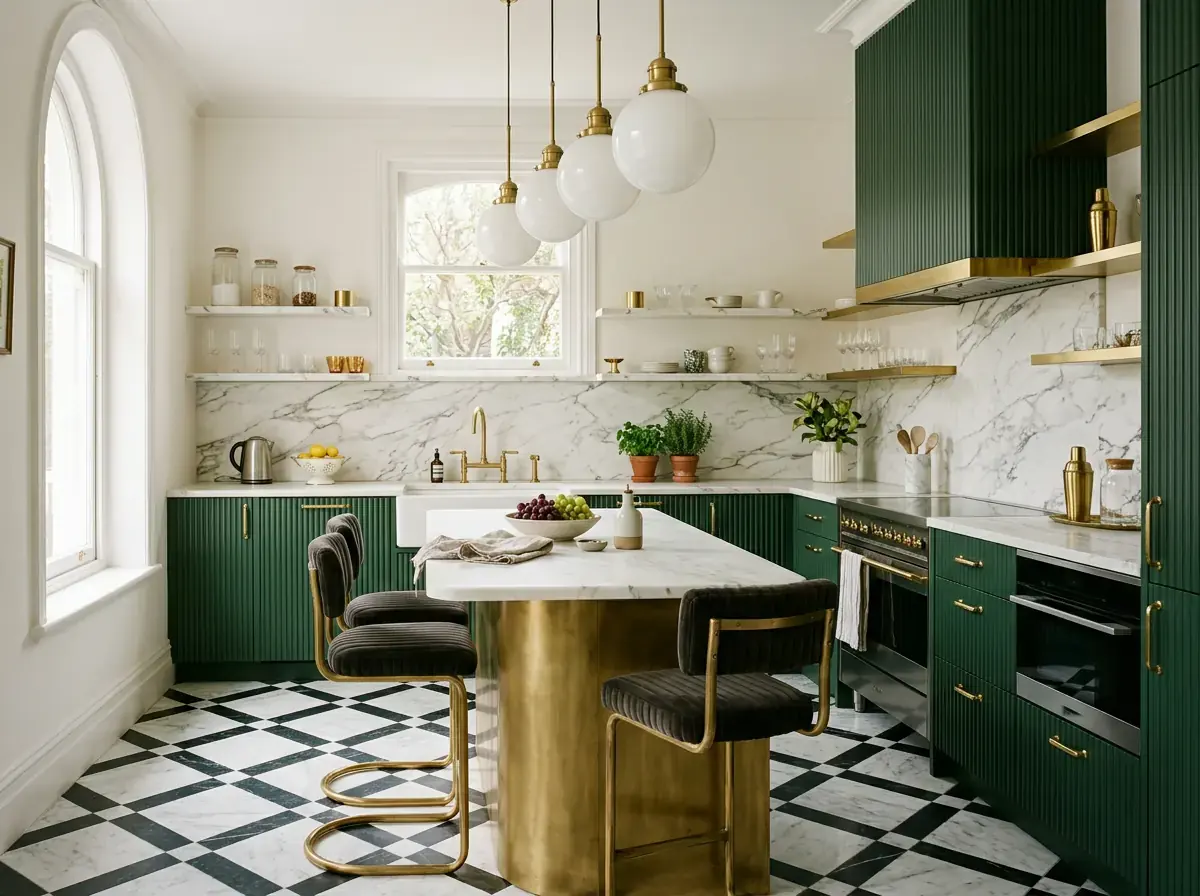
Kitchens of the 1920s and 1930s were mostly plain and practical, but the style’s details translate well to a modern kitchen. Fluted cabinet doors in deep green, polished brass handles and a white marble backsplash give a period feel, while the layout and appliances stay entirely current.
Add a row of opal glass globe pendants over the island, a black-and-white marble floor and stools with curved brass frames. An island clad in brass with a rounded end is a real statement piece; if that feels like too much, keep the brass to handles, the faucet and open shelf brackets.
Tip: Unlacquered brass darkens and spots with use; choose lacquered or PVD-coated brass if you want it to stay bright.
7. A home bar with mirror, lacquer and brass
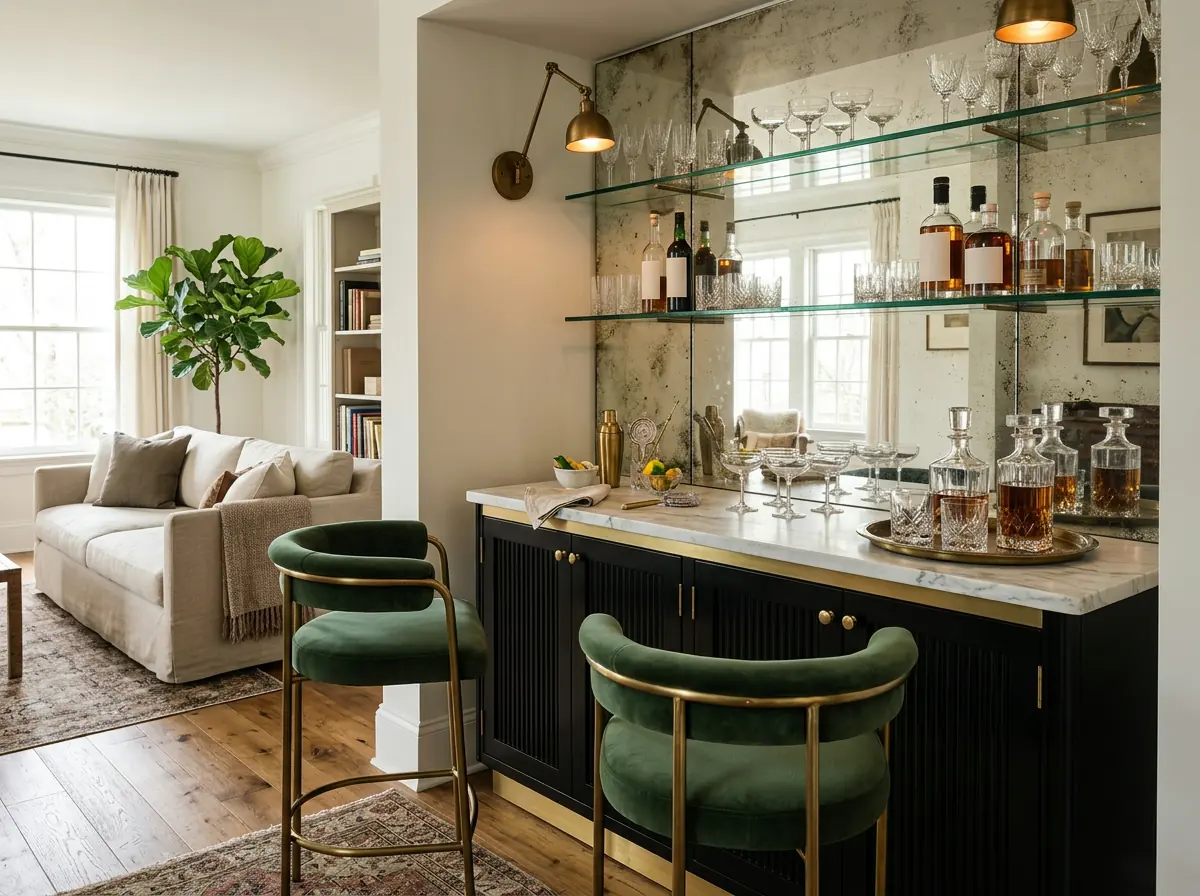
Cocktail culture, from Prohibition-era speakeasies to the bars of ocean liners, is part of the Art Deco story, and a home bar is a natural place for the style. An antiqued mirror back wall with glass shelves makes glassware and bottles sparkle, even in a small alcove off the living room.
Below, a black lacquered cabinet with fluted doors and brass trim hides bottles and gives a working surface, ideally in marble or stone. Add a brass tray with decanters and coupe glasses, a wall light for warm evening light and two curved velvet bar stools. A dining room corner, a niche or even a closet can work.
Tip: Seal a marble bar top and wipe up citrus and wine quickly, because acids can etch polished marble.
8. Modern Art Deco: one bold wall in a calm room
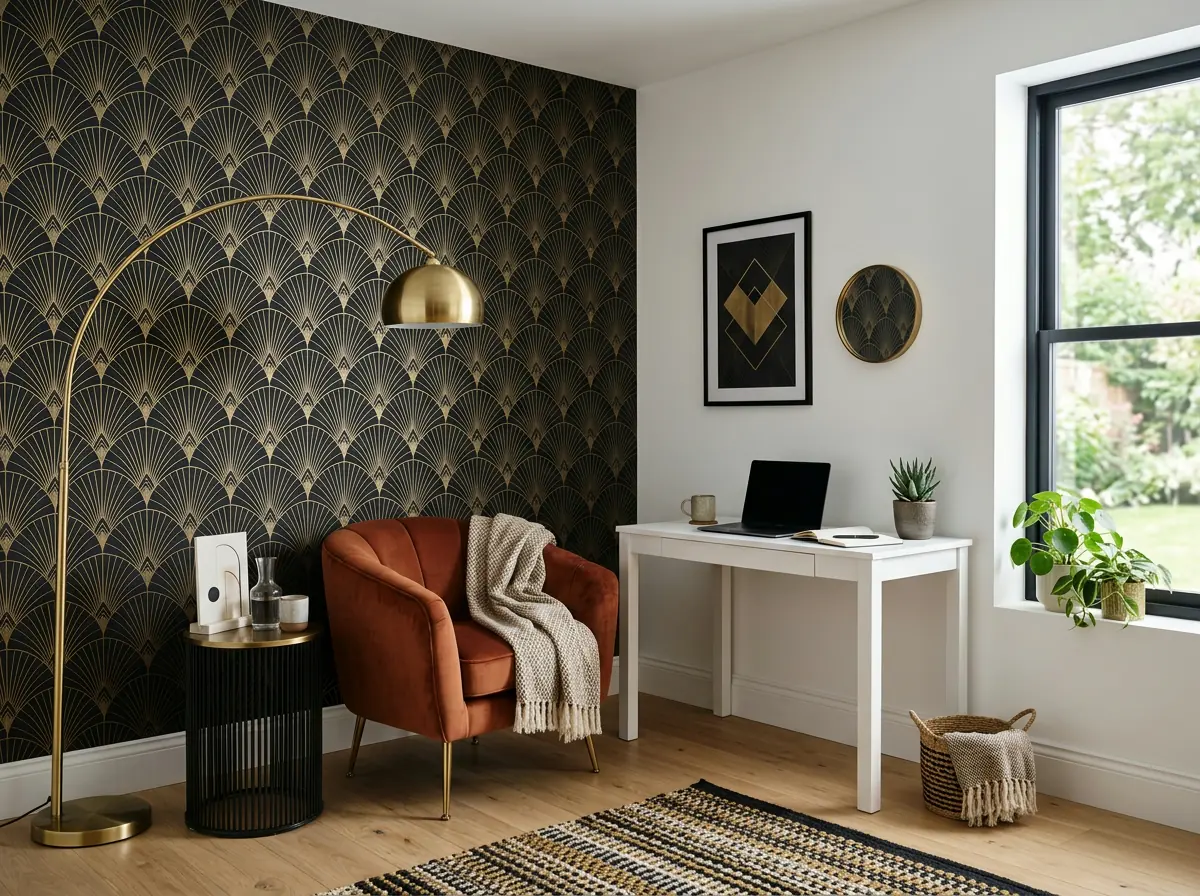
You do not need a full period room to enjoy Art Deco. A modern Art Deco interior keeps the base simple, with white walls, light wood floors and plain furniture, and brings in the style through one strong element, such as a single wall of black-and-gold fan-pattern wallpaper.
Then repeat the theme in two or three smaller pieces: a curved velvet armchair, a brass arc lamp, a fluted side table or a framed geometric print. This approach suits home offices, guest rooms and rentals, where a full makeover is not practical, and it is easy to change later.
Tip: Put bold wallpaper on the wall behind you on video calls; it adds character without you staring at it all day.
How to plan an Art Deco interior
- Pick a strong palette: one deep color such as emerald, navy or black, plus brass and cream.
- Choose two or three signature materials: velvet, lacquer, brass, mirror, marble or terrazzo.
- Repeat one geometric motif, such as fans, sunbursts or stepped shapes, in a rug, wallpaper or mirror.
- Balance curved furniture with straight lines and symmetry.
- Layer light with sconces, a statement chandelier and table lamps instead of one ceiling fixture.
- Photograph your room and try the Art Deco style on it with an AI tool before you buy furniture.
Try Art Deco on your own room
Upload a photo, choose the Art Deco style and see your room redesigned in seconds. 2 free credits, no credit card.
Redesign my roomArt Deco interior design FAQ
What makes a design Art Deco?
A design reads as Art Deco when it combines bold geometry with luxurious materials and a sense of streamlined glamour. Typical features are fans, sunbursts, chevrons and stepped shapes, symmetry, curved and fluted furniture, and materials such as lacquer, brass, chrome, mirror, marble, exotic wood veneers and velvet. The style first appeared in France in the 1910s and spread worldwide in the 1920s and 1930s.
Can you mix Art Deco with modern?
Yes, Art Deco mixes well with modern design because both value clean lines and good materials. Keep the base modern, with simple walls, floors and storage, and add Deco through a few pieces: a curved velvet sofa, a fluted side table, brass lighting, a geometric rug or one wall of patterned wallpaper. Sticking to one deep color and one metal keeps the room pulled together.
Why did Art Deco fall out of fashion?
Art Deco fell out of fashion because of the Great Depression, World War II and the rise of postwar modernism. After the 1929 crash, lavish materials and ornament were harder to justify, the war stopped most building and luxury production, and after 1945 architects and designers turned to plainer modernist designs that rejected decoration. Interest returned in the late 1960s, when the name Art Deco came into wide use.
Can I see my own room in Art Deco style?
Yes. Upload a photo of your room to EasyInterior’s AI interior design tool, choose the Art Deco style and you see the same room redesigned in seconds. Try a few color palettes, such as emerald and brass or black and gold, before you commit to paint or furniture.