FRONT YARD IDEAS
Front yard landscaping ideas: 8 looks to try before you dig
Published · EasyInterior
Your front yard is the first thing people see, and it is also the part of the garden most people leave alone: a strip of lawn, a straight path and a few shrubs pushed against the house. Small changes such as a curved path, deeper beds or one tree in the right place change curb appeal more than a new paint color.
Below are eight front yard landscaping ideas for different houses, climates and budgets. Each one covers what it needs, how much upkeep it takes and the mistakes to avoid. First, two before-and-after redesigns of ordinary front yards.
Before and after: two typical front yards redesigned
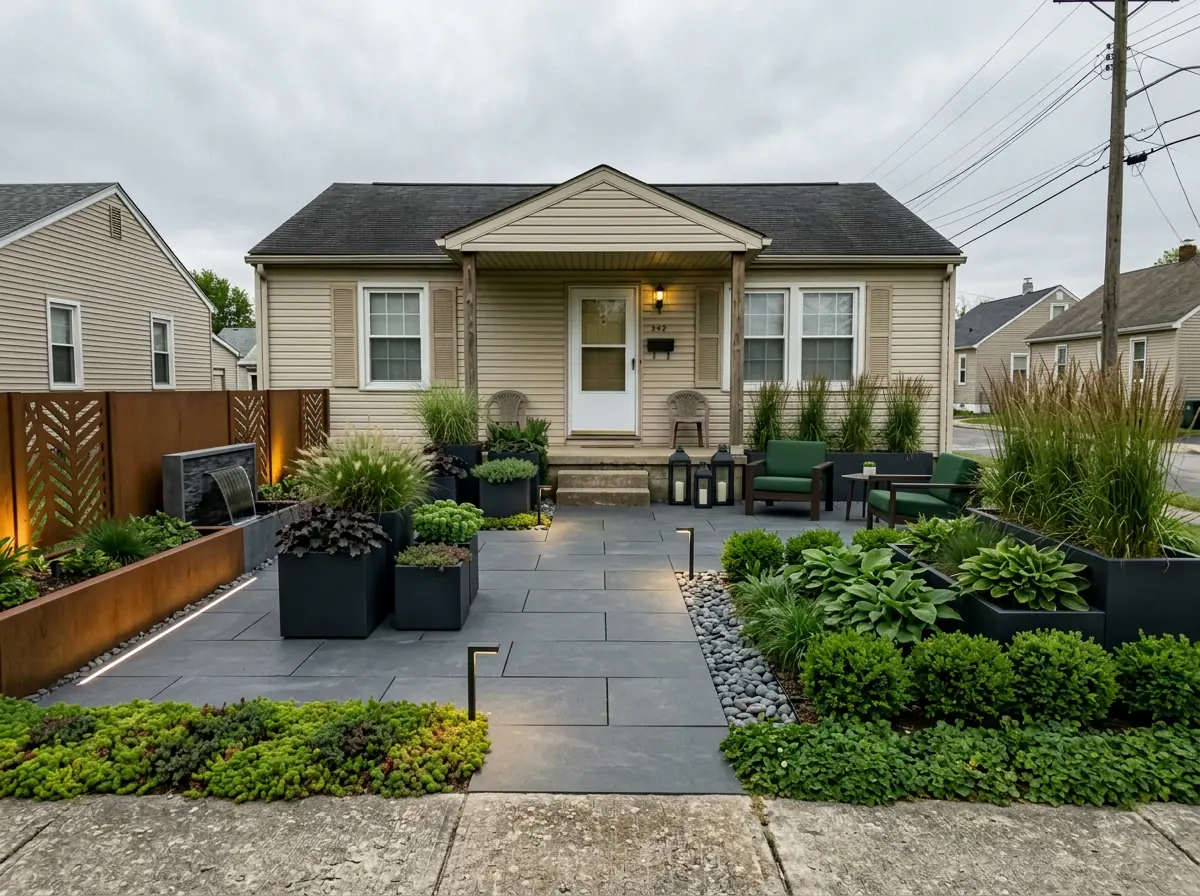
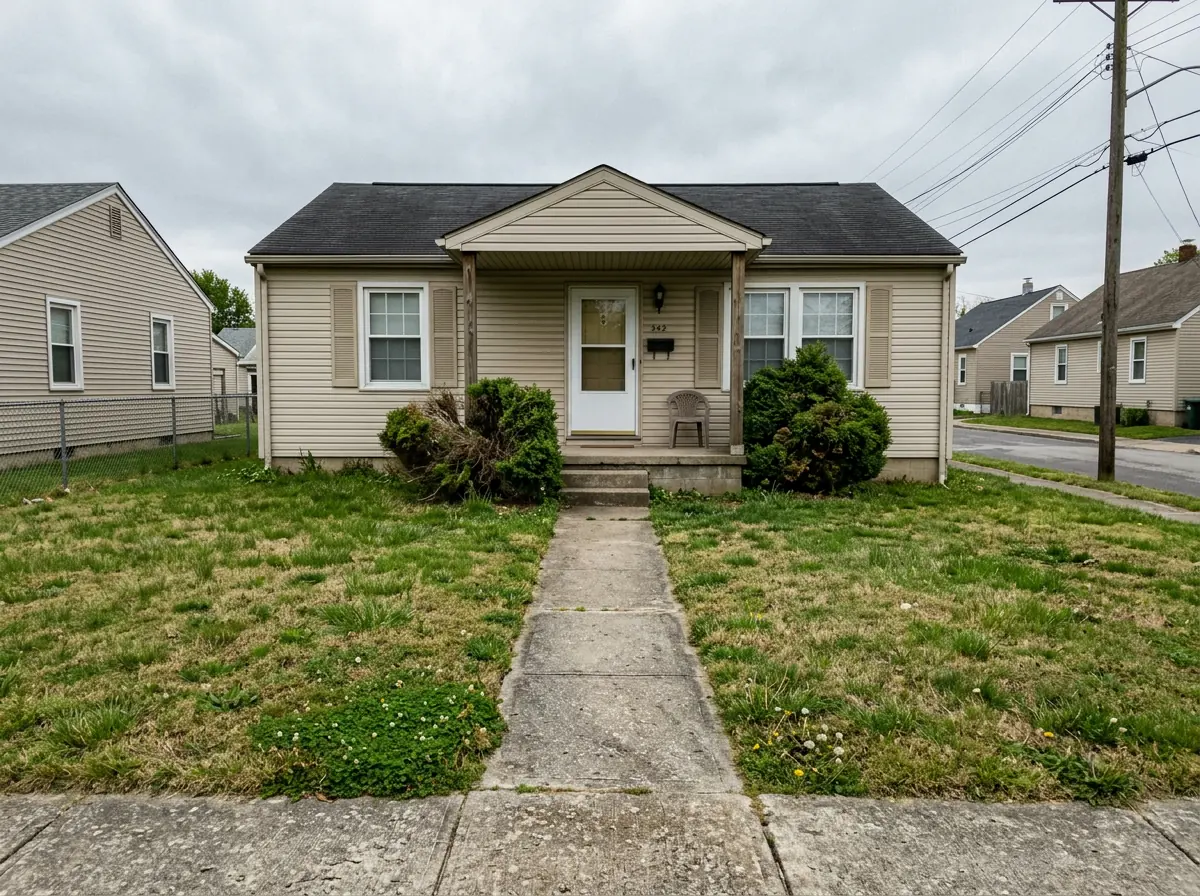
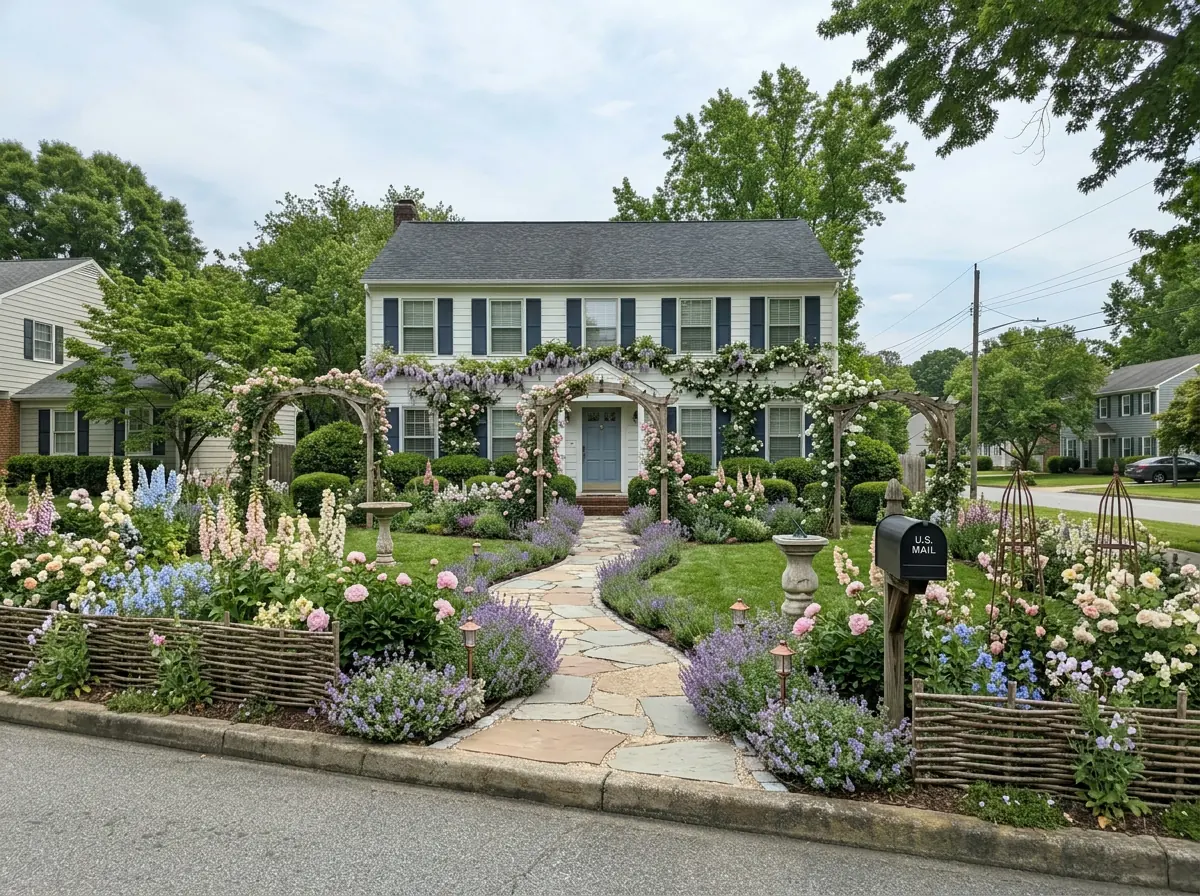
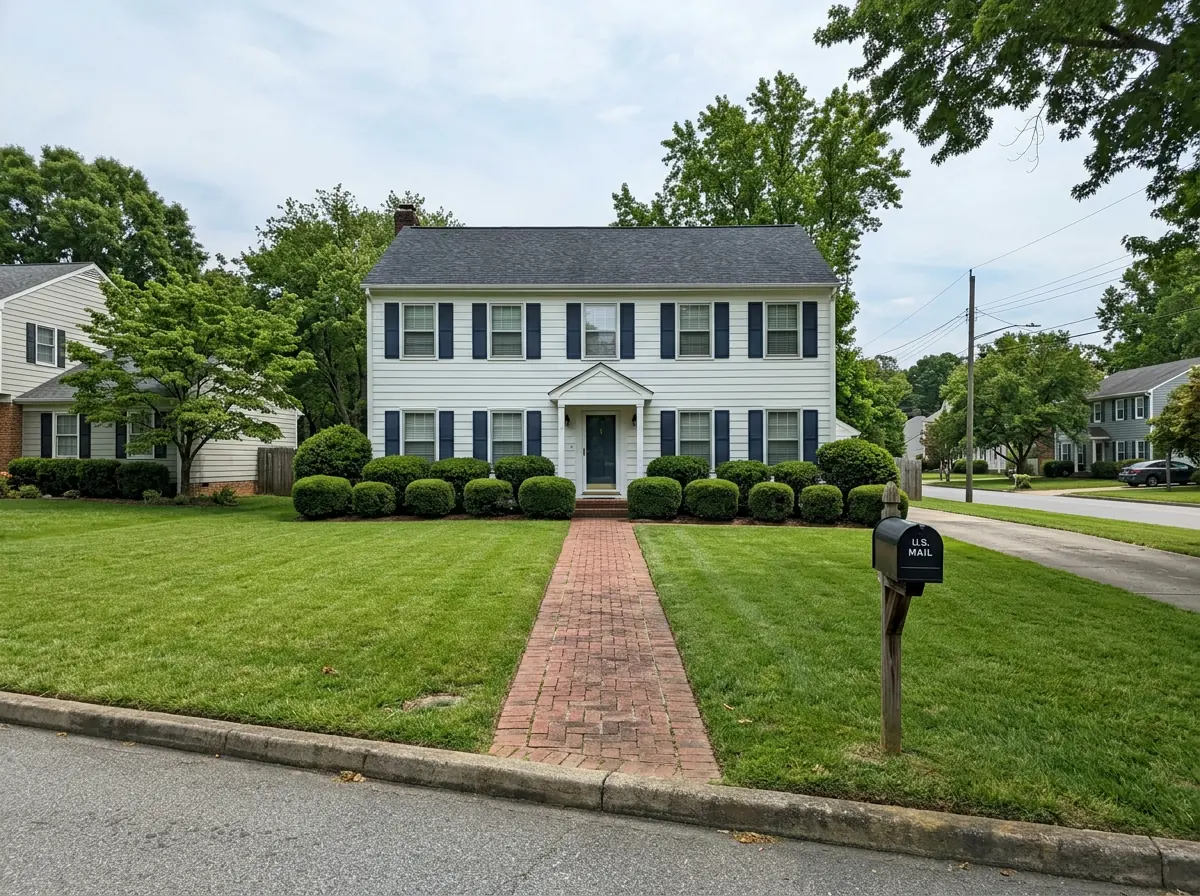
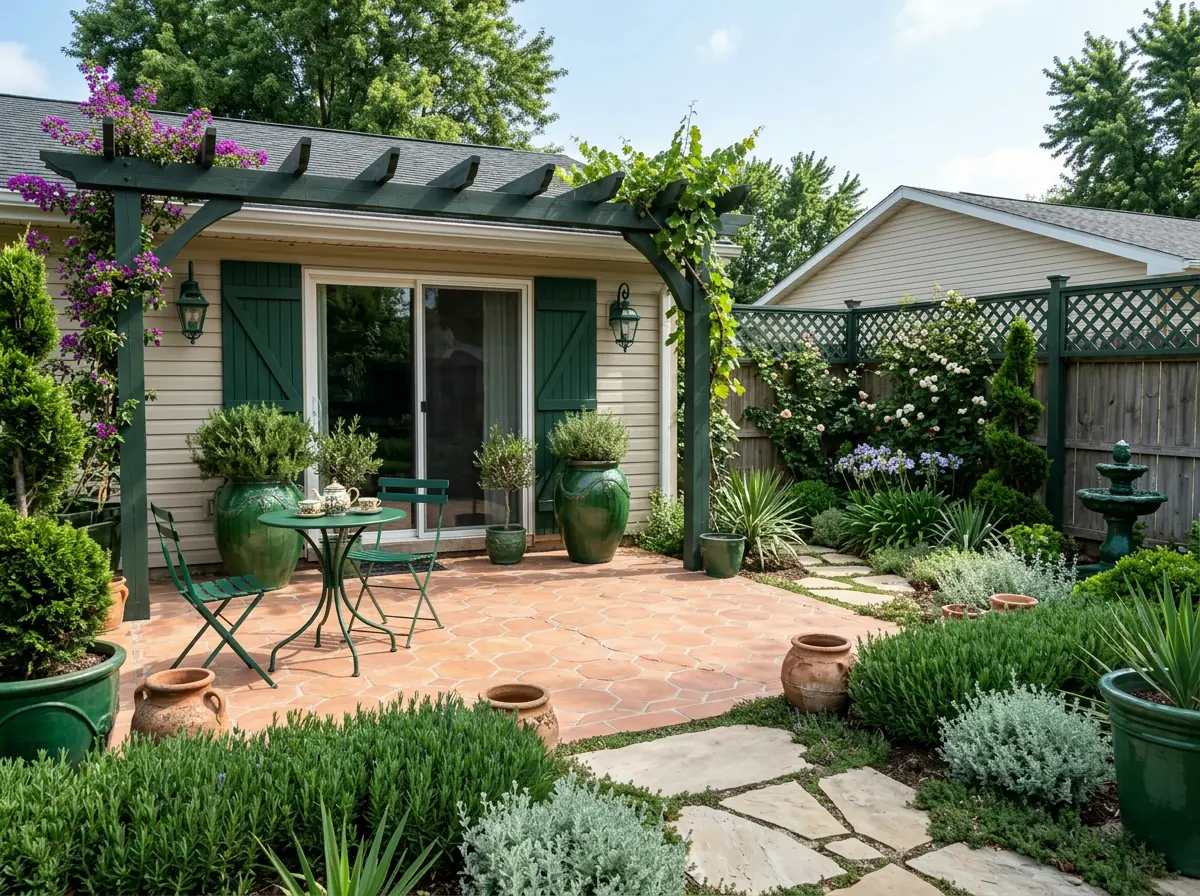
All images in this article were generated with AI. The “before” photos are AI-generated examples of typical front yards; the “after” images were made from them with the same prompt EasyInterior’s garden tool uses. The other images illustrate ideas and are not photos of real projects.
8 front yard landscaping ideas
1. Modern gravel and pavers
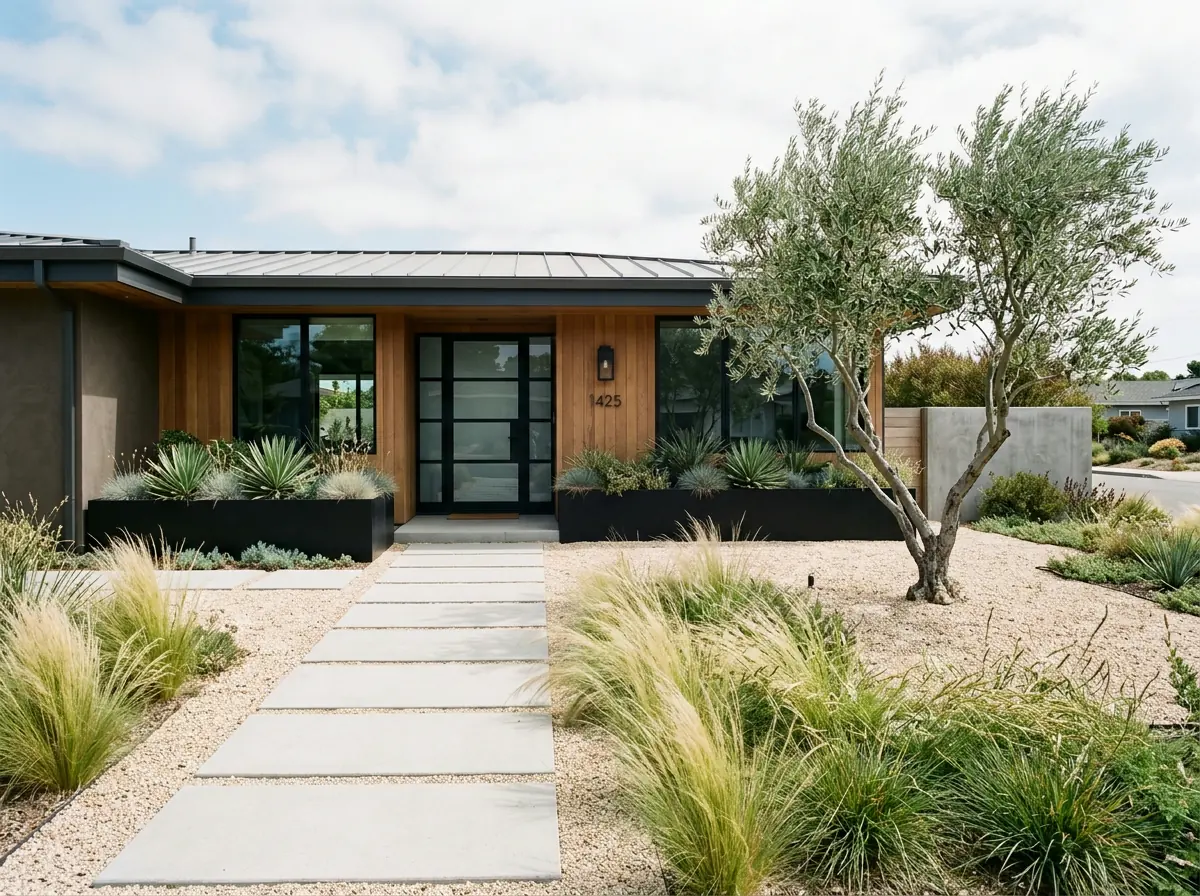
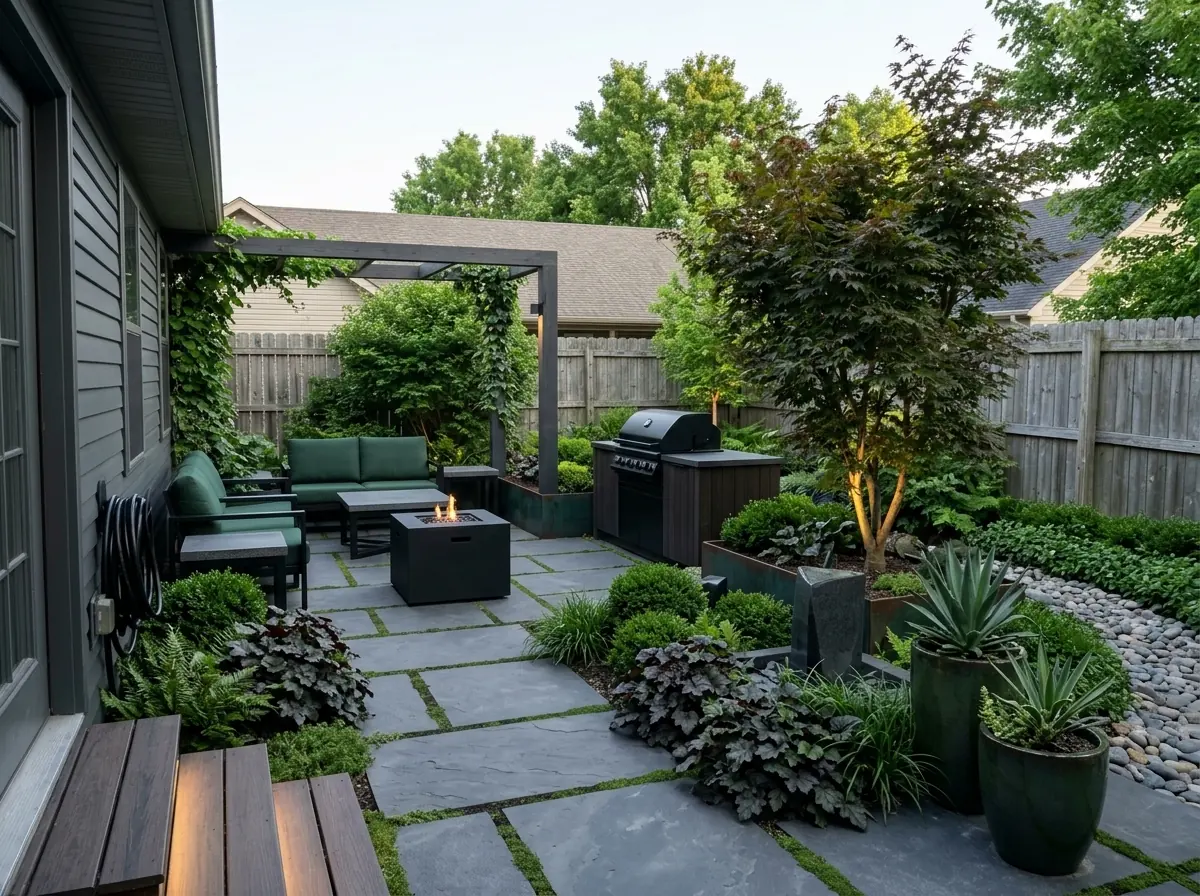
Large rectangular pavers set in gravel give a front yard clean lines and very little lawn to mow. Repeat one or two grasses, such as feather reed grass, Mexican feather grass or blue fescue, in drifts and add a single multi-stem tree as a focal point.
This look works best with contemporary, mid-century and ranch houses. Keep the palette to two or three materials: concrete, gravel and dark steel or wood.
Tip: Lay landscape fabric under gravel only where nothing will be planted; grasses need open soil to spread.
2. Cottage borders and a picket fence
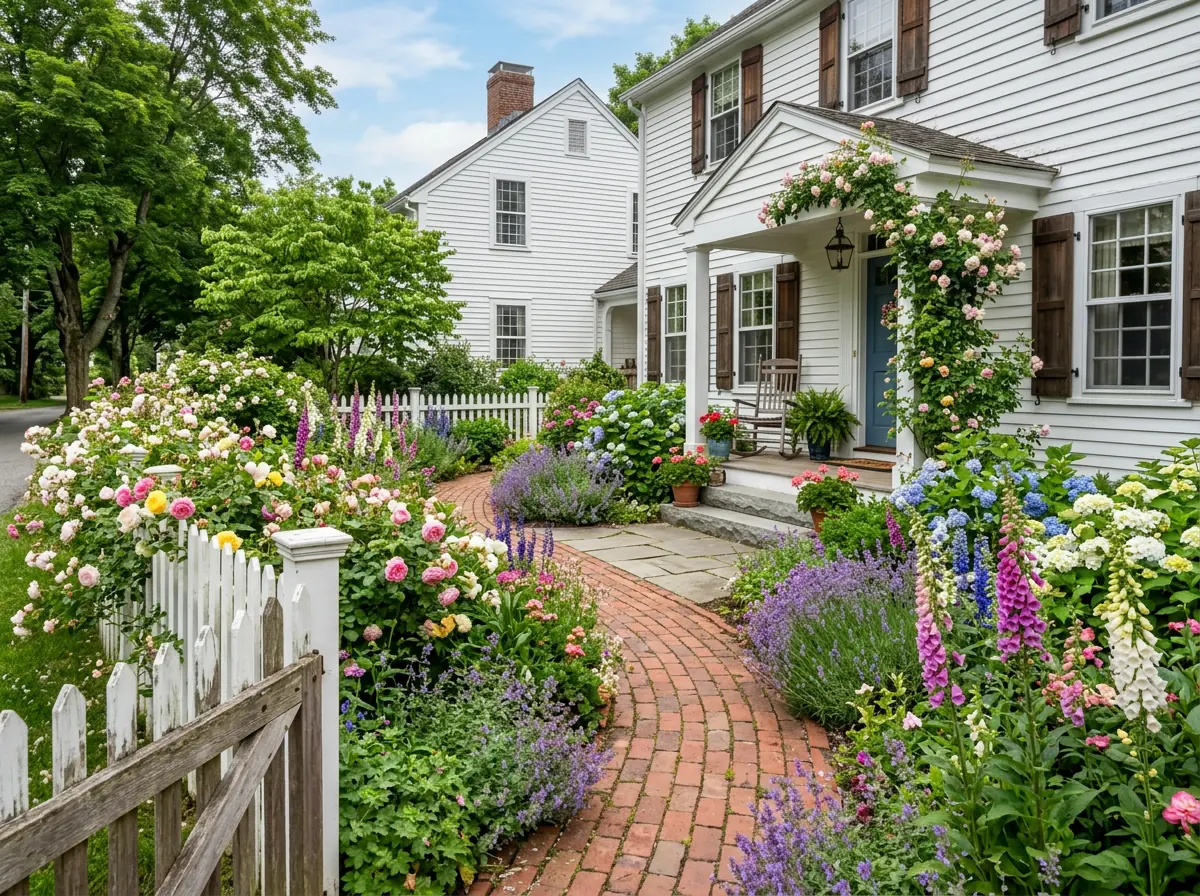
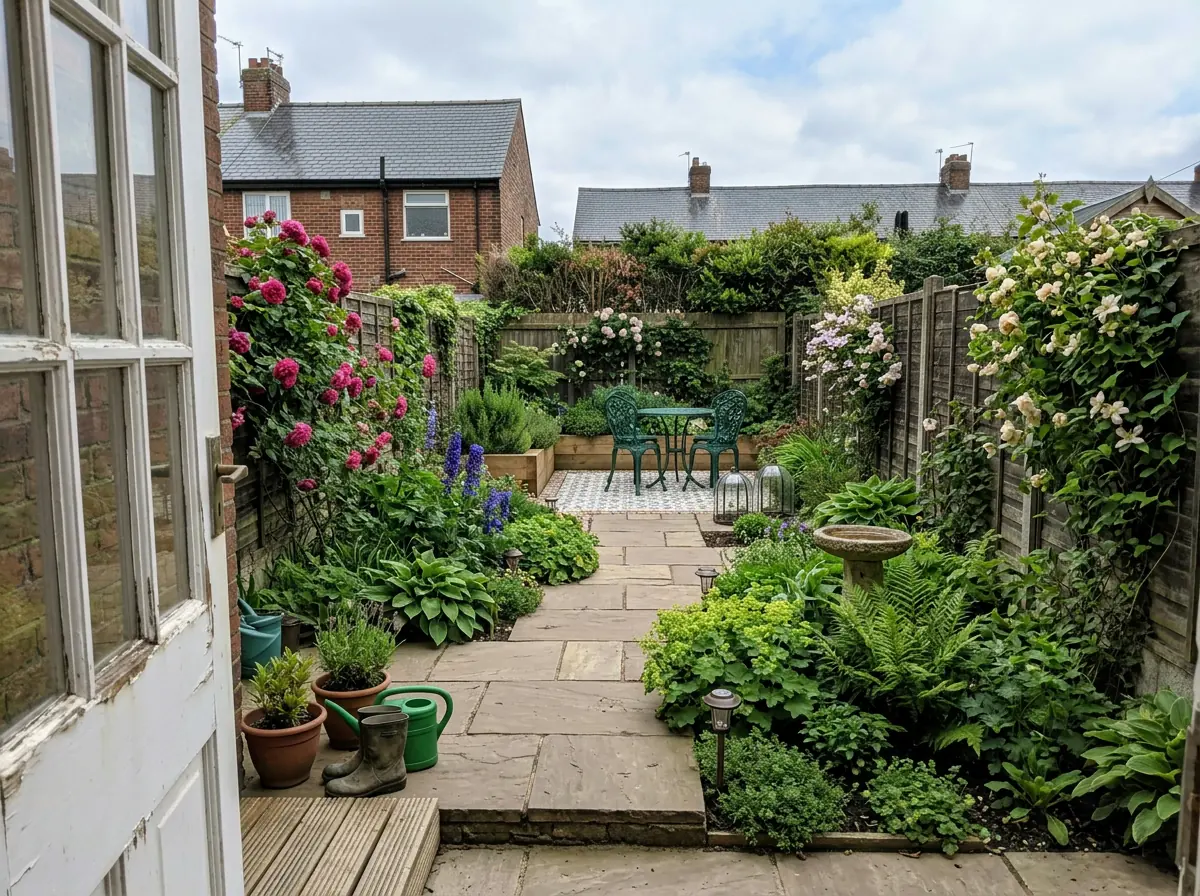
A cottage front garden swaps most of the lawn for deep, layered borders: roses and hydrangeas at the back, lavender, catmint and foxgloves in front, and something spilling over the path edge.
It suits older houses, porches and picket fences, and it is forgiving because plants are meant to look crowded. Plan for color from spring to fall by mixing bulbs, early perennials and late bloomers such as asters.
Tip: Make borders at least 4 feet (1.2 m) deep. Narrow beds along a fence never look full.
3. Drought-tolerant xeriscape
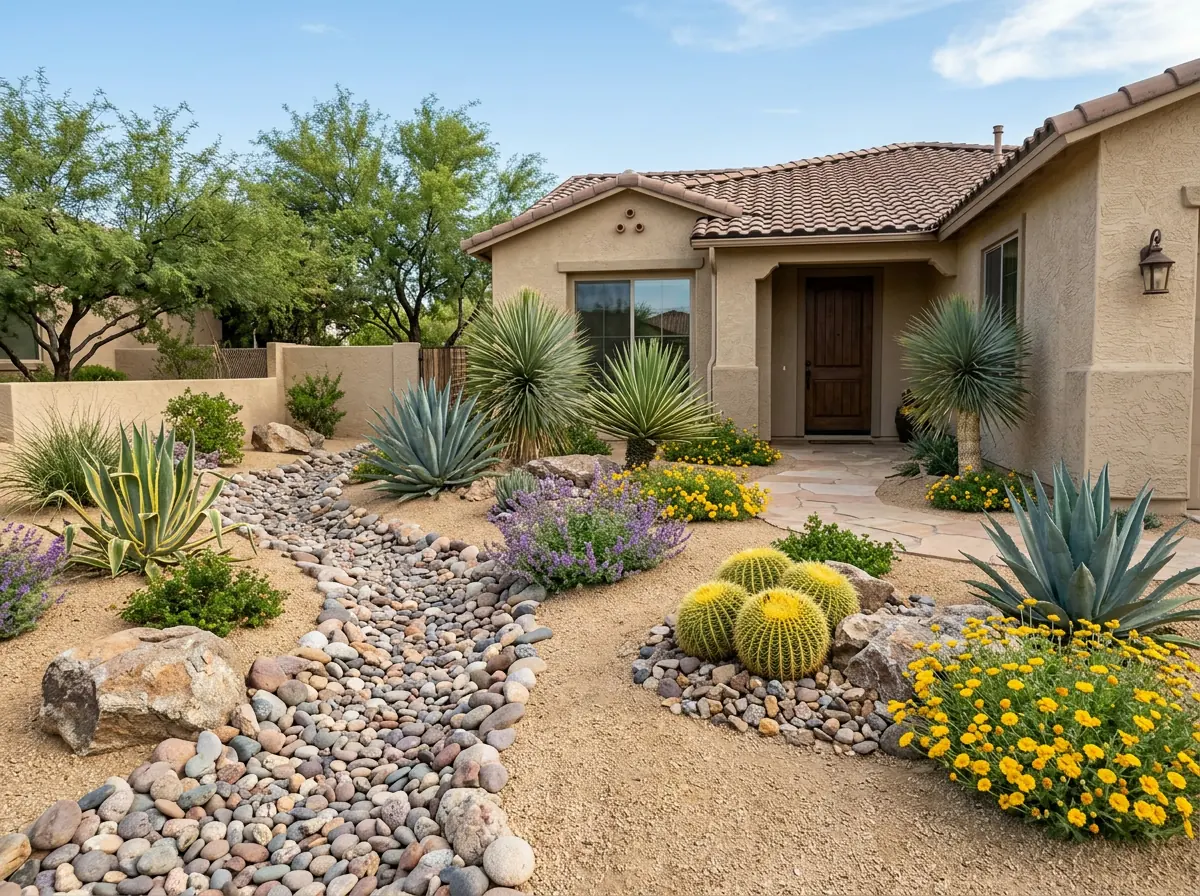
In dry climates a lawn is expensive to keep green. A xeriscape replaces it with decomposed granite or gravel, a few boulders and plants that need little water once established: agave, yucca, salvia, desert marigold and native grasses.
A dry creek bed of river rock adds structure and handles the occasional heavy rain. Group plants by water needs so drip irrigation can be zoned.
Tip: Check with your city or water district: many offer rebates for replacing turf with water-wise planting.
4. A curving path through layered beds
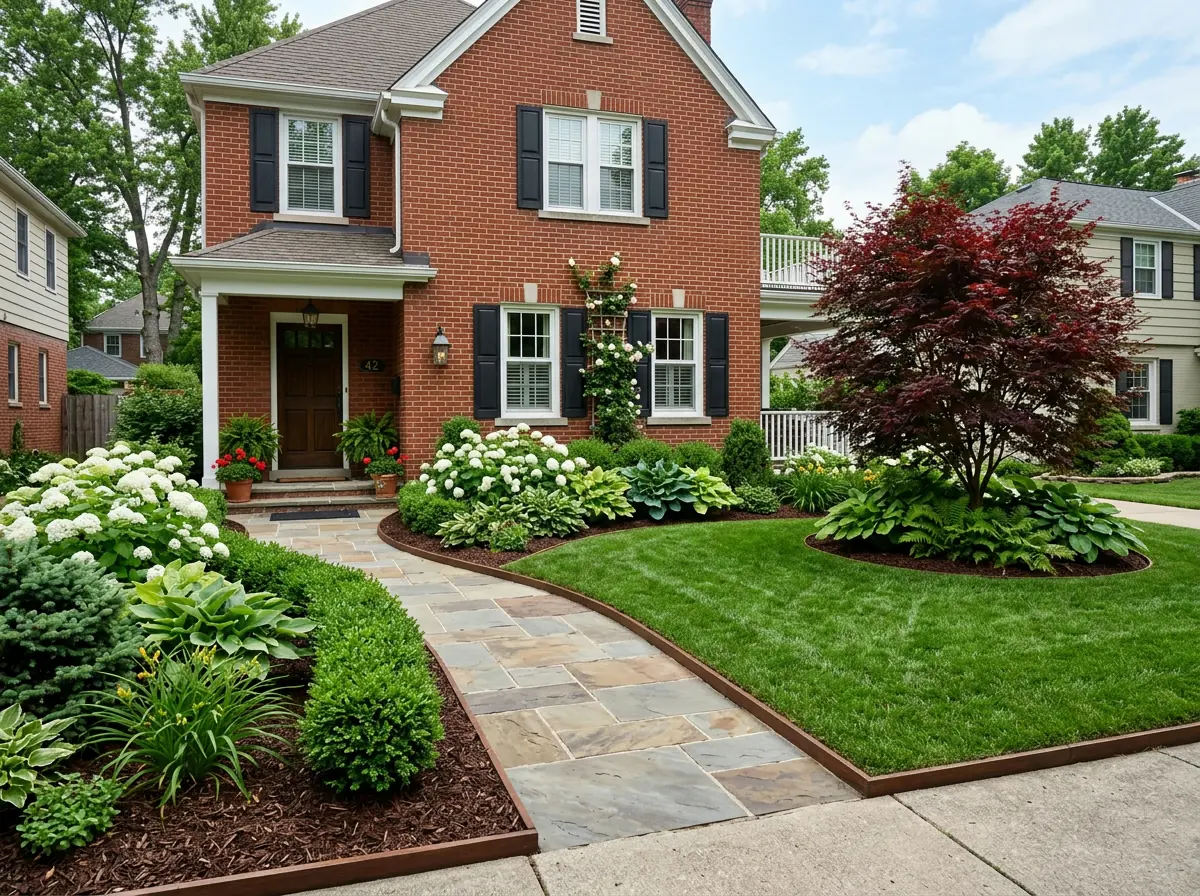
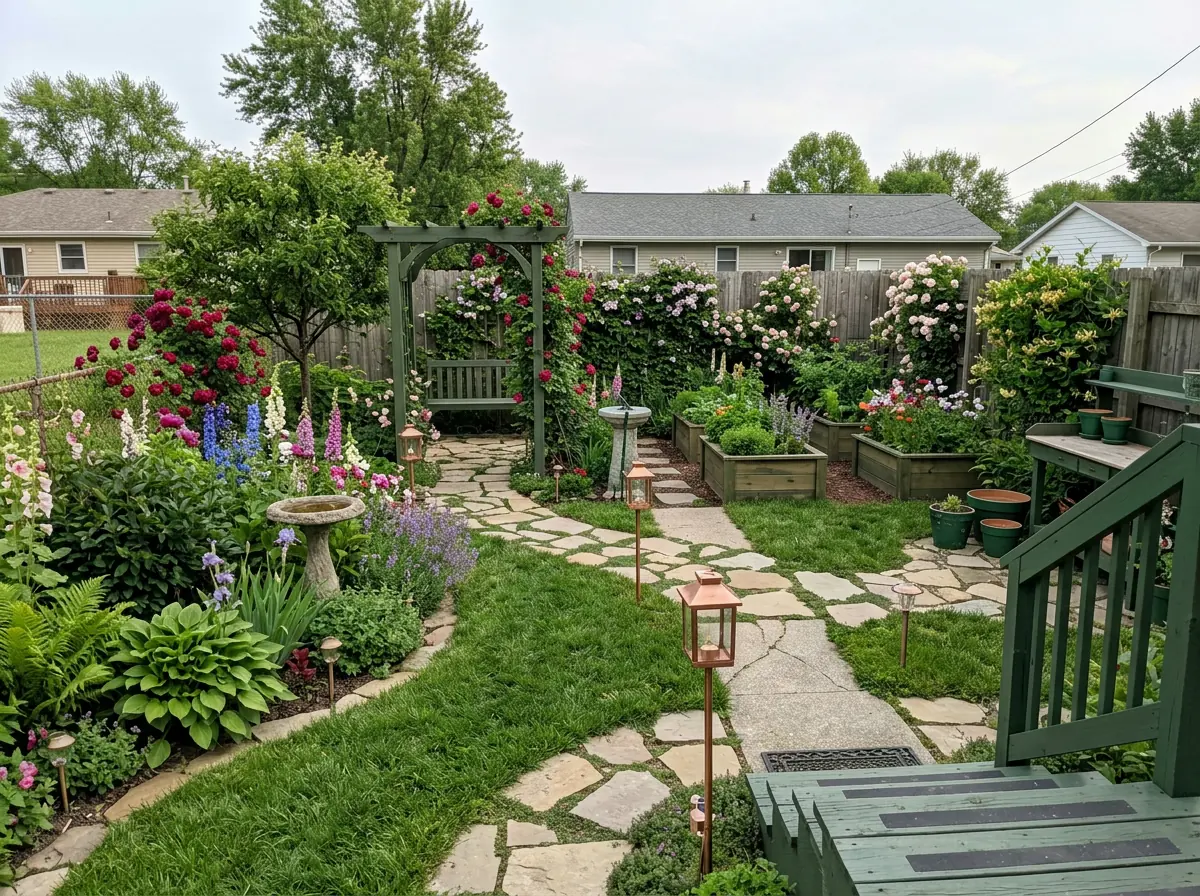
Replacing a straight concrete walk with a gently curving path is one of the most effective front yard upgrades. The curve slows the eye, creates planting pockets on both sides and makes even a small yard feel designed.
Layer the beds in three heights: low edging (boxwood, liriope or catmint), a middle layer of shrubs and perennials, and one small tree. Fresh dark mulch and a crisp lawn edge make everything look finished.
Tip: Keep the path at least 4 feet wide near the door so two people can walk side by side.
5. Raised planters for a small front yard
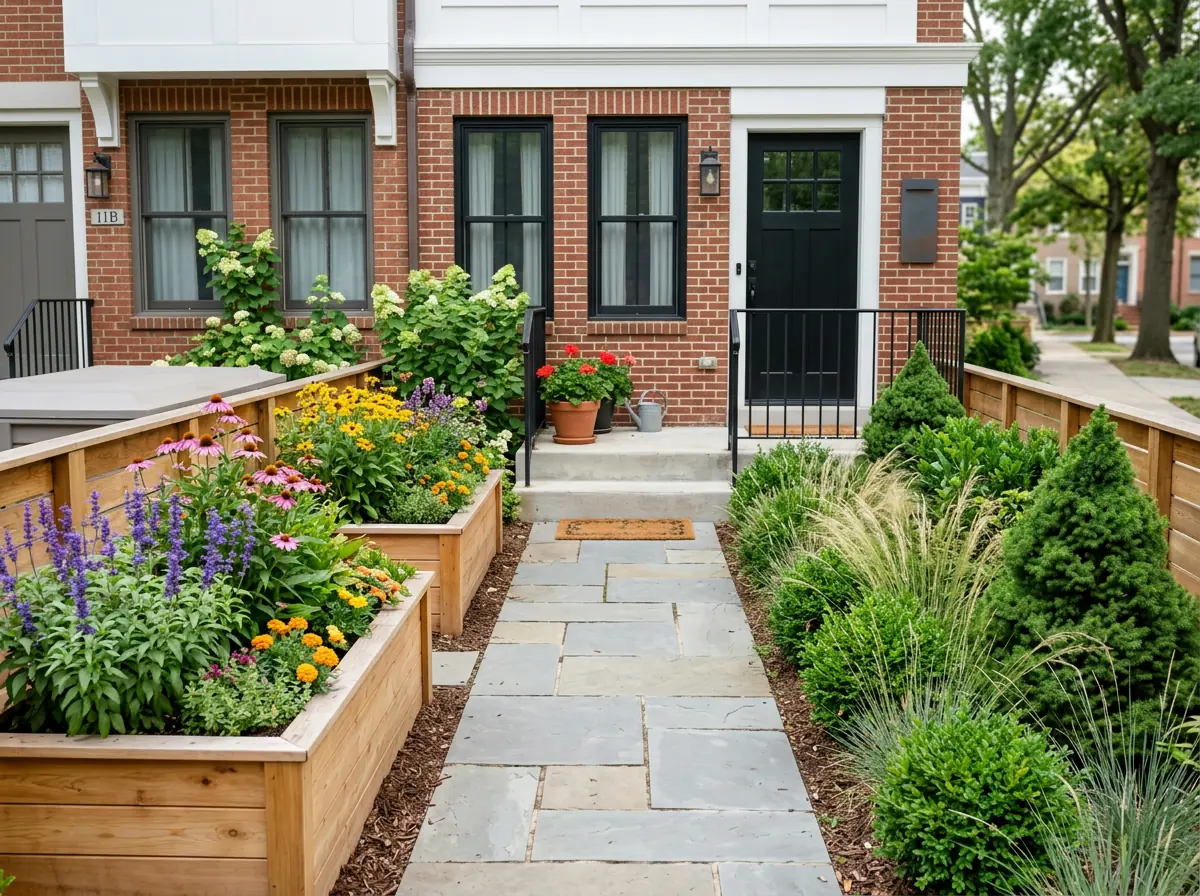
Townhouses and row houses often have only a few square meters in front. Raised planters define the space, hide utility boxes and bring plants closer to eye level. Cedar, Corten steel or rendered block all work.
Choose compact plants that stay interesting all year: dwarf conifers, boxwood balls, heuchera, grasses and seasonal annuals for color.
Tip: Leave a gap between planter and house wall to keep moisture away from the siding.
6. Japanese-inspired calm
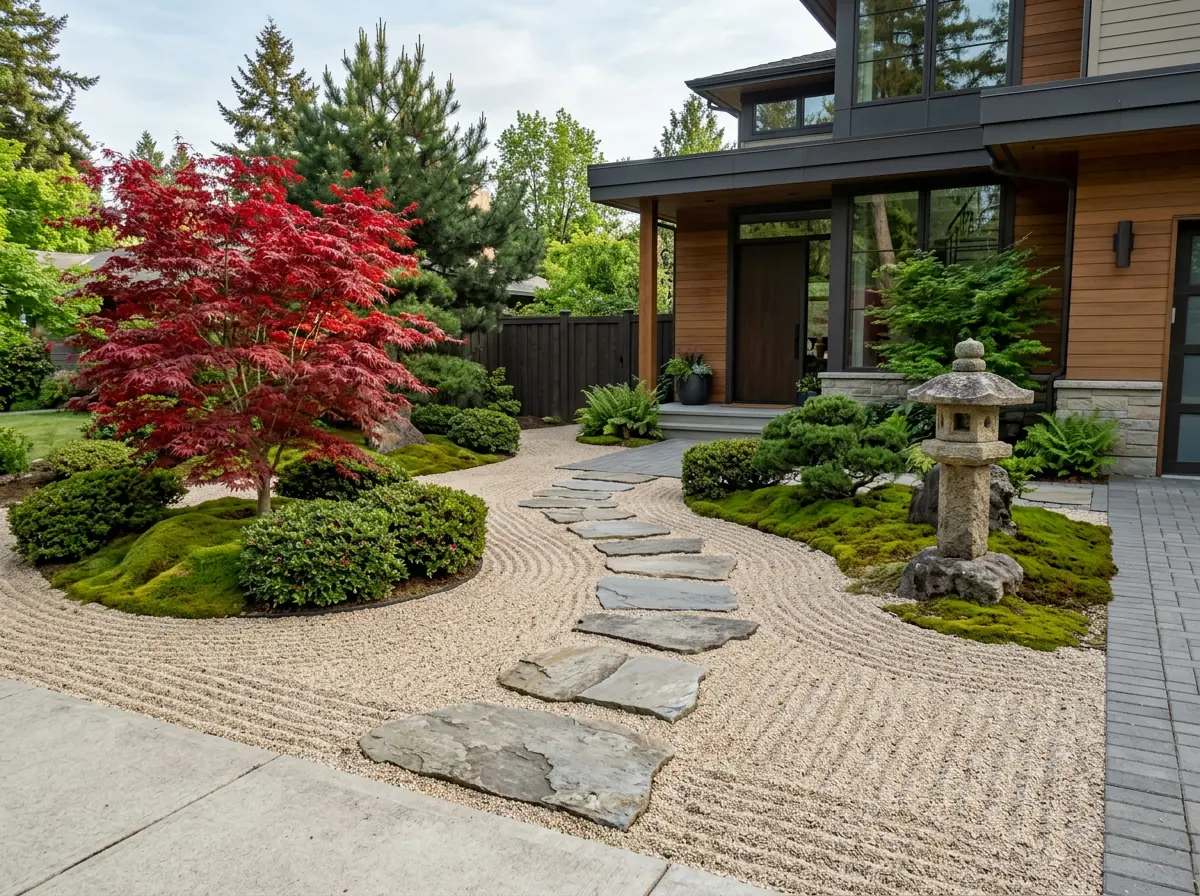
A Japanese-inspired front yard relies on restraint: raked gravel, moss or low ground cover, a few carefully placed stones and one star plant such as a Japanese maple. Stepping stones set slightly apart slow the walk to the door.
There is no mowing, but gravel and fallen leaves need regular tidying to keep the calm look.
Tip: Use an odd number of feature rocks and bury about a third of each one so they look natural.
7. Formal and symmetrical
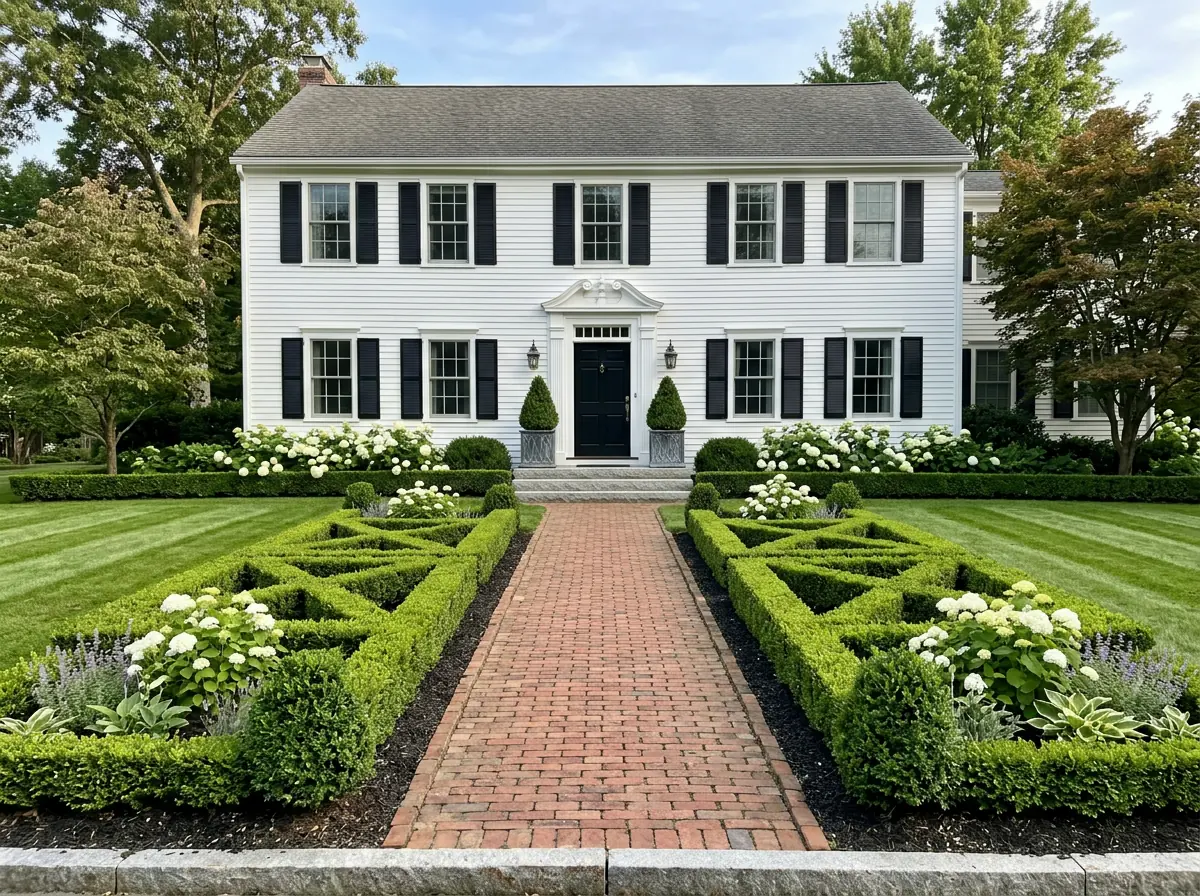
Symmetrical houses, such as colonial and Georgian styles or many new builds, look best with a symmetrical front yard: a straight path to the door with matching beds, clipped boxwood or yew, and a pair of planters at the steps.
The look depends on regular clipping. If you do not want to trim twice a year, use naturally compact shrubs and repeat them instead of shaping them.
Tip: White flowers such as hydrangeas, roses and alliums keep a formal garden crisp and work with any house color.
8. Replace the lawn with a native meadow
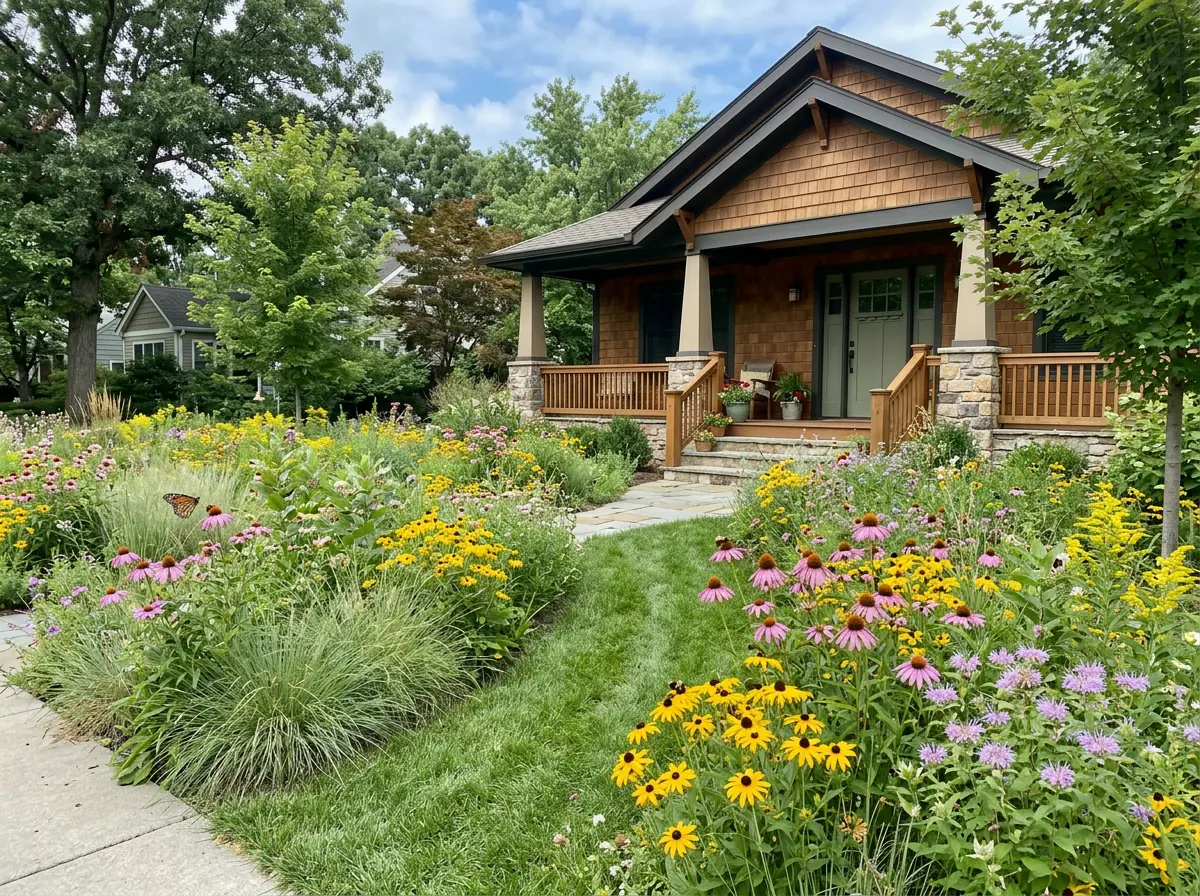
A native meadow front yard uses less water, needs mowing about once a year and supports bees and butterflies. Coneflowers, black-eyed Susans, bee balm and native grasses like little bluestem are reliable in much of the US.
A mown path and a neat edge along the sidewalk show that the meadow is intentional, which matters to neighbors and homeowner associations.
Tip: Check HOA and city rules on plant height before you stop mowing.
How to plan your front yard makeover
- Measure the yard and note sun and shade at different times of day.
- Decide what must stay: driveway, utilities, mature trees and the path to the door.
- Pick one style that matches your house and stick to two or three hardscape materials.
- Choose plants for your hardiness zone and group them by water needs.
- Take a photo from the street and try a few styles on it with an AI tool before you buy anything.
- Phase the work: hardscape and soil first, trees and shrubs next, perennials last.
Try these ideas on your own front yard
Upload a photo, choose a garden style and see your yard redesigned in seconds. 2 free credits, no credit card.
Design my front yardFront yard landscaping FAQ
What is the cheapest way to landscape a front yard?
Work with what you have: reshape bed edges, add a thick layer of mulch, divide existing perennials and plant small, young shrubs instead of large ones. Gravel and a few drought-tolerant plants usually cost less than new sod and irrigation.
How do I make my front yard look better fast?
Edge the lawn, refresh the mulch, prune overgrown shrubs away from windows, add two matching planters by the door and improve the path lighting. These steps take a weekend and change curb appeal right away.
Which front yard style needs the least maintenance?
A xeriscape or a modern gravel garden with a few grasses needs the least water and no mowing. A native meadow needs one cut a year but takes a season or two to establish.
Can I see these landscaping ideas on my own house?
Yes. Upload a photo of your front yard to EasyInterior’s AI landscape design tool, pick a garden style and you get a redesigned version of the same yard in seconds. Use it to compare styles before you hire a landscaper or buy plants.