FIRE PIT IDEAS
Fire pit ideas: 8 backyard designs to gather around
Published · EasyInterior
The best fire pit ideas start with the seating, not the fire pit itself. A fire pit area works when everyone can sit at a comfortable distance from the flames, the surface underneath cannot burn and there is plenty of space between the fire and the house, fences and trees. Get those right and the pit can be anything from a simple steel bowl to a built-in stone ring.
The eight backyard fire pit ideas below cover different builds and settings: sunken, gravel, Adirondack and seat-wall designs, a gas fire table for a deck, string lights overhead, a terrace on a slope and a portable bowl for a small yard. Each comes with a practical tip. First, the before-and-after just below: a rusty fire bowl on a scorched lawn redesigned as a modern outdoor living area.
Before and after: from a scorched lawn to a fire pit area
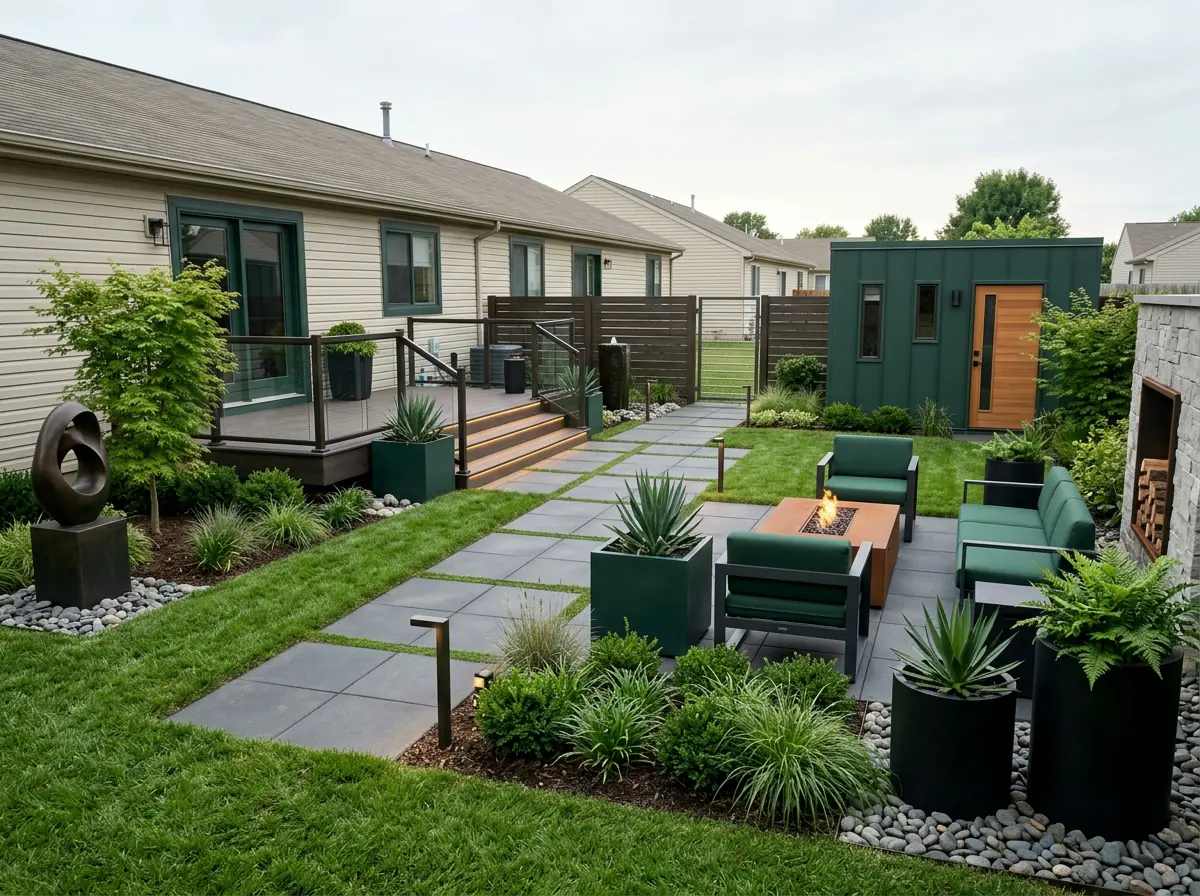
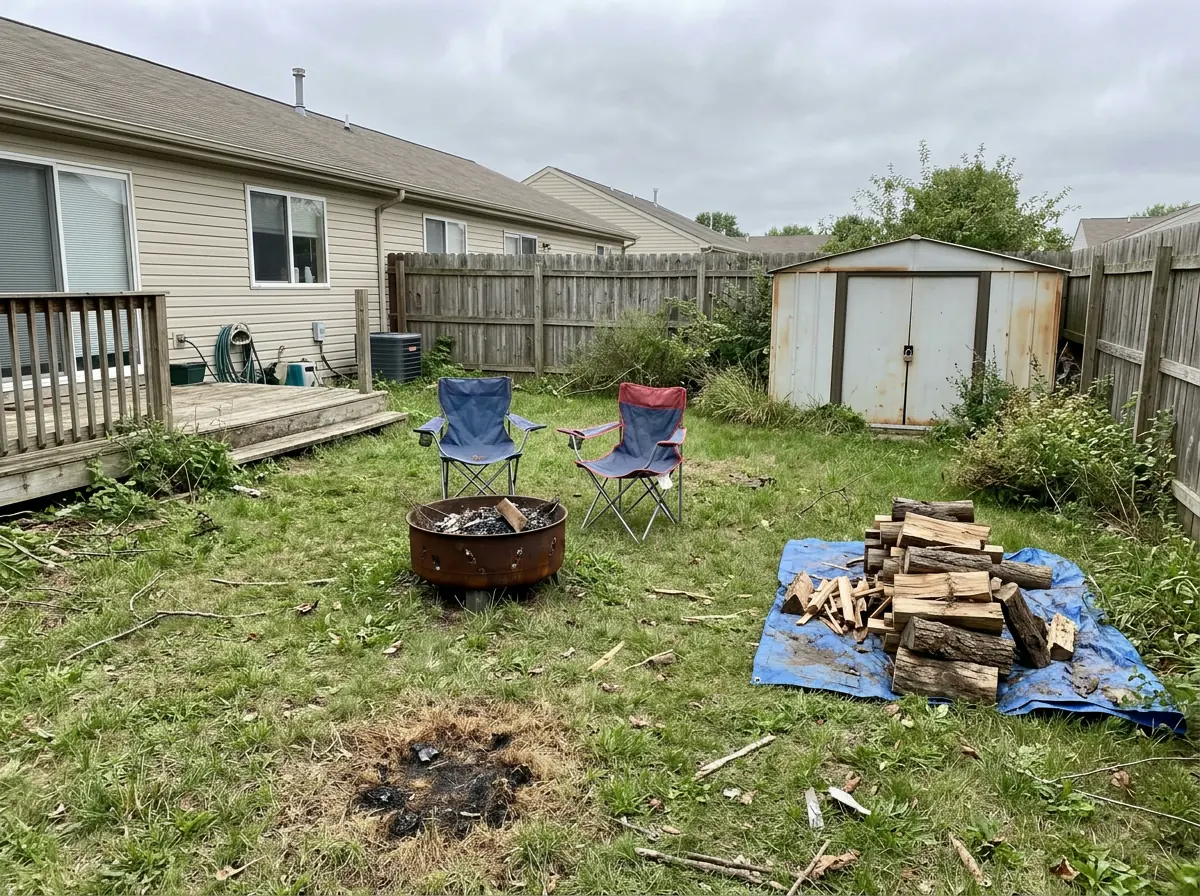
All images in this article were generated with AI. The “before” photo is an AI-generated example of a typical backyard; the “after” image was made from it with the same prompt EasyInterior’s garden tool uses. The other images illustrate ideas and are not photos of real gardens.
8 fire pit ideas
1. A sunken fire pit with a built-in bench
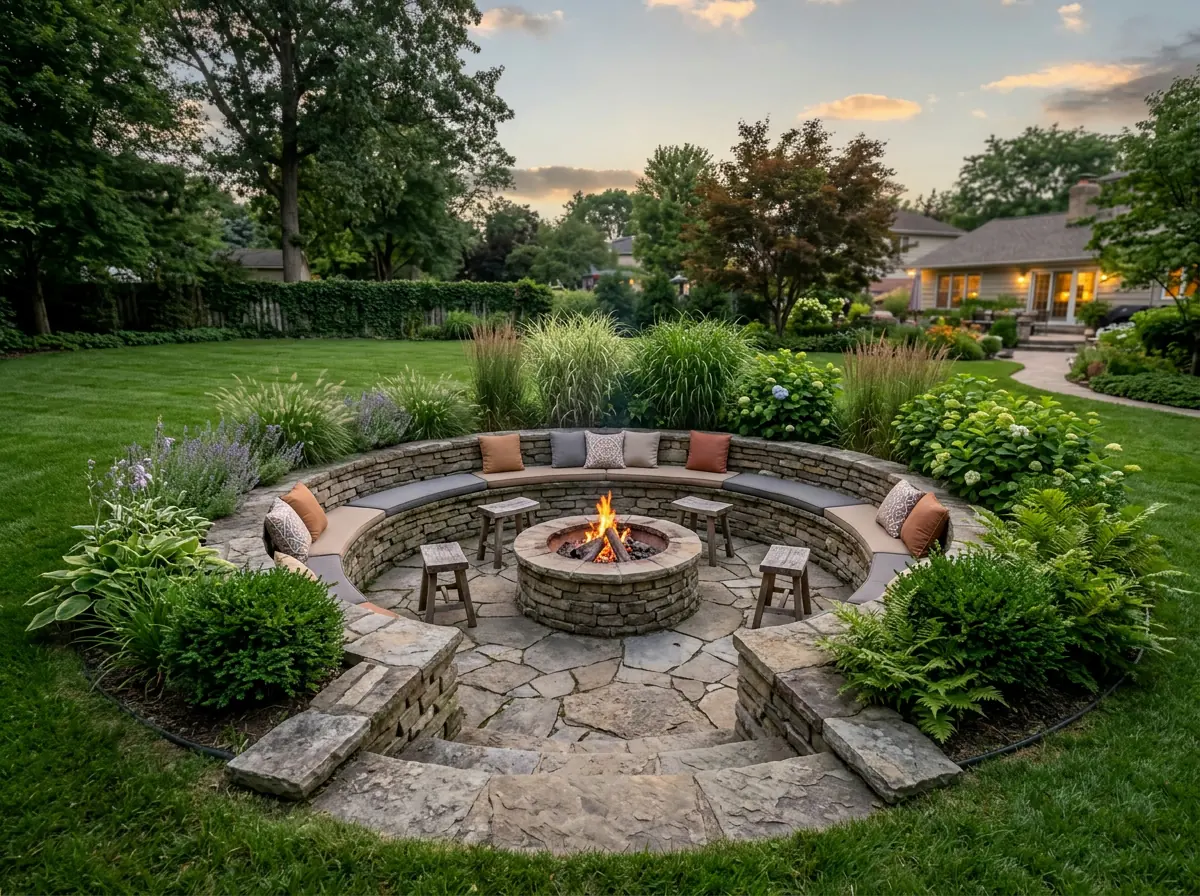
A sunken fire pit area, set a couple of feet below the lawn, feels sheltered and intimate. The retaining wall around it becomes one continuous curved bench, and the higher ground around it blocks the wind. Flagstone underfoot, a round stone fire pit in the middle and a few wide steps down from the lawn complete the design.
Because it sits below grade, a sunken area collects rainwater, so drainage has to be planned from the start, usually with a gravel base and a drain or outlet at the low point. Plant grasses and shrubs along the top edge to soften the wall, and keep the steps wide and easy to see in the dark.
Tip: Call 811 a few days before you dig so underground utility lines are marked; the service is free in the US.
2. A gravel patio fire pit
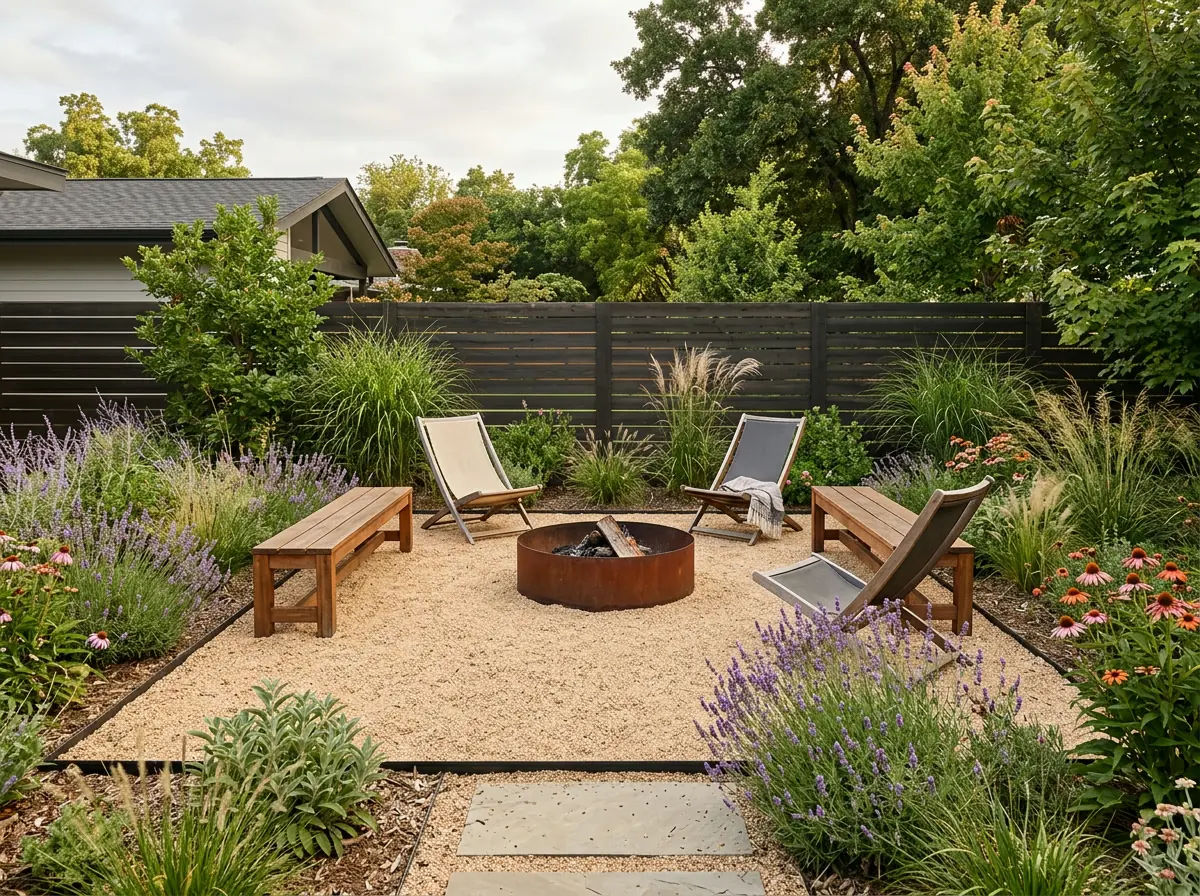
Gravel is one of the simplest and least expensive surfaces for a fire pit area: it does not burn, it drains well and it can be laid in a weekend. A rectangular gravel patio with thin steel edging looks crisp and modern, and a low weathering-steel fire ring suits the style. Backless benches let people face the fire or turn toward the garden.
For a firm surface that chair legs will not sink into, use crushed angular gravel or decomposed granite rather than round pea gravel. Spread it a few inches deep over a compacted base and edge it so it stays in place. Lavender, grasses and coneflowers around the edge like the same sunny, well-drained spot.
Tip: Keep plants and benches several feet back from the fire ring, so stray sparks land on gravel instead of dry leaves.
3. An Adirondack chair circle
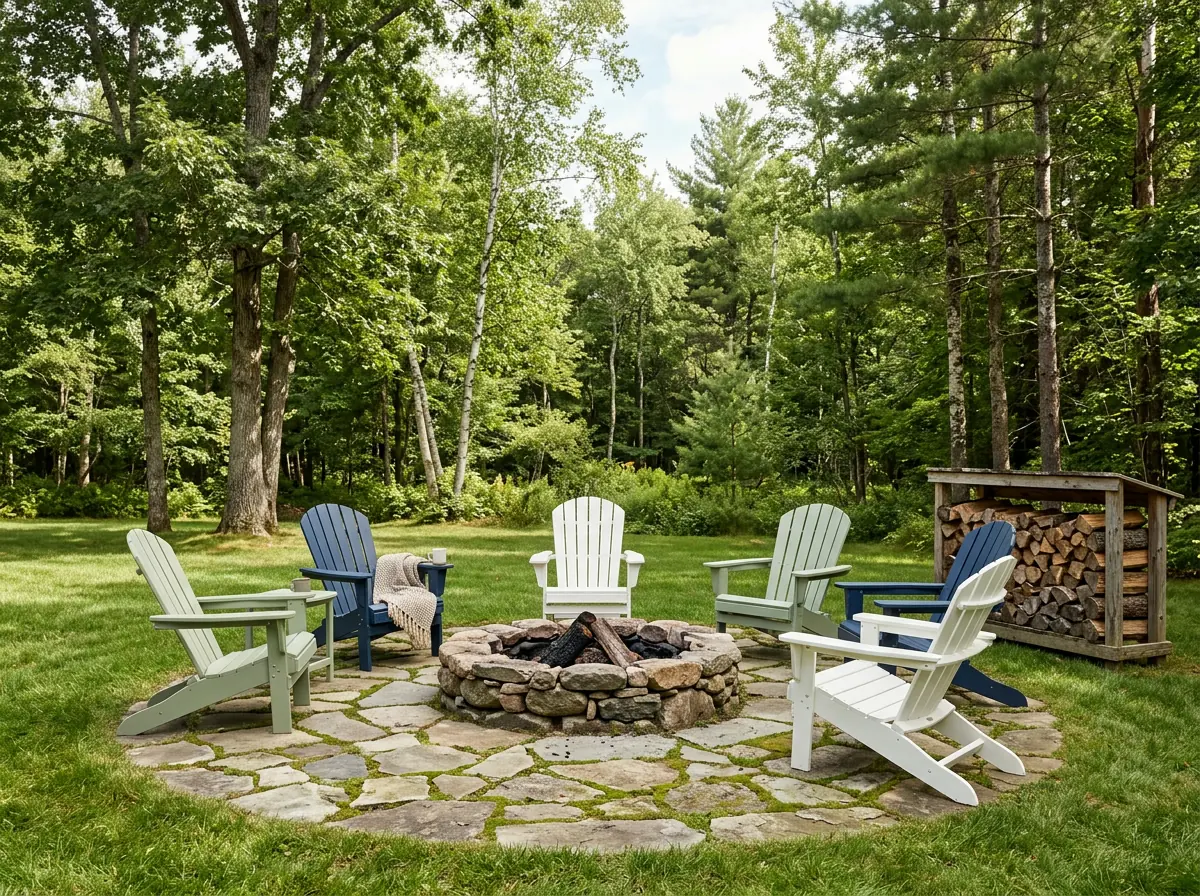
A ring of Adirondack chairs is the classic backyard fire pit setup, and it still works: the deep, reclined seats keep people relaxed and at a comfortable distance from the heat. Painting the chairs in two or three related colors, here sage, navy and white, makes a simple circle look planned rather than collected.
Plan the circle from the outside in. Chairs need room to sit back and for people to walk behind them, so the seating area is much wider than the fire pit itself. A pad of flagstones set into the lawn keeps chair legs level and saves the grass, and a covered firewood rack nearby keeps logs dry and off the ground.
Tip: Before you lay the flagstones, set the chairs out around a marked circle and sit in them to check the size.
4. A built-in seat wall
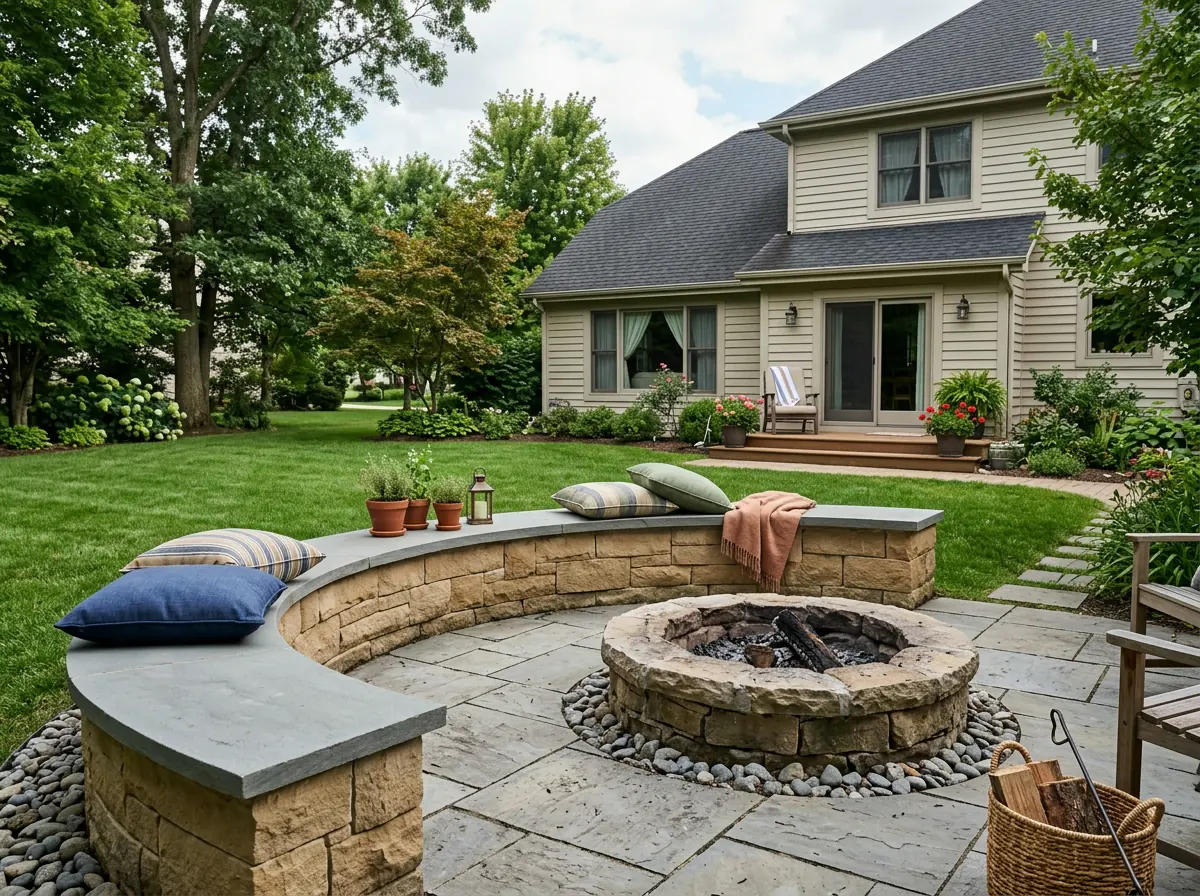
A curved seat wall gives a fire pit area permanent seating that never needs to be stored or covered for winter. Seat walls are usually built about 18 inches high, close to the height of a chair seat, with a flat, smooth cap stone wide enough to sit on. A half circle around the fire leaves the other side open to the lawn and the house.
Build the wall from stone or block that matches the fire pit so the two read as a set, and add loose cushions and a few chairs on the open side for flexible seating. Where the yard slopes slightly, a seat wall can also work as a low retaining wall that holds the patio level.
Tip: Choose a cap stone that overhangs the wall face by an inch or two, so it is comfortable to sit on and sheds rain.
5. A gas fire table on a deck
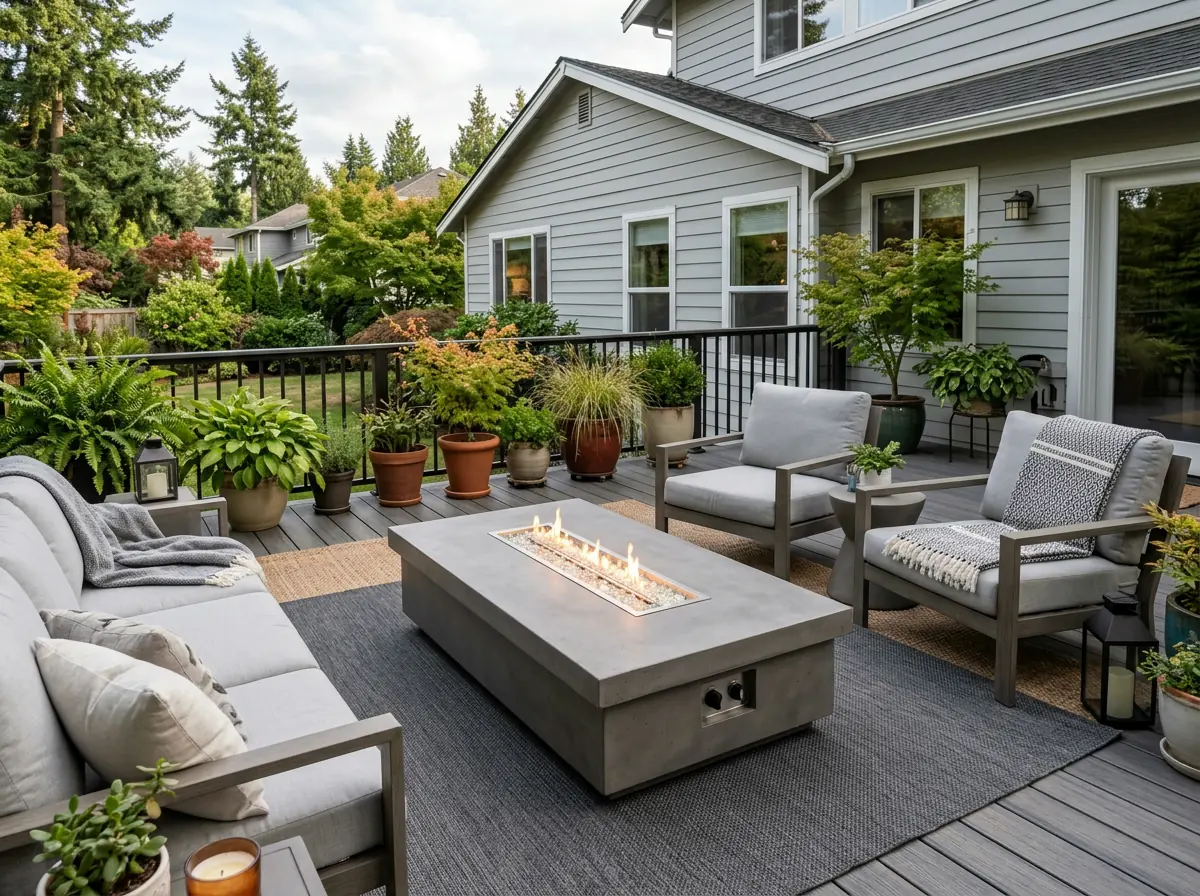
Wood-burning fire pits and decks are a risky mix: embers can scorch or ignite wood and composite boards, many deck makers warn against them, and local codes or HOAs may restrict them. A propane or natural gas fire table is the usual alternative, with no sparks, a flame that switches on and off, and a tabletop that doubles as a coffee table.
Gas fire tables still give off heat, so check the manufacturer’s clearances to railings, walls and anything overhead, and whether it calls for a heat-resistant pad underneath. Check the decking maker’s guidance as well, since some composite boards can be damaged by heat. A natural gas line should be run by a licensed professional.
Tip: On an exposed deck, choose a table with a wind guard around the burner so gusts do not blow the flame around.
6. String lights over the fire pit
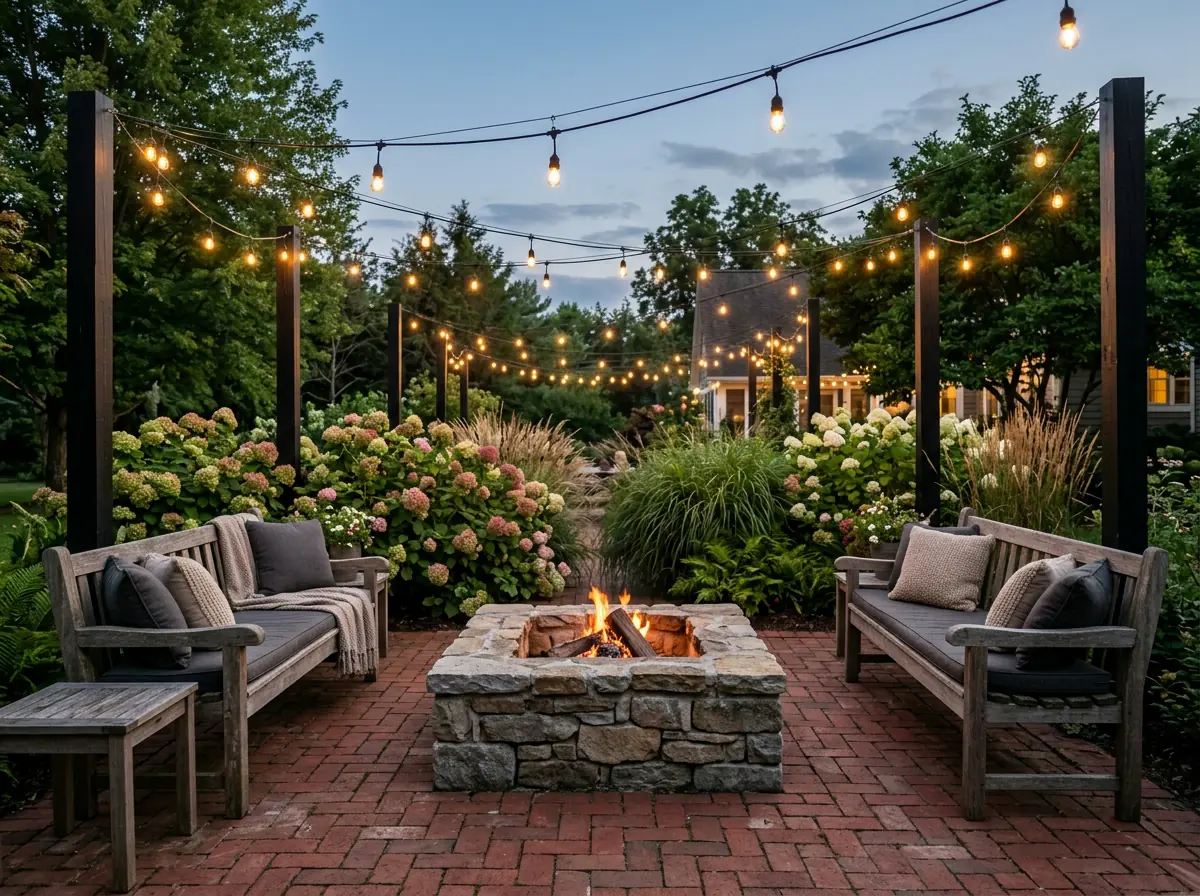
A canopy of string lights turns a fire pit into an outdoor room after dark. Zigzagging the lights between tall posts on two sides of the patio creates a ceiling of warm light, enough to see faces and steps without competing with the fire. Here a square stone fire pit on brick, with two cushioned benches facing each other, sits right under the canopy.
Use outdoor-rated string lights hung on a support cable, and plug them into a GFCI-protected outdoor outlet. Set the posts in concrete or sturdy post bases, and hang the lights well above the fire and off to the sides, where rising heat and sparks will not reach the cords or bulbs.
Tip: Put the lights on a dimmer or a smart plug so you can turn them down once the fire is going.
7. A fire pit terrace on a sloped yard
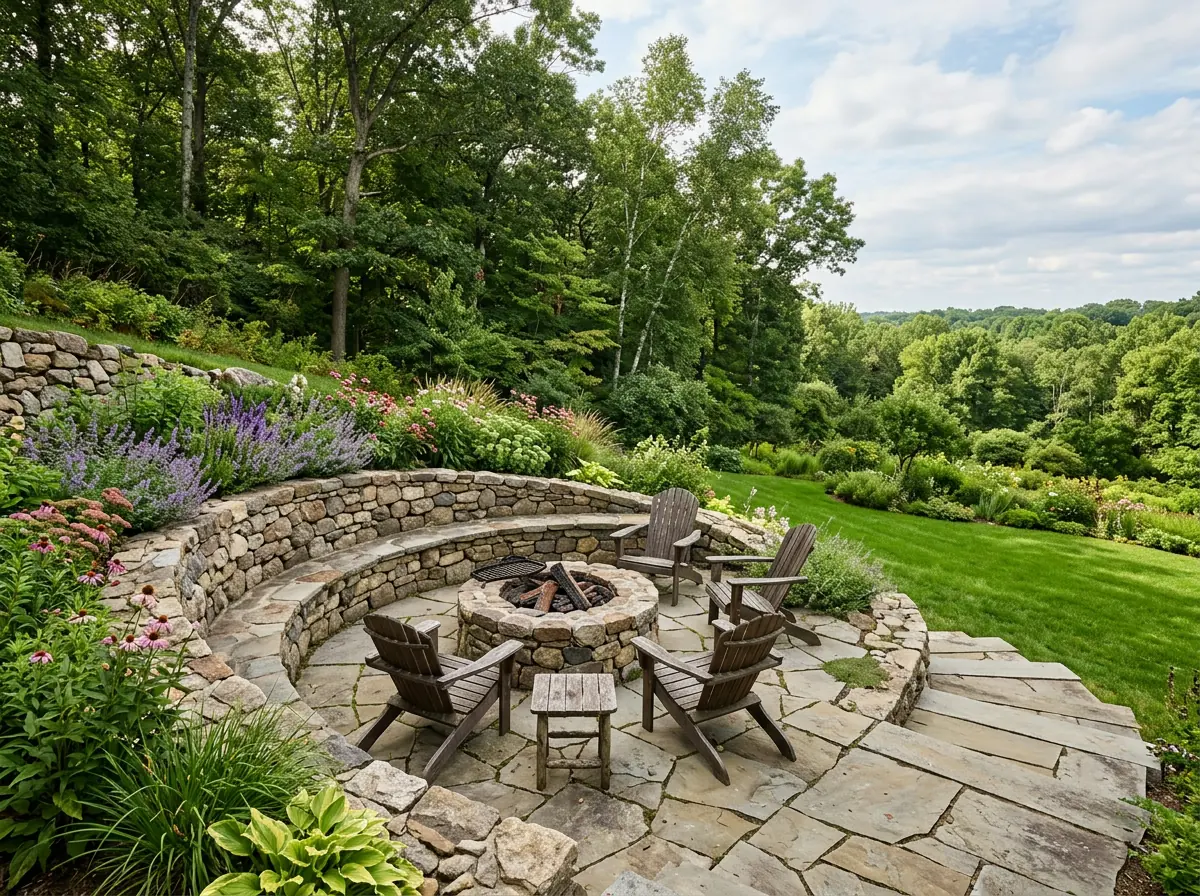
A sloped yard can be the best place for a fire pit. Cutting a level terrace into the hillside gives you a retaining wall on the uphill side that doubles as a curved bench, a flat floor for the fire pit and chairs, and a view out over the yard. Wide stone steps lead down to the lower lawn.
Retaining walls hold back soil and water, so anything more than a low wall needs a proper footing, drainage behind it and often a professional design. Plant the top of the wall with perennials such as lavender and coneflowers, and make the terrace big enough for chairs plus a clear walkway around them.
Tip: Make sure the terrace drains away from the house and that the steps are wide and even enough to use safely at night.
8. A portable fire bowl for a small yard
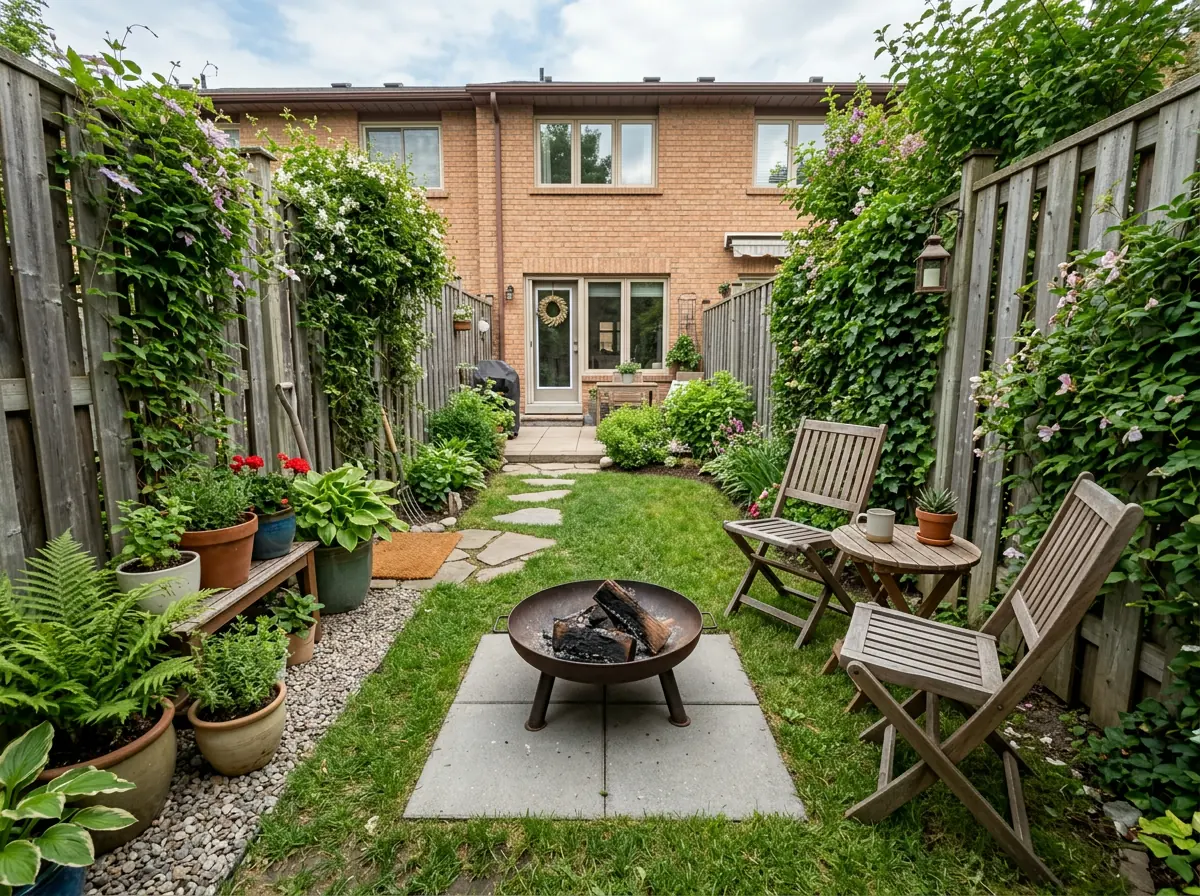
In a small yard, a portable steel fire bowl on legs gives you a fire without building anything. Set it on a small pad of concrete pavers to protect the lawn and catch stray embers, add two folding chairs and a side table, and put everything away when you need the space back. It also shows how often you really use a fire pit before you build one.
Small yards make safe distances harder to find, so measure before you light anything: the bowl should sit well away from fences, the house, overhanging branches and climbing plants. Burn only dry, seasoned firewood, which makes less smoke for the neighbors, and check local rules, since some cities limit wood burning on poor air-quality days.
Tip: Double-wall smokeless fire pits burn more completely and make less smoke once they are hot, which helps when neighbors are close.
How to plan your fire pit area
- Check local fire codes, burn bans and HOA rules before you choose a spot.
- Pick a level spot well away from the house, fences, trees and anything else that can burn.
- Decide between wood and gas, then choose a noncombustible surface underneath.
- Plan the seating first: the circle of chairs plus room to walk behind them.
- Photograph your backyard and try a few garden styles on it with an AI tool before you buy anything.
- Keep a hose, a bucket of water or an extinguisher within reach every time you light a fire.
See your backyard redesigned
Upload a photo of your backyard, choose a garden style and see it redesigned in seconds. 2 free credits, no credit card.
Redesign my backyardFire pit FAQ
What is the best material to build a fire pit with?
The best material to build a fire pit with is one made for direct heat on the inside, such as firebrick or a steel fire ring, with natural stone, concrete block or brick on the outside. Ordinary concrete blocks and pavers can crack or flake when they sit in the flames for long periods, which is why most fire pit kits pair a decorative outer wall with a steel insert. Use refractory mortar wherever masonry touches the fire.
What rocks should not be used in a fire pit?
Do not use river rock, pea gravel or other stones taken from water or wet ground inside a fire pit, and avoid porous rocks such as sandstone and some limestone. These stones can hold moisture, and when that water turns to steam in the heat it can crack them or make them burst and throw hot fragments. Use materials made for fire instead, such as firebrick, lava rock sold for fire pits or fire glass in gas fire pits.
How far should a fire pit be from the house?
A fire pit should be at least as far from the house as your local fire code and the fire pit’s manufacturer require, so check both first. Typical guidance for wood-burning fire pits, depending on the source, is at least 10 to 25 feet from the house and other structures, with extra room from fences, sheds and overhanging branches. Gas fire tables often list smaller clearances in their manuals. Some towns also require a permit or ban open burning on dry, windy days.
Can I see my own backyard redesigned?
Yes. Upload a photo of your backyard to EasyInterior’s AI garden design tool, choose a style such as Modern Landscape, Mediterranean or Japanese Zen and you see the same yard redesigned in seconds. Use it to compare a few directions for the whole yard before you buy stone, pavers or furniture.