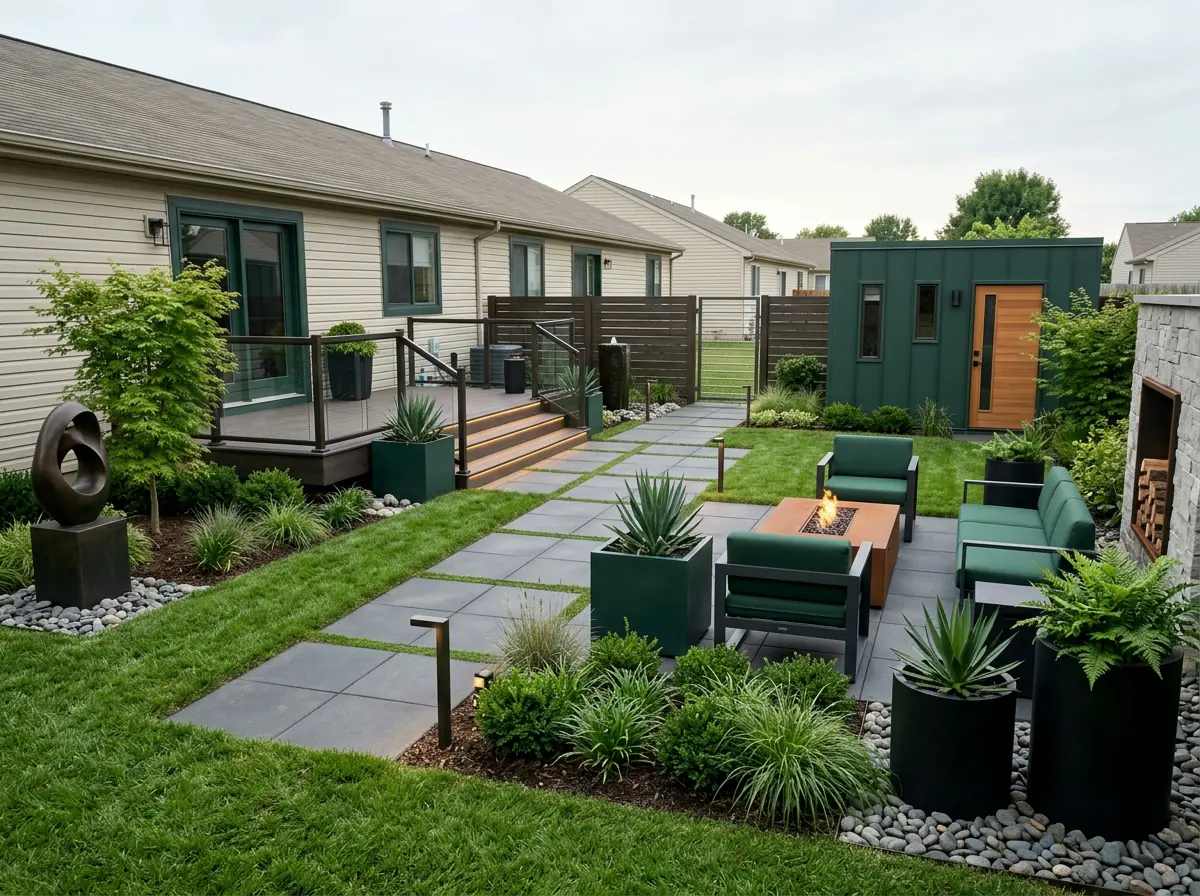
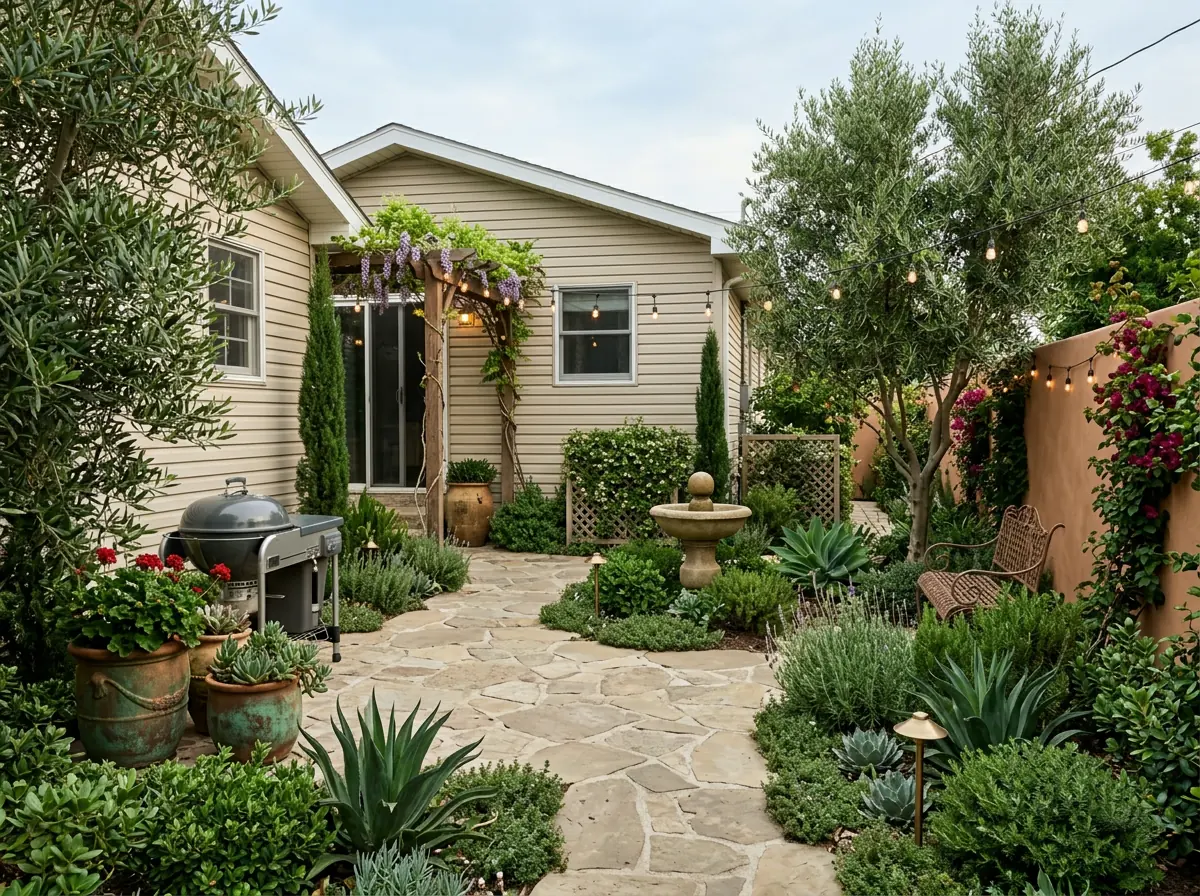
BACKYARD LANDSCAPING IDEAS
Backyard landscaping ideas: 8 designs for the whole yard
Published · EasyInterior
The best backyard landscaping ideas start with how you want to use the space, not with plants. A typical suburban backyard is a lawn, a fence and a small slab by the back door. Good backyard design turns it into a few connected areas, each with a clear job, such as eating, relaxing, playing or growing food, linked by paths and held together by planting.
The eight ideas below are whole-backyard looks, each built around one main use: a patio wrapped in planting, a fire pit circle, a deck, a lawn alternative, privacy screening, a kitchen garden, a water-wise layout and a family yard. In a larger yard, combine two or three. First, the before-and-after just below: a bare suburban backyard redesigned in one step.
Before and after: a bare suburban backyard redesigned
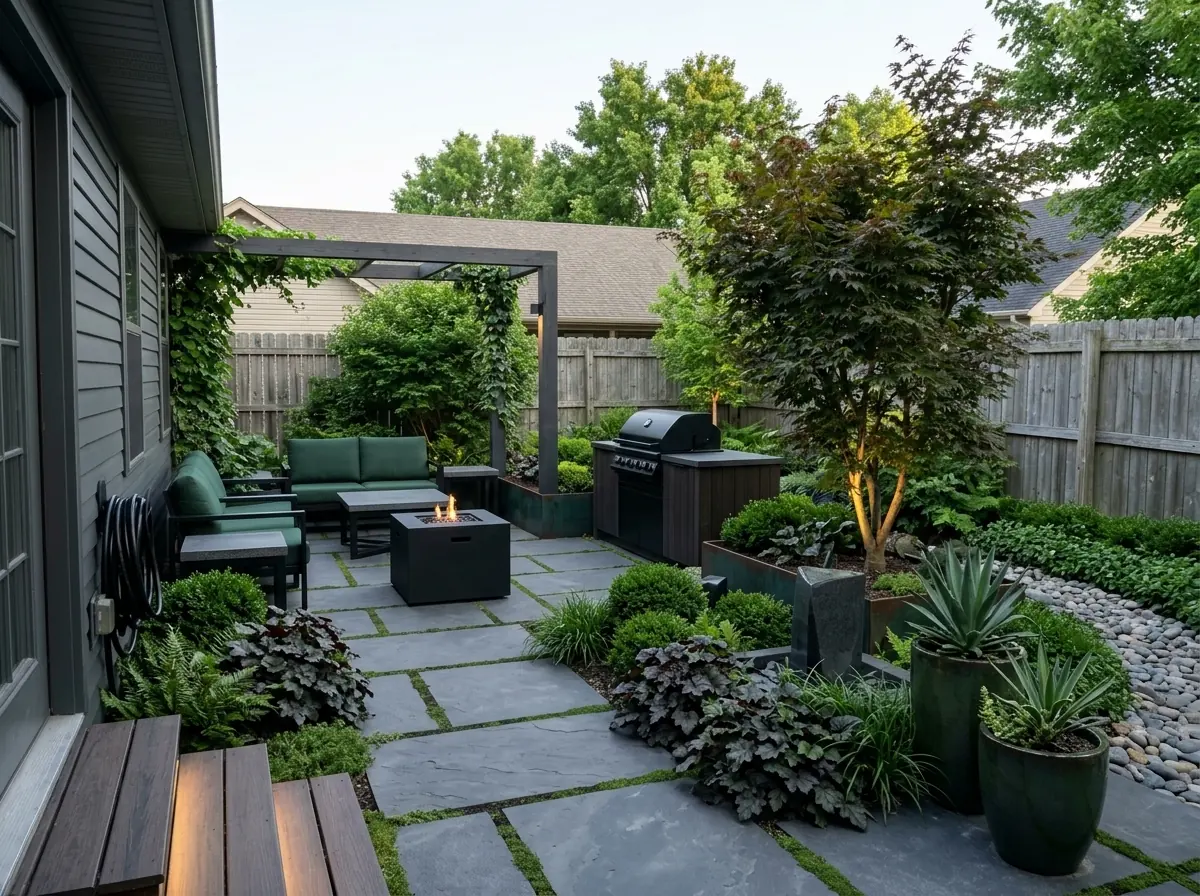
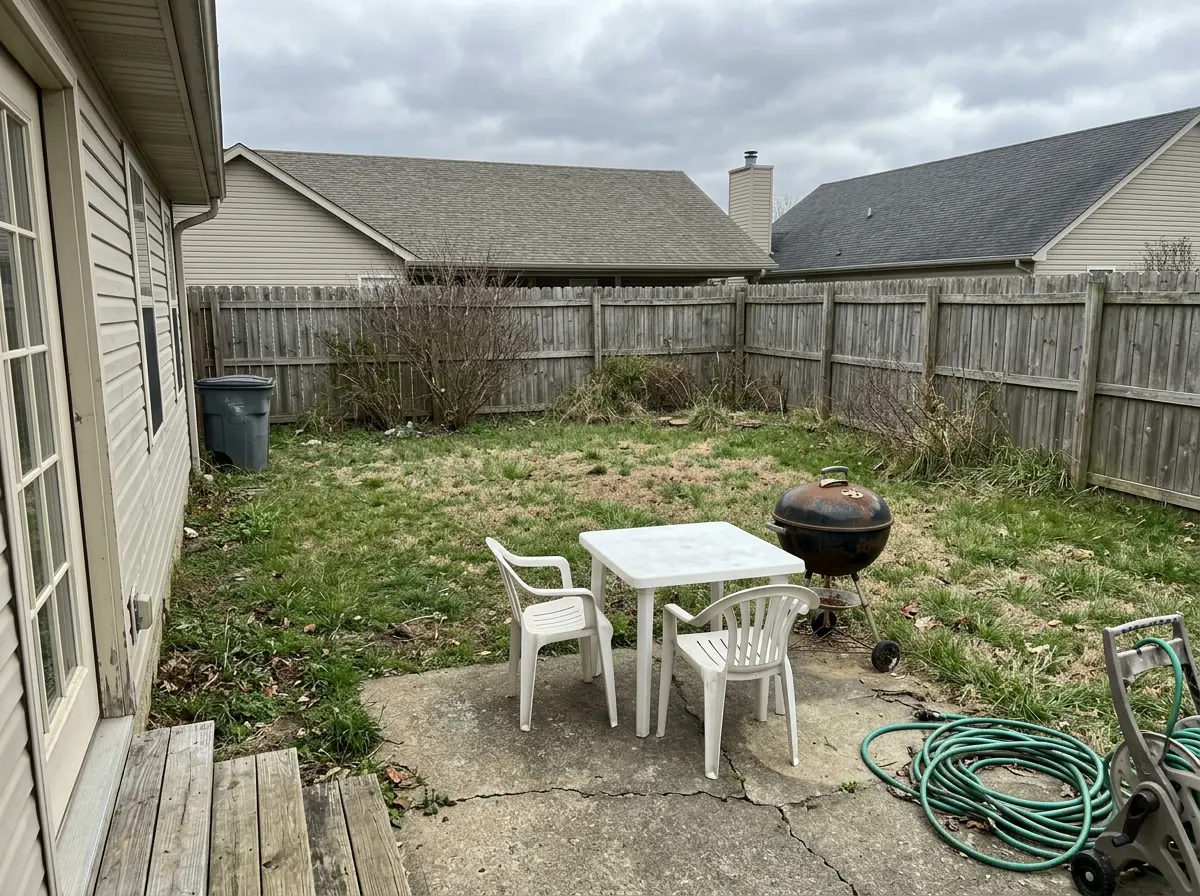
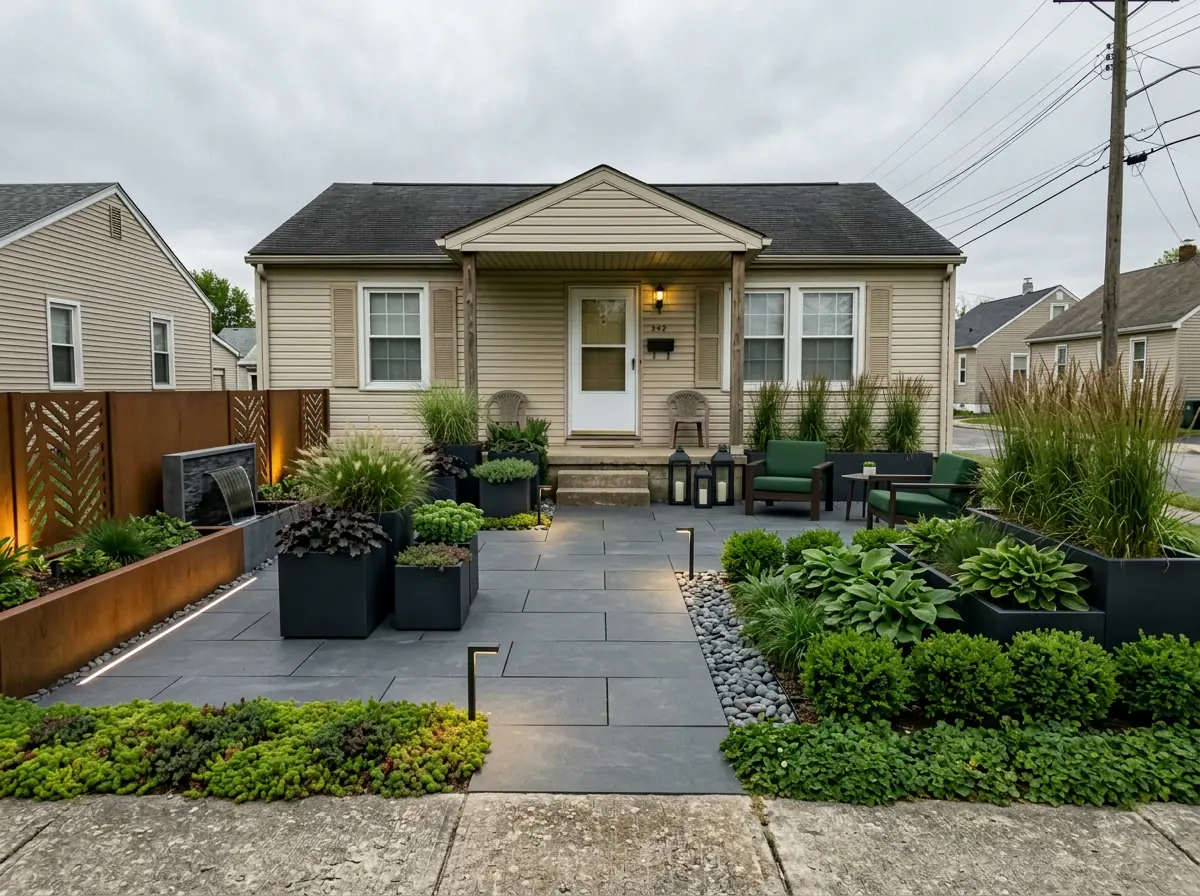
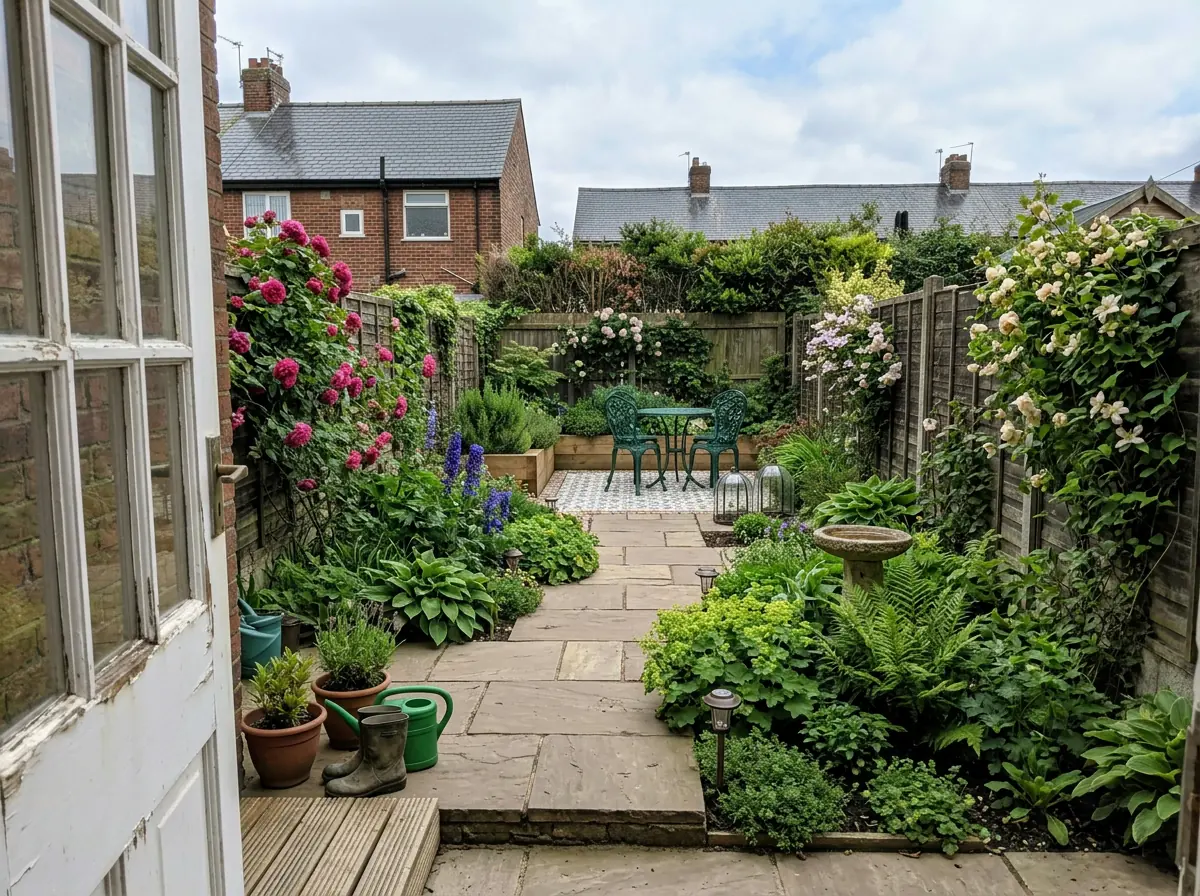
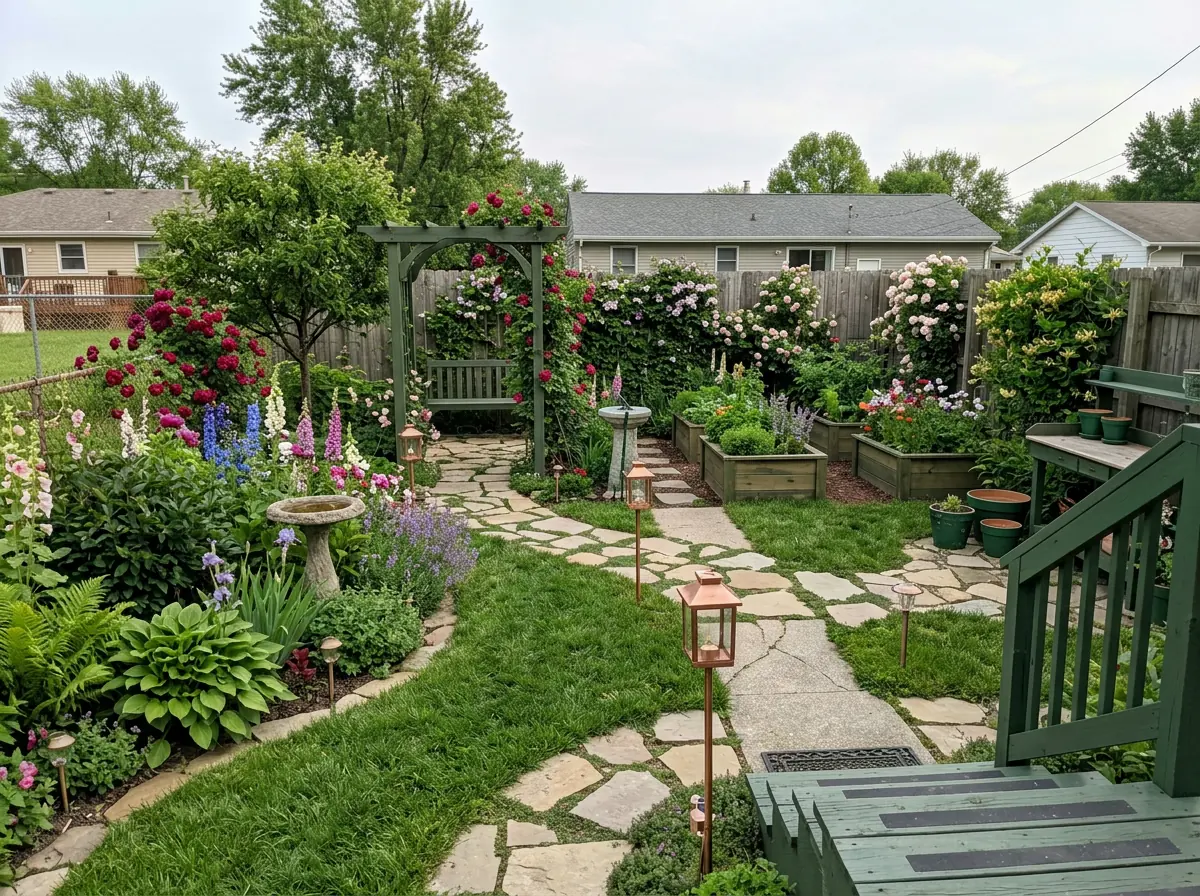
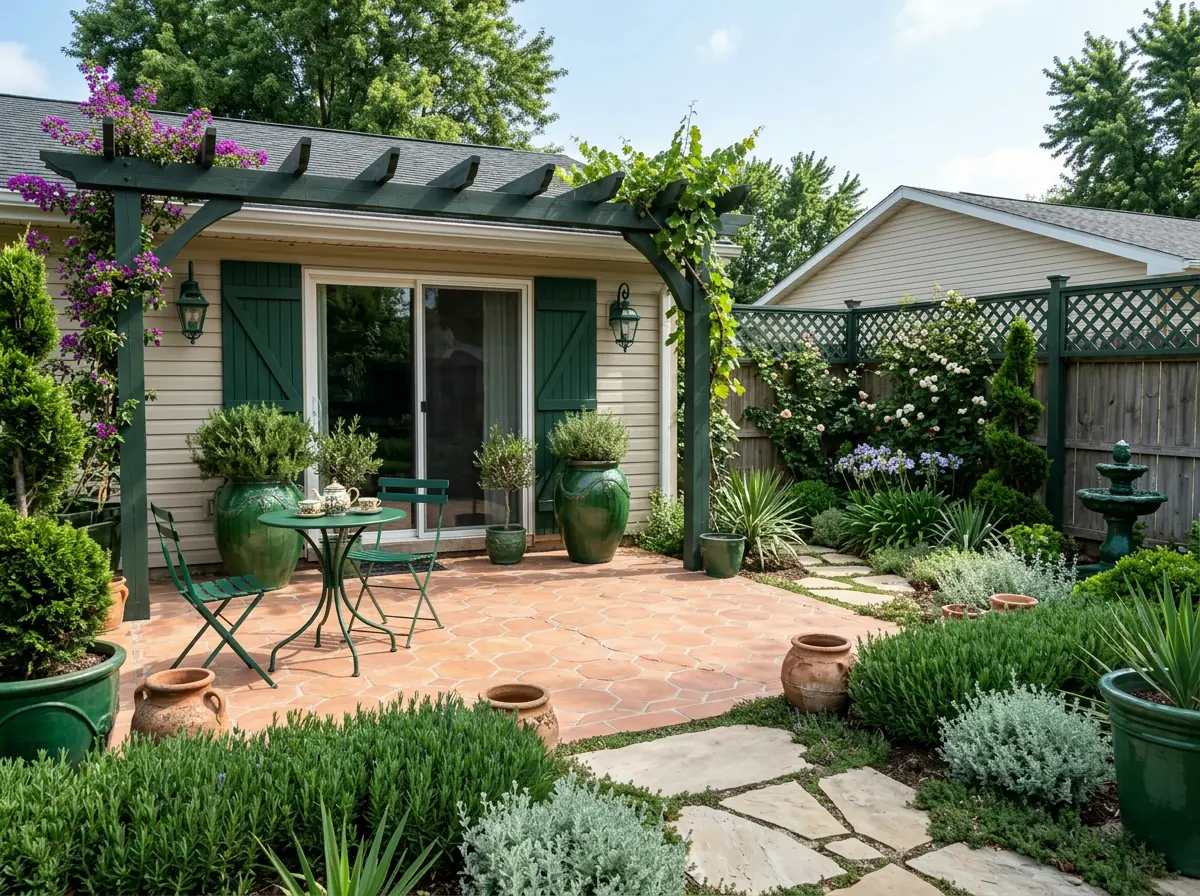
All images in this article were generated with AI. The “before” photo is an AI-generated example of a typical backyard; the “after” image was made from it with the same prompt EasyInterior’s garden tool uses. The other images illustrate ideas and are not photos of real gardens.
8 backyard landscaping ideas
1. A paver patio wrapped in planting
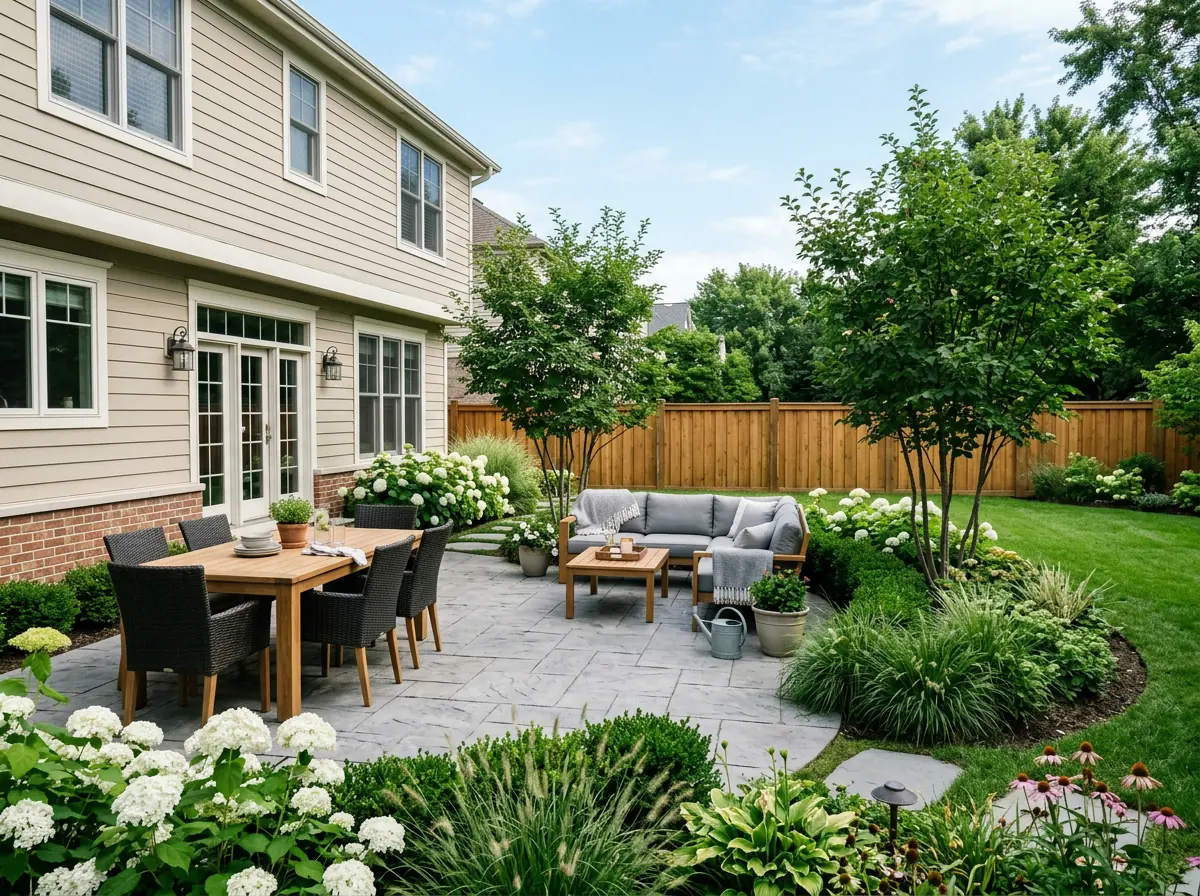
For most houses, the most useful backyard design is a generous patio right outside the back door, big enough for a dining table and a sofa, with deep planting beds wrapped around it. Curving the bed edges softens the hard lines of the paving and makes the lawn read as a deliberate shape rather than leftover space.
Size the patio for the furniture you actually own, plus room to pull chairs out and walk around them. Beds 4 to 6 feet deep leave room for layers: shrubs such as hydrangea or boxwood at the back, grasses and perennials in front, and one or two small multi-stem trees for height and light shade.
Tip: Lay out the patio shape with a garden hose and your real furniture before you order pavers; it is the cheapest way to check the size.
2. A fire pit area at the end of the yard
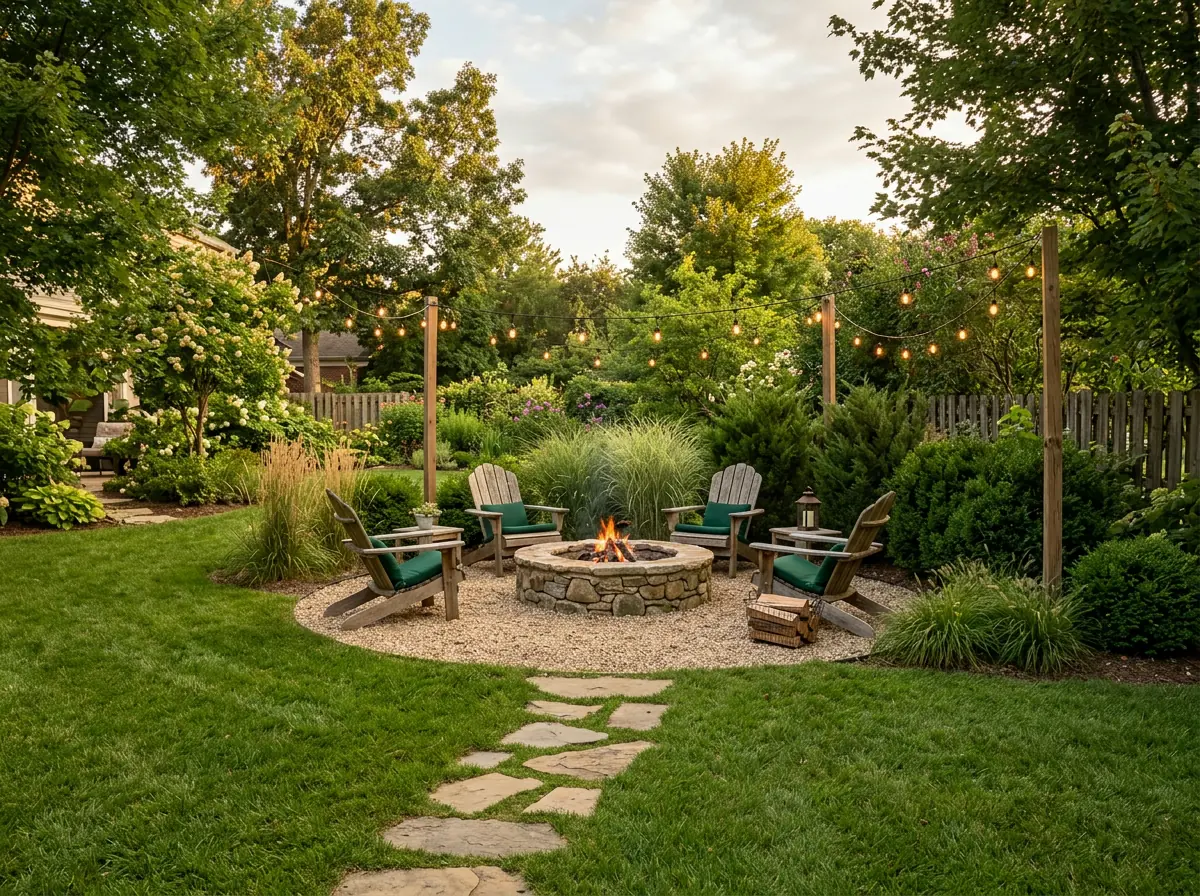
A fire pit gives a backyard a destination, a reason to walk to the far end of the lawn instead of staying on the patio. A circle of pea gravel with a stone fire ring in the middle, four to six chairs around it and a stepping-stone path leading in is a simple layout that suits almost any style.
Planting around the circle, such as ornamental grasses and evergreen shrubs, makes it feel enclosed without blocking the view, and string lights on posts add evening light without wiring the whole yard. Before you build, check local rules: many cities and HOAs restrict open fires, set distances from buildings or ban burning on dry, windy days.
Tip: Keep the fire pit well away from the house, fences and overhanging branches, and have a hose or extinguisher within reach.
3. A deck that steps down to the lawn
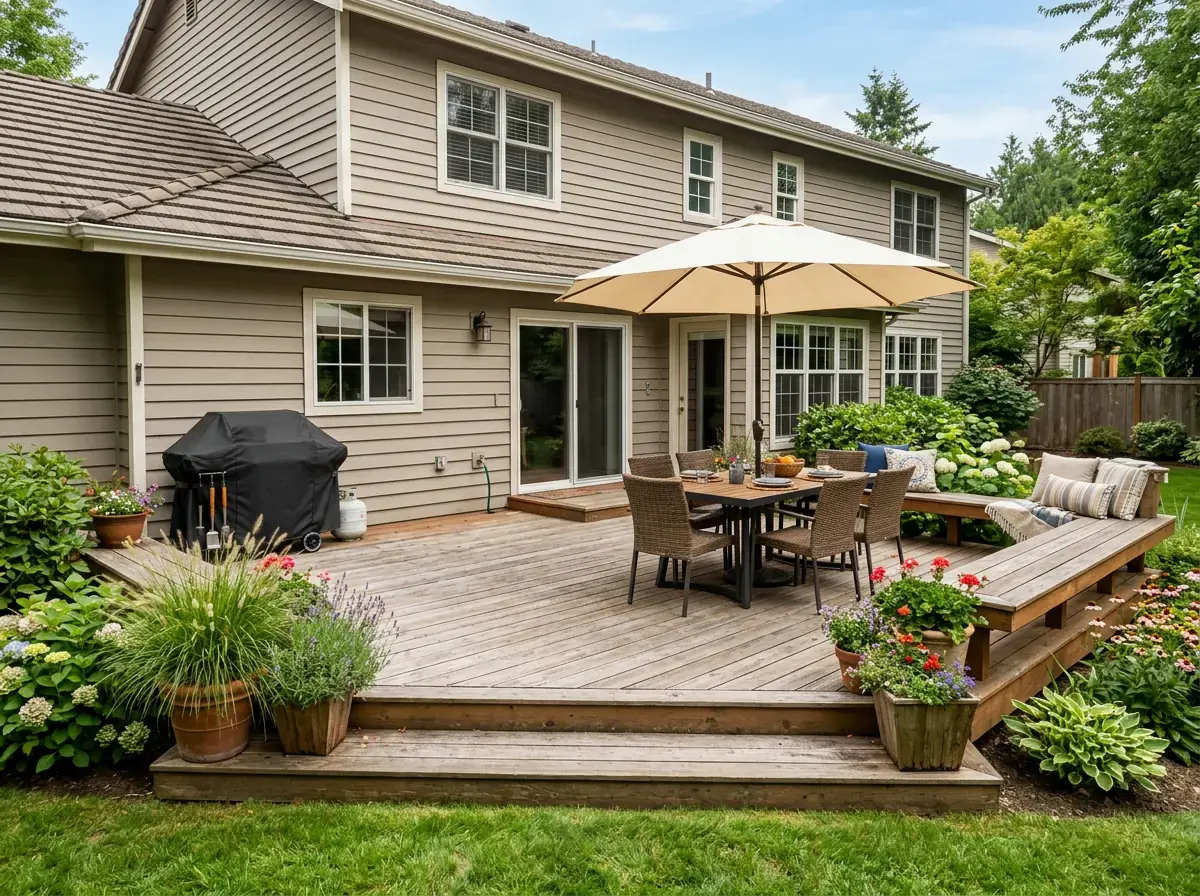
When the back door sits well above the ground or the lot slopes away from the house, a deck is often simpler than building up a patio with retaining walls and fill. A wide deck with broad steps down to the lawn connects house and yard better than a narrow stair, and the steps double as extra seating.
Plan zones on the deck the way you would indoors: a dining spot under an umbrella, a grill in a corner away from the door and a built-in bench along one edge. Plant beds along the base of the deck to hide the framing, and use large planters on the deck itself to bring flowers and grasses up to table height.
Tip: Many towns require a permit for a deck, especially one attached to the house or raised above the ground, so check with your building department first.
4. Backyard landscaping without a lawn: low groundcover
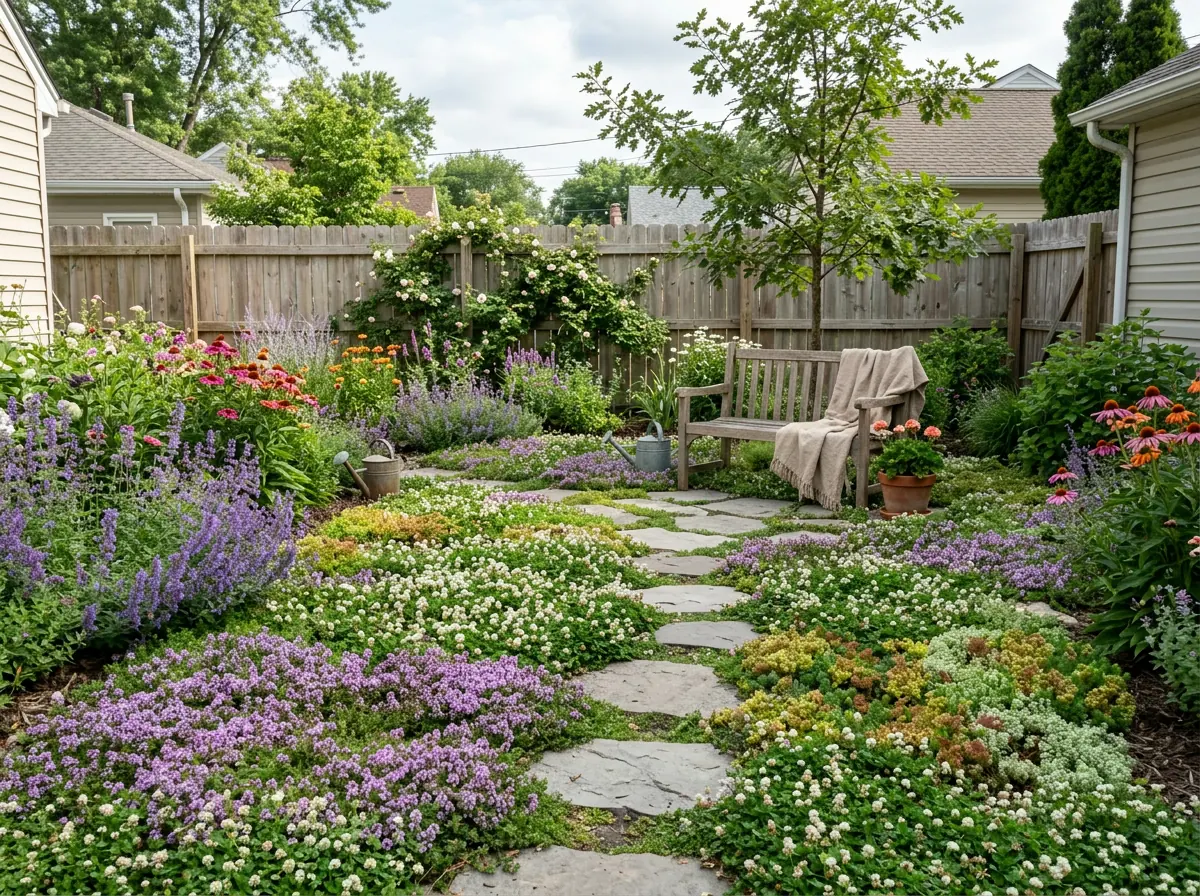
Lawn is usually the most demanding part of a backyard: weekly mowing, regular watering and feeding. Where you do not need a play surface, low groundcovers such as creeping thyme, white clover and sedum form a soft, flowering carpet that needs little or no mowing and, once established, less water than turf in many climates.
Run irregular flagstone stepping stones through the groundcover so you can cross it without wearing paths, and frame it with low perennial beds of catmint, coneflowers and lavender. Most groundcovers tolerate light foot traffic, not ball games, so keep a small patch of grass if children or dogs need one.
Tip: Plant groundcover plugs in spring or fall and keep them weeded and watered until they knit together, which usually takes one or two seasons.
5. Privacy screening with slats and evergreens
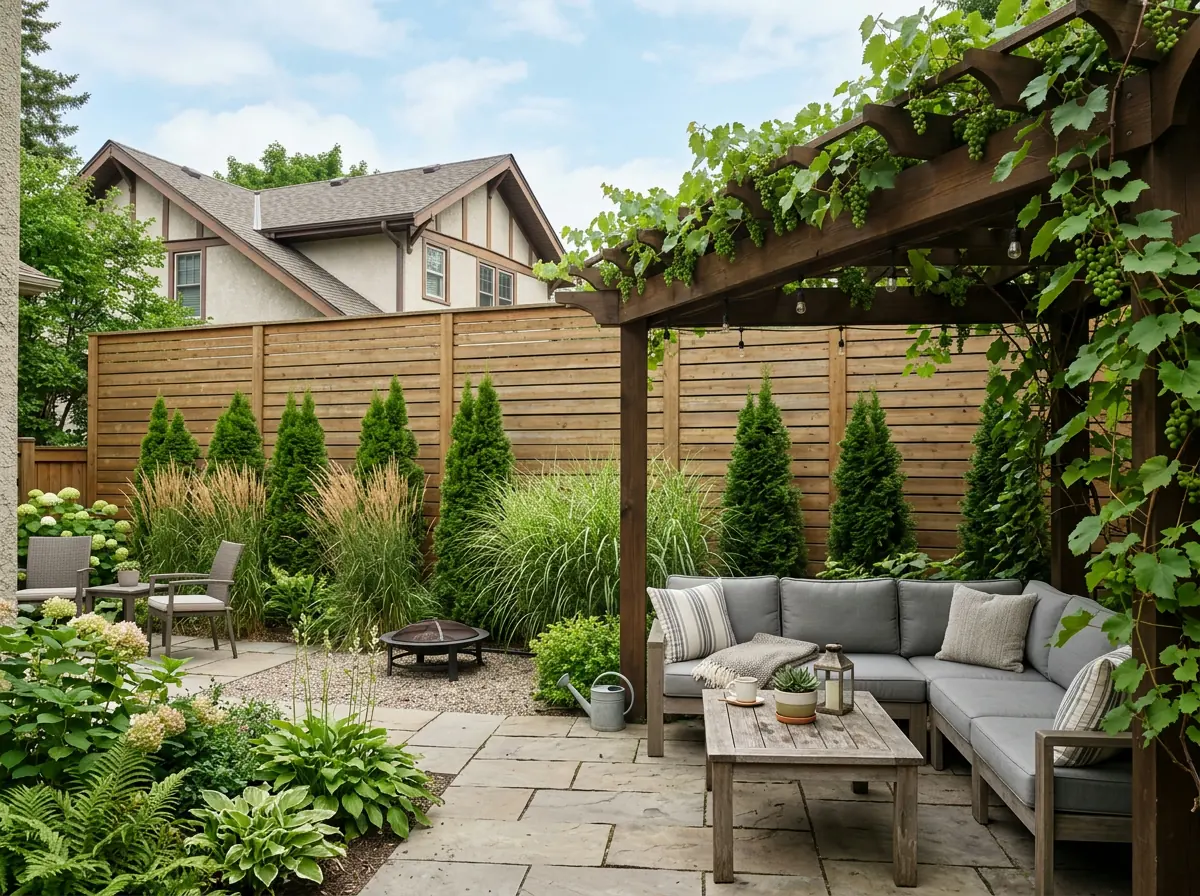
In many suburban backyards, the main problem is that the neighbors’ windows look straight in. A horizontal-slat screen along the back fence, with a row of narrow upright evergreens and tall grasses planted in front of it, blocks views at eye level while still looking light and modern.
A pergola with a climbing vine adds privacy from above, against second-floor windows next door, and shades a seating area below. Layering works better than one solid wall: screen, plants and pergola together hide more and feel less closed-in than a single tall fence, and the planting softens the wood.
Tip: Many towns limit backyard fence and screen heights, often to about 6 feet, so check local rules and any HOA guidelines before building higher.
6. A kitchen garden in raised beds
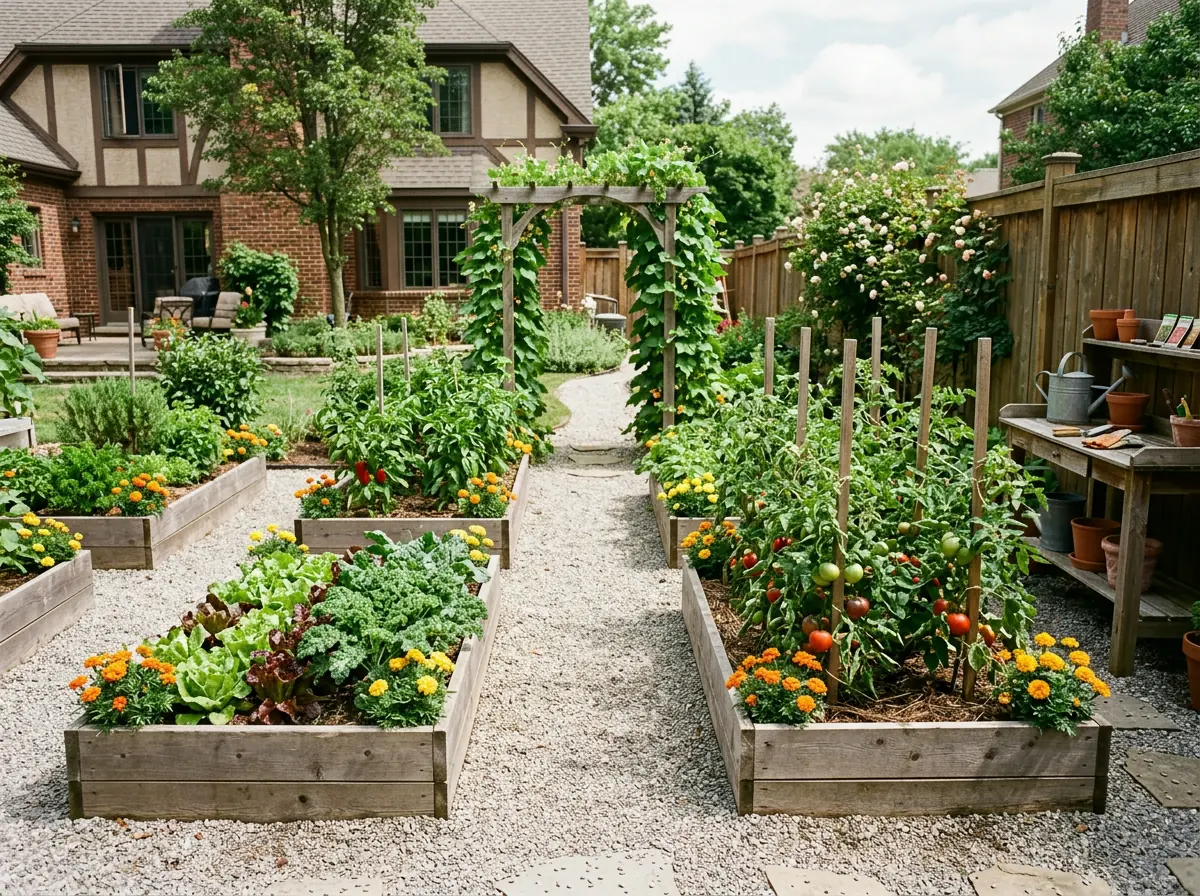
A kitchen garden turns part of the backyard into a place to grow tomatoes, salad, herbs and beans. Raised beds keep it tidy and productive: they warm up earlier in spring, drain well and let you fill them with good soil even where the ground is heavy clay or full of builder’s rubble.
Keep beds no wider than about 4 feet so you can reach the middle from both sides, and leave paths wide enough for a wheelbarrow. Most vegetables need at least six to eight hours of direct sun a day. A wooden arch for climbing beans marks the entrance, marigolds add color, and a potting bench keeps tools in one place.
Tip: Put the kitchen garden as close to the back door as the sun allows; herbs you can pick in a minute get used much more often.
7. A water-wise yard with a dry creek bed
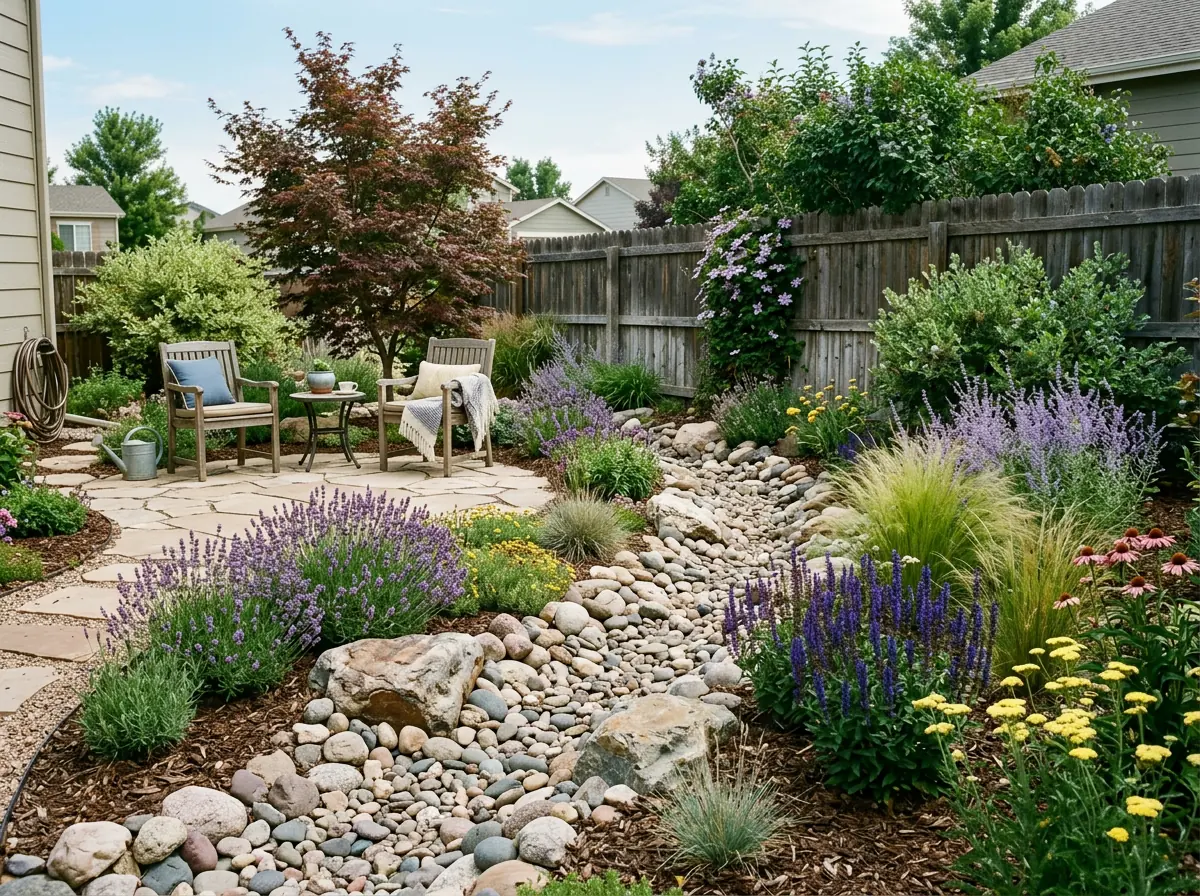
A water-wise backyard needs less irrigation and copes better with heavy rain. A dry creek bed of river rock and boulders, laid along the natural low line of the yard, carries runoff from downspouts away from the house and lets it soak in, and it still looks like a stream bed when it is dry.
Plant the banks with drought-tolerant perennials and grasses, such as lavender, salvia, yarrow and ornamental grasses, and cover bare soil with mulch to hold moisture. Water new plants regularly in their first season; after that, a drip line on a timer uses much less water than sprinklers on a lawn.
Tip: Choose plants suited to your region; a local native plant society or extension service can tell you which ones need little water where you live.
8. A family backyard with room to play
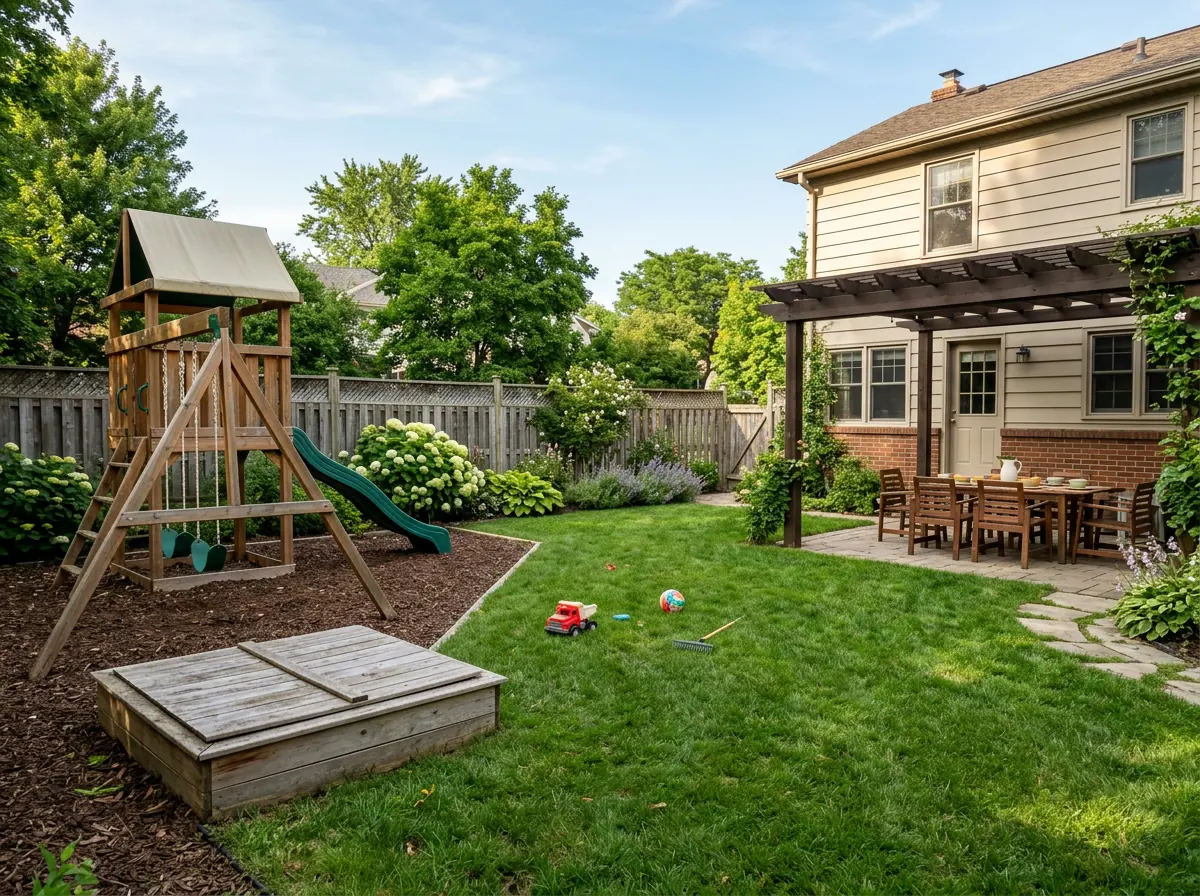
A family backyard works best with a clear layout: an open lawn in the middle for running and ball games, a play area in one corner and a dining patio near the house so adults can watch while they cook or eat. Keeping the play set to one side leaves the lawn free for everything else.
Put play equipment on a deep layer of wood chips or another impact-absorbing surface rather than on grass or bare dirt, and leave clear space around swings and slides. A sandbox with a lid keeps out rain and animals. Tough shrubs along the fence soften the edges and survive the occasional stray ball.
Tip: Place the play area where you can see it from the kitchen window or the patio table.
How to plan your backyard design
- List how you want to use the yard: dining, lounging, play, growing food, storage.
- Note sun and shade, slopes, wet spots and the views you want to hide or keep.
- Sketch zones and the paths between them before you choose plants or materials.
- Check local rules for fences, decks, fire pits and drainage before you build.
- Photograph your backyard and try a few garden styles on it with an AI tool before you buy anything.
- Work in phases: drainage and hard landscaping first, planting last.
See your backyard redesigned
Upload a photo of your backyard, choose a garden style and see it redesigned in seconds. 2 free credits, no credit card.
Redesign my backyardBackyard landscaping FAQ
How do I plan my backyard?
Plan your backyard by deciding first how you want to use it, then mapping what you already have. Sketch the yard with the house, fences, trees, sun and shade, slopes and wet spots, then divide it into zones such as dining, lounging, play and planting, linked by paths. Settle hard surfaces and drainage first, since they are hardest to change, and choose plants last.
What is the rule of 3 in landscaping?
The rule of 3 in landscaping is the idea that plants and objects look more natural in groups of three, or other odd numbers, than in pairs. An odd-numbered group is harder for the eye to split into matching halves, so it reads as one natural drift. Designers also repeat the same plant three or more times across a bed to tie the planting together.
Can ChatGPT create landscape design?
ChatGPT and similar AI tools can help with parts of landscape design, but they do not replace a plan made for your site. A chatbot can suggest layouts, plant lists and ideas, and an AI image tool can show a photo of your yard redesigned in a chosen style. Planting, drainage, grading and structures such as decks or retaining walls still need to be checked for your site, soil and climate, sometimes by a professional.
Can I see my own backyard redesigned?
Yes. Upload a photo of your backyard to EasyInterior’s AI garden design tool, choose a style such as Modern Landscape, Cottage Garden or Desert Xeriscape and you see the same yard redesigned in seconds. Use it to compare a few directions before you talk to a landscaper or buy plants.