BACKYARD PATIO IDEAS
Backyard patio ideas: 8 designs for every budget
Published · EasyInterior
The best backyard patio ideas start with two decisions: what the patio is for and what it is made of. A patio for weeknight dinners for four needs a different size and spot than a quiet lounge corner, and the surface you choose, from gravel to natural stone, sets most of the budget and the look. Get those two right and furniture, shade and lighting are easy to add later.
The eight patio designs below cover the main materials and layouts: pavers with a border, flagstone with planted joints, concrete, gravel, a covered patio under a pergola, a patio straight off the sliding door, a multi-level patio for a sloped yard and an outdoor room with a rug and lights. First, the before-and-after just below: a bare backyard behind a ranch house redesigned in one step.
Before and after: a bare backyard turned into a patio garden
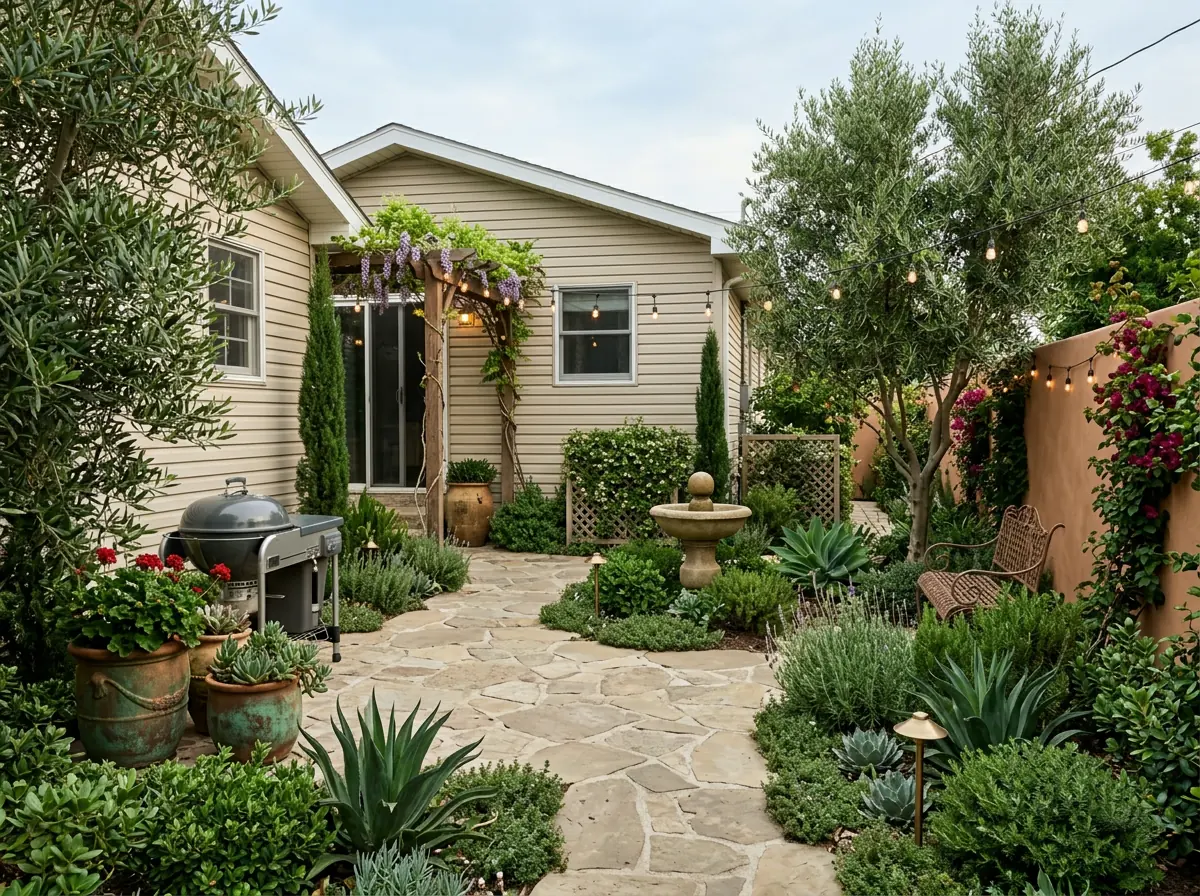
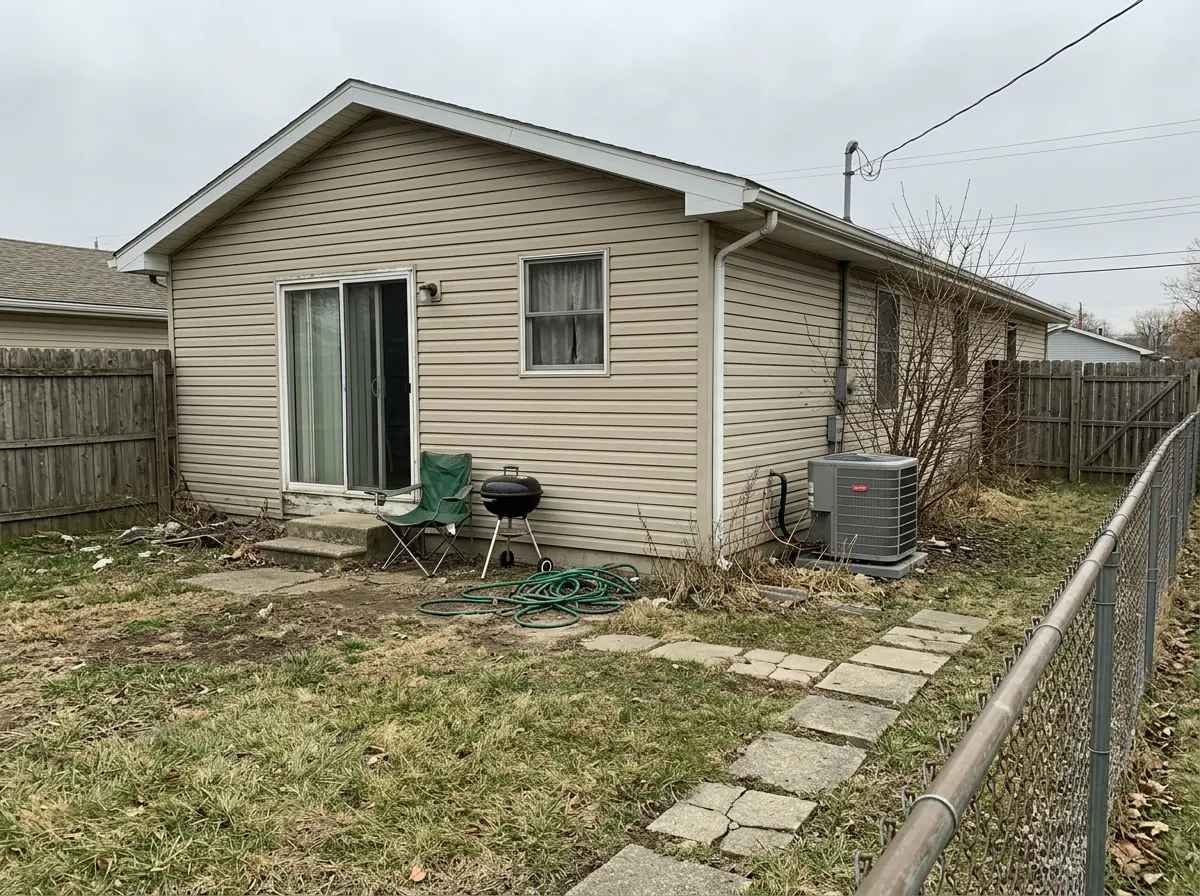
All images in this article were generated with AI. The “before” photo is an AI-generated example of a typical backyard; the “after” image was made from it with the same prompt EasyInterior’s garden tool uses. The other images illustrate ideas and are not photos of real gardens.
8 backyard patio ideas
1. A paver patio with a contrasting border
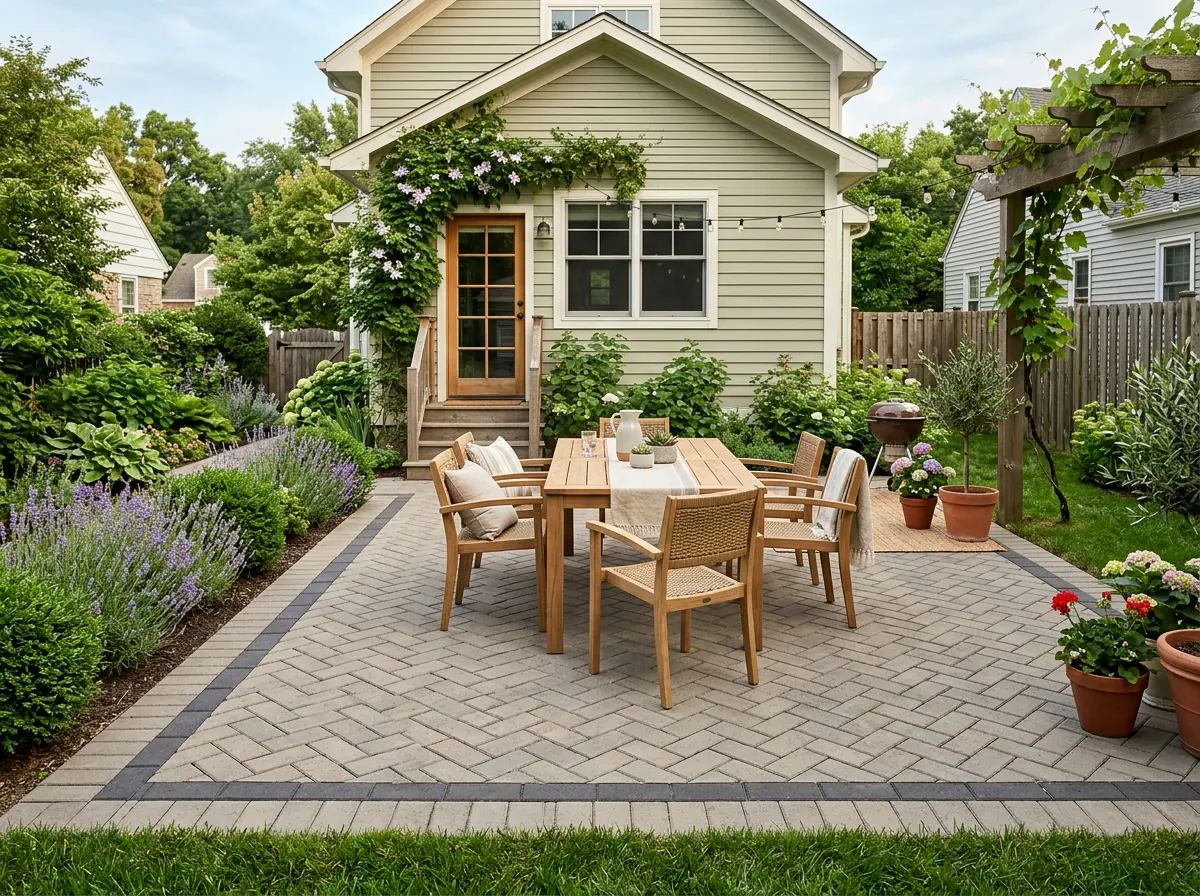
Concrete pavers are the most common patio choice for good reason. They come in many sizes and colors, they are laid on a compacted gravel and sand base instead of being poured, and a cracked or stained paver can be lifted out and replaced. The pattern sets the mood: herringbone interlocks tightly and feels traditional, while large slabs in a simple grid look calmer and more modern.
A border is what makes a paver patio look finished. One or two rows of a darker paver around the edge frame the field like a rug, give the cut ends of the pattern a clean line to stop against and give the lawn or planting a neat edge to meet. Pick a border color that repeats something on the house, such as the roof, the trim or the door.
Tip: Ask for an edge restraint along every open side; without one, the outer pavers can slowly creep outward and the joints open up.
2. Flagstone with planted joints
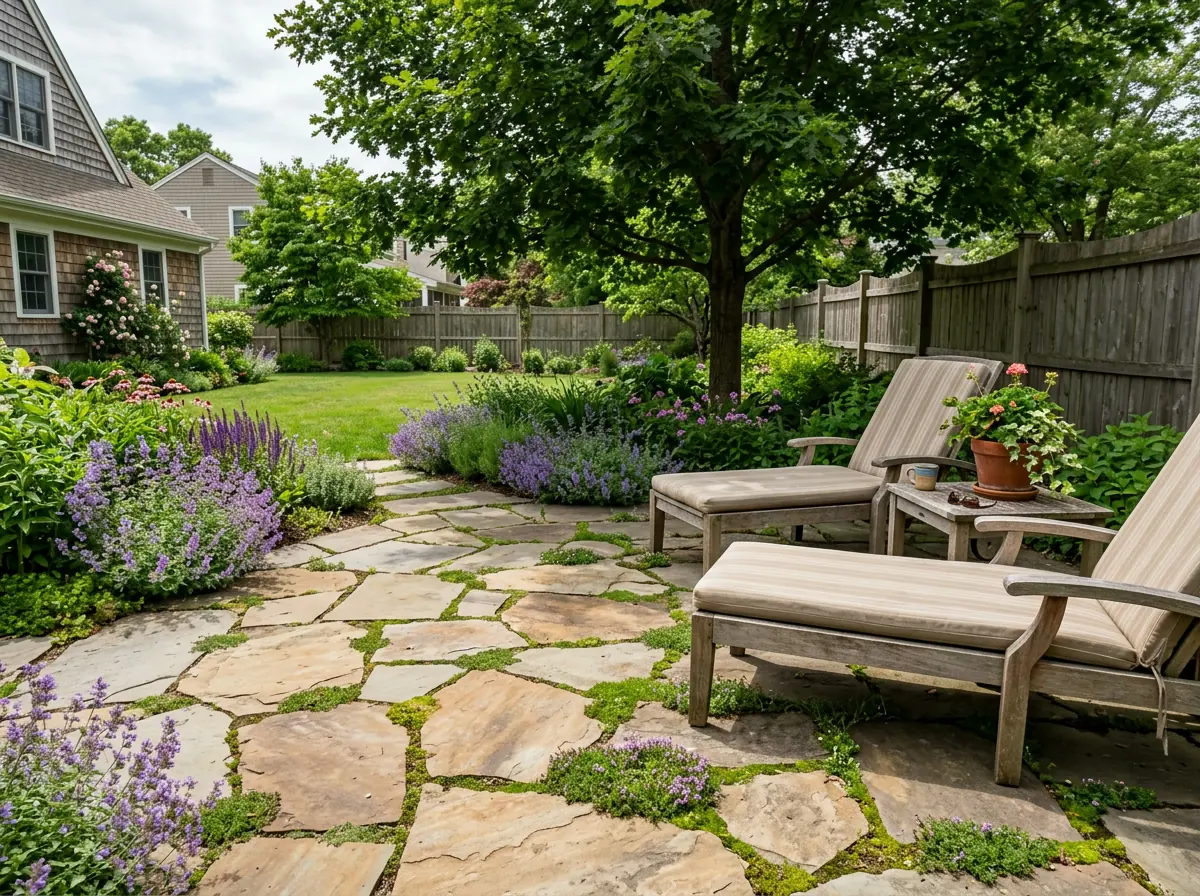
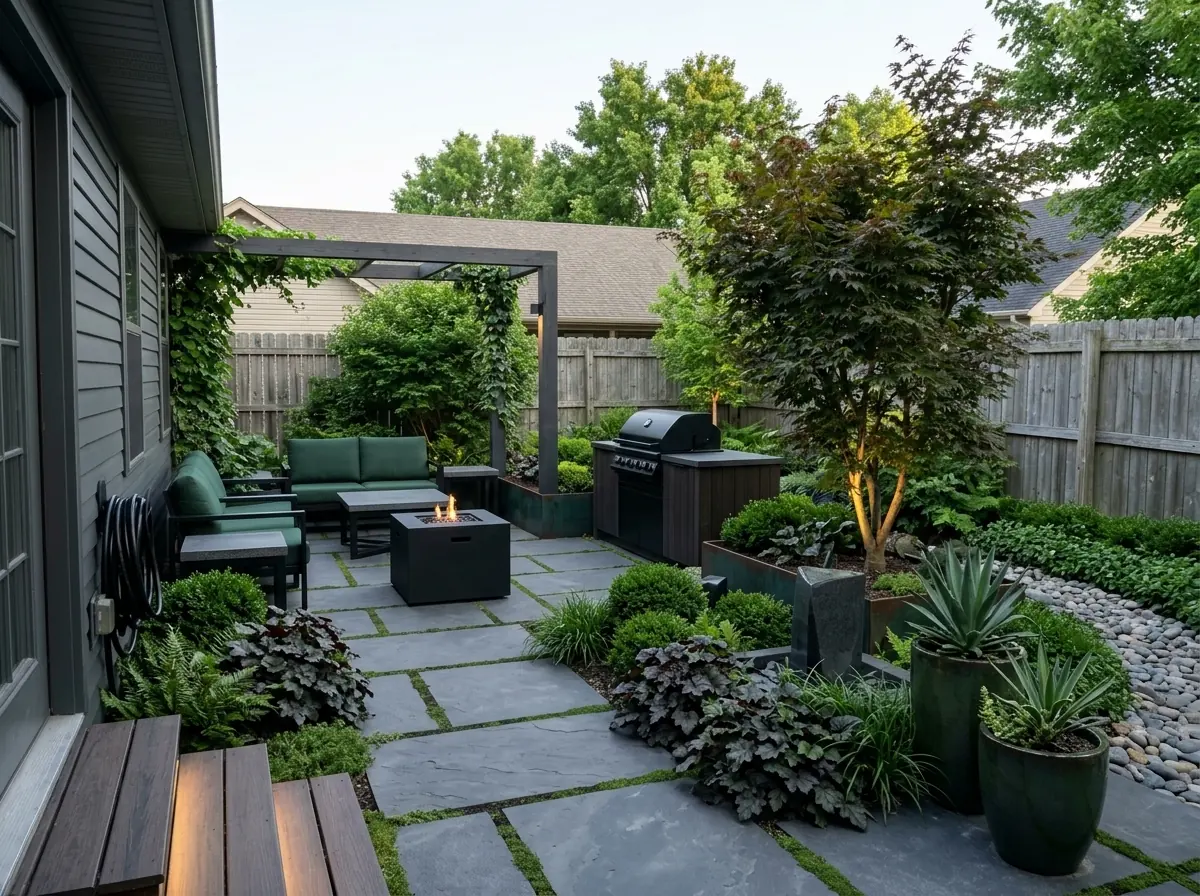
Irregular flagstone gives a patio a relaxed, garden feel that cut pavers cannot quite match. Every stone has a different shape, so the patio looks as if it has always been there. Instead of filling the gaps with mortar, leave joints of 1 to 2 inches and plant them with low, tough groundcovers: creeping thyme in sun, moss or creeping sedum in lighter shade.
Set the stones on a compacted gravel base with a layer of sand or fine gravel on top, so they sit firm and drain well; thick stones rock less than thin ones. A flagstone patio suits lounge chairs and a small side table better than a big dining set, because chair legs catch on uneven stone and planted joints, and a table never sits quite level.
Tip: Keep the joints tighter where people walk and sit most, and leave the wider, planted gaps toward the edges of the patio.
3. Brushed or stamped concrete
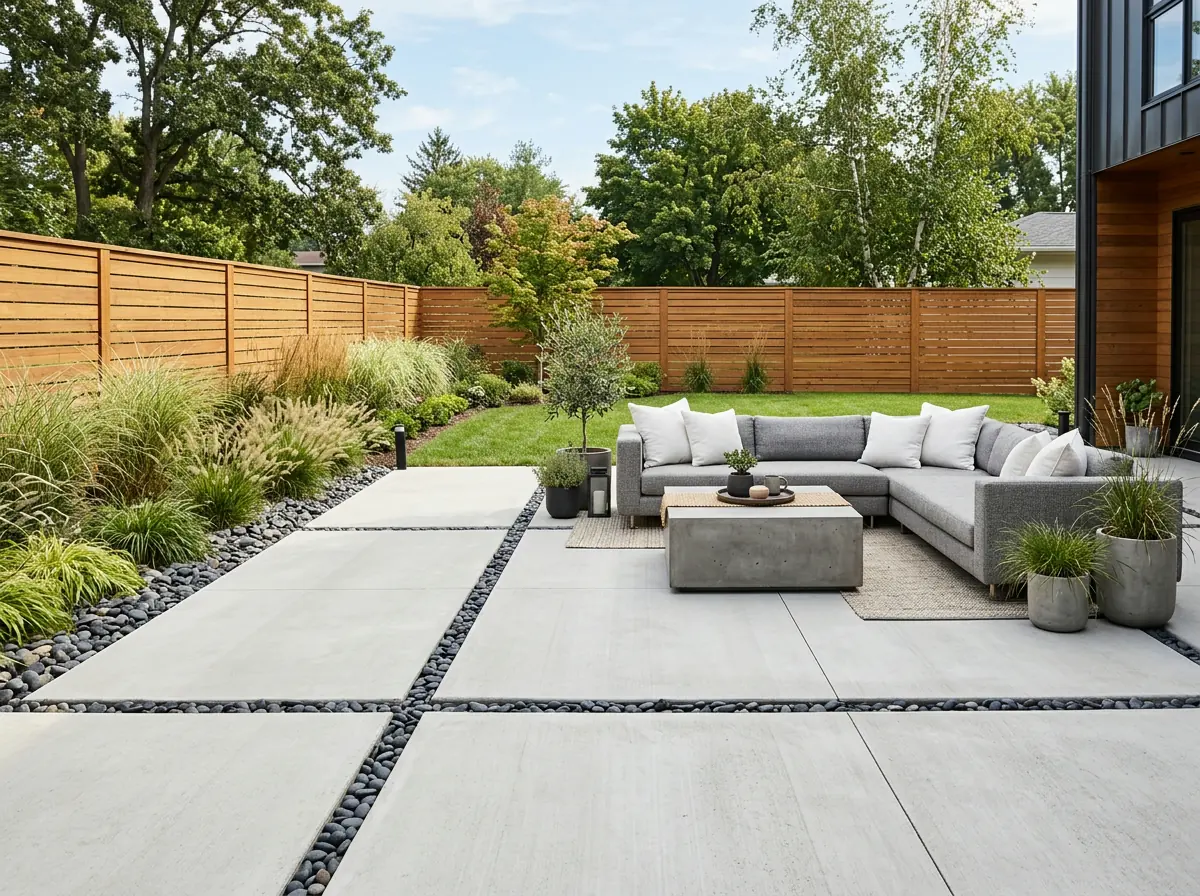
Poured concrete is one of the most affordable ways to cover a large patio, especially when a contractor does the work, and it gives a smooth, continuous surface for furniture. A broom finish adds texture for grip. Stamped concrete is pressed with patterned mats while it is still wet and colored to look like stone, brick or slate, at a higher cost than plain concrete.
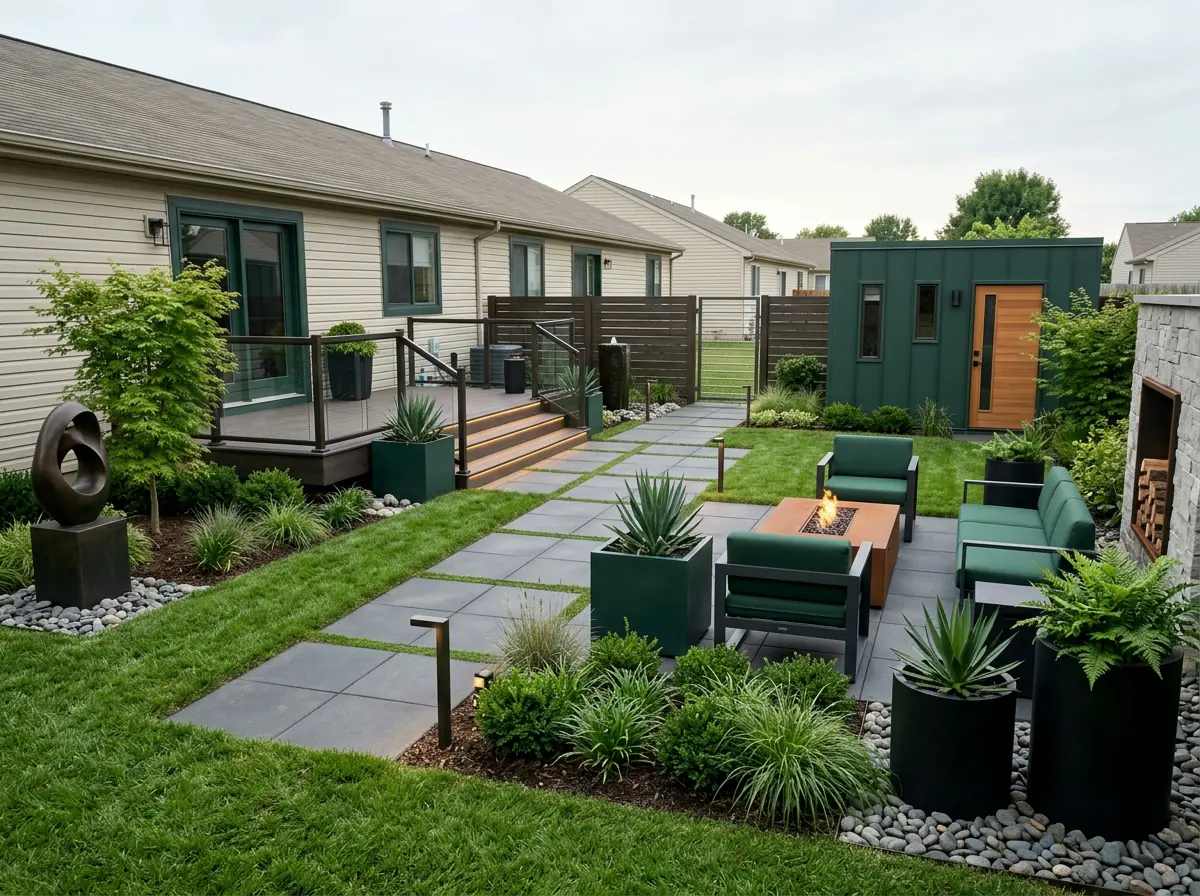
The weak point of any slab is cracking. Control joints, tooled or saw-cut, tell the concrete where to crack so it does so in straight lines. Turning those joints into a design feature, as with these big panels separated by strips of black pebbles, makes a plain slab look deliberate and modern. Stamped and colored concrete also needs resealing every few years to keep its color.
Tip: If your winters bring hard freezes and thaws, ask the contractor what base, slab thickness and joint spacing they recommend for your area.
4. A gravel patio, the budget option
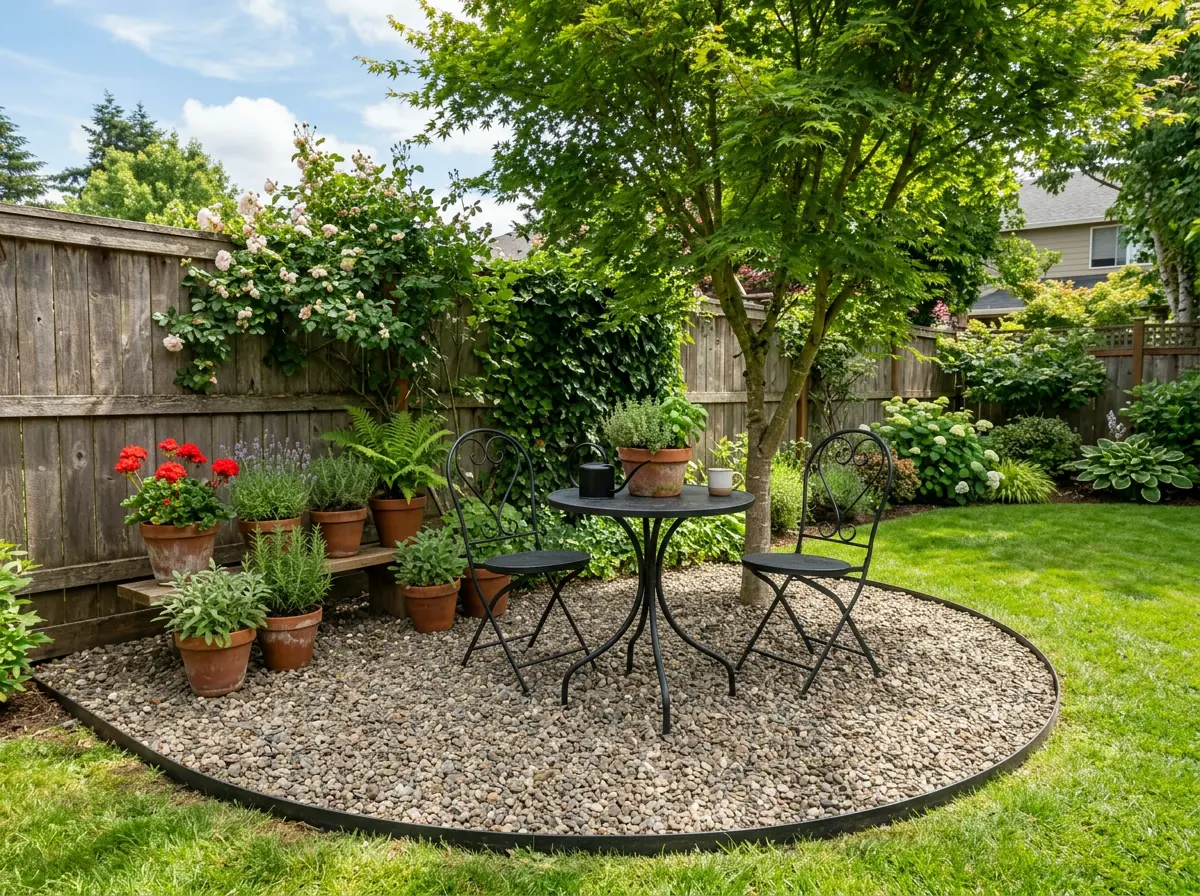
A gravel patio is usually the cheapest patio you can build and one of the easiest to do yourself. Dig out the area a few inches deep, lay landscape fabric, add and compact a base of crushed stone, then top it with a thin layer of pea gravel or another decorative stone. Steel, stone or plastic edging keeps the gravel out of the lawn.
Gravel lets rain soak into the ground instead of running off, and it is easy to reshape or extend later. It suits a bistro table or a pair of lounge chairs better than heavy furniture, because narrow legs sink into loose stone. Pea gravel is smooth and comfortable underfoot but shifts; angular crushed stone or decomposed granite packs down firmer.
Tip: Keep the loose top layer thin over a firmly compacted base; deep loose gravel is tiring to walk on and hard to drag chairs across.
5. A covered patio with a pergola
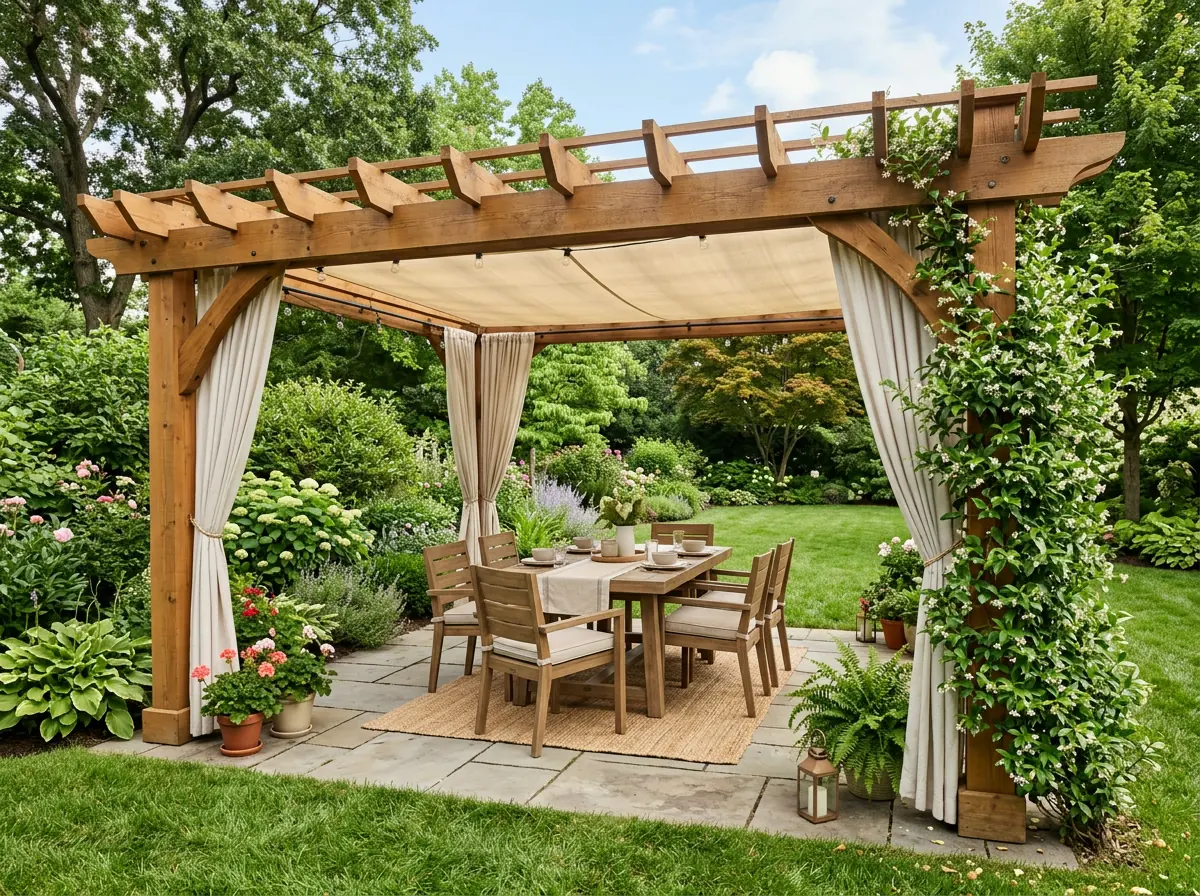
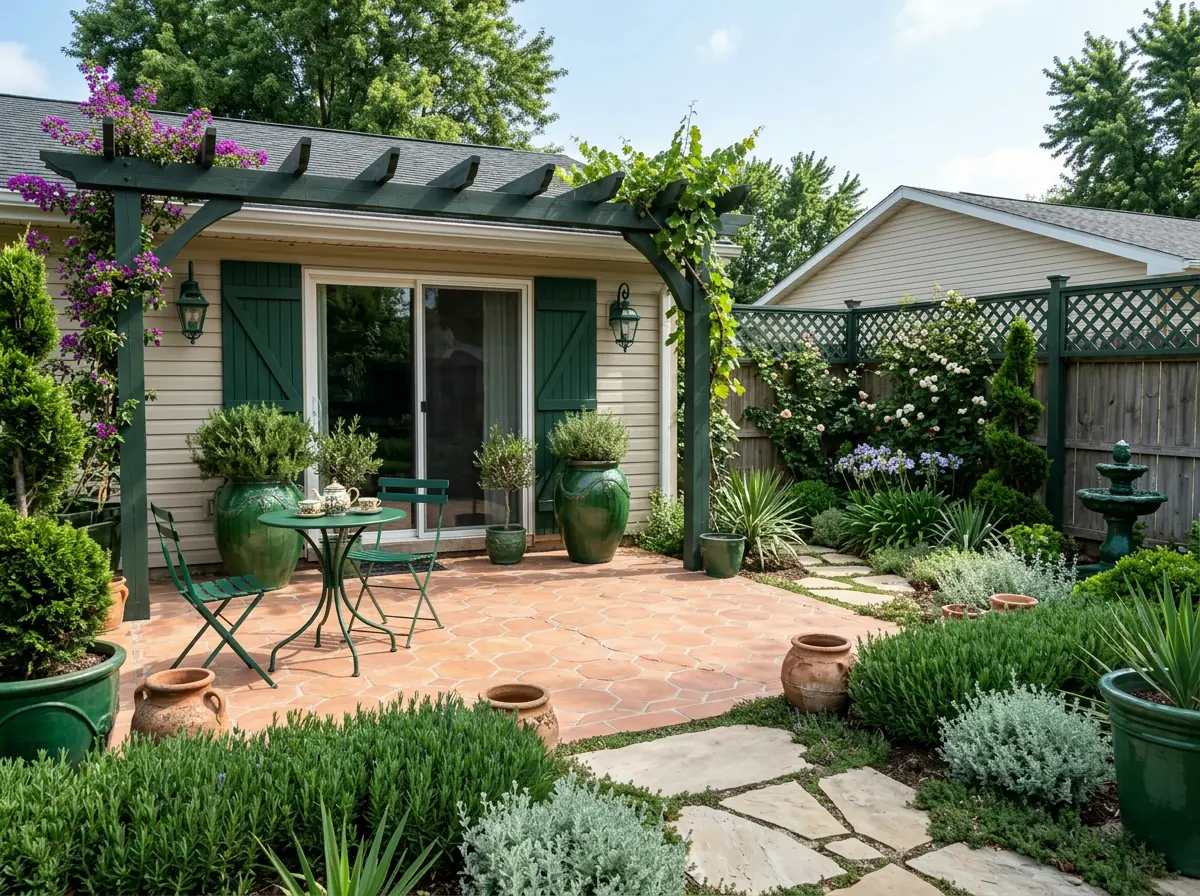
A patio in full afternoon sun can be too hot to use in summer, and a pergola is the classic fix. On its own, an open pergola casts only striped shade, so give it a cover: a canvas shade cloth or retractable canopy across the top, a climbing vine such as jasmine, clematis or grape on wires, or solid or louvered roof panels if you want shelter from rain too.
Size the pergola to the furniture under it, with the posts outside the area where chairs pull back. Outdoor curtains tied to the posts add privacy and block low evening sun on the west side. A freestanding pergola can sit anywhere in the yard, while one attached to the house works like a porch roof over the patio by the back door.
Tip: Check whether your town requires a permit for a pergola, especially one attached to the house or with a solid roof.
6. A backyard patio right off the sliding door
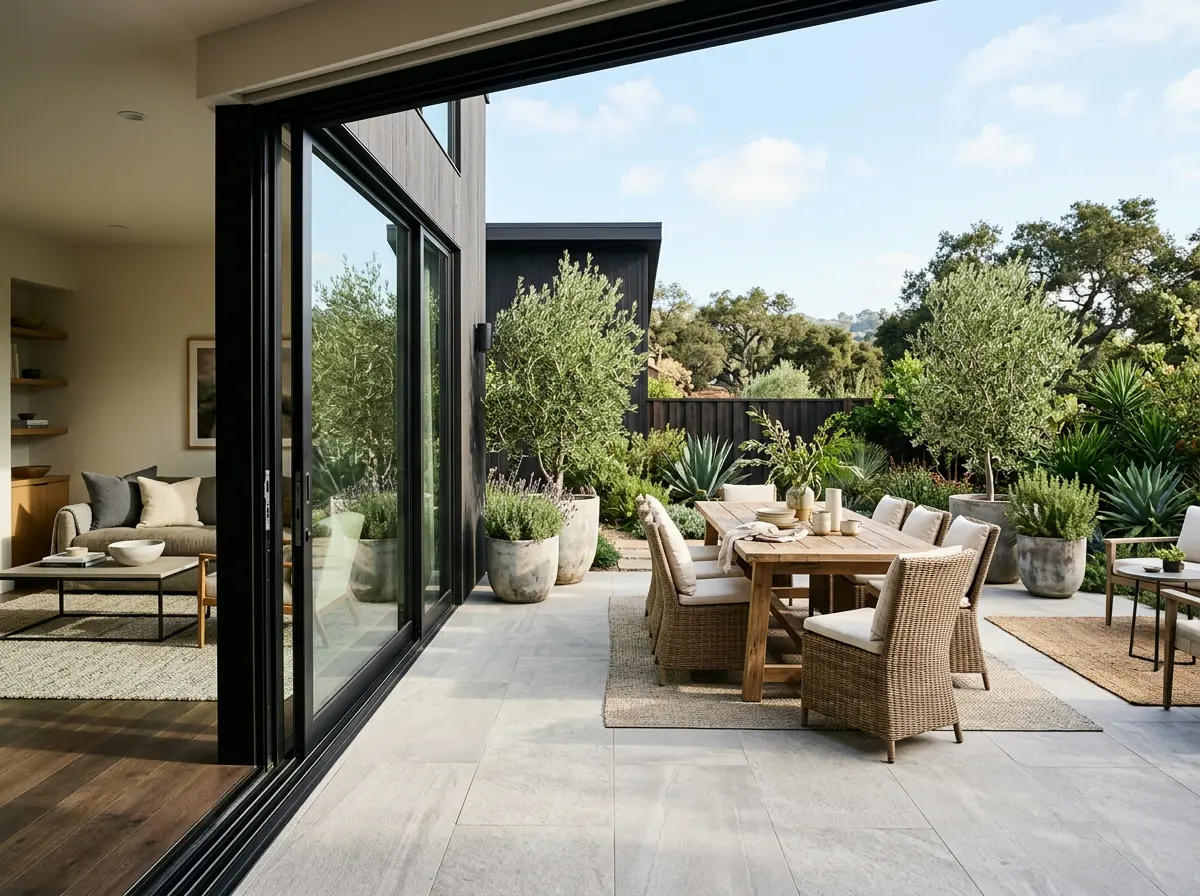
The patio you use most is usually the one closest to the kitchen. Putting it directly outside the sliding door means food, drinks and plates travel only a few steps, and the patio starts to feel like part of the room behind it. Keep the route from the door clear, so nobody has to squeeze past a grill or a planter to get outside.
Large-format pavers in a color close to the indoor floor make inside and outside read as one space, especially with a wide door. Slope the patio slightly away from the house so rain runs off instead of toward the threshold. Big planters at the corners, with small trees or tall grasses, frame the view from the sofa and soften the wall.
Tip: Before you place the table, leave a clear walkway from the door that is at least as wide as the door opening.
7. A multi-level patio for a sloped yard
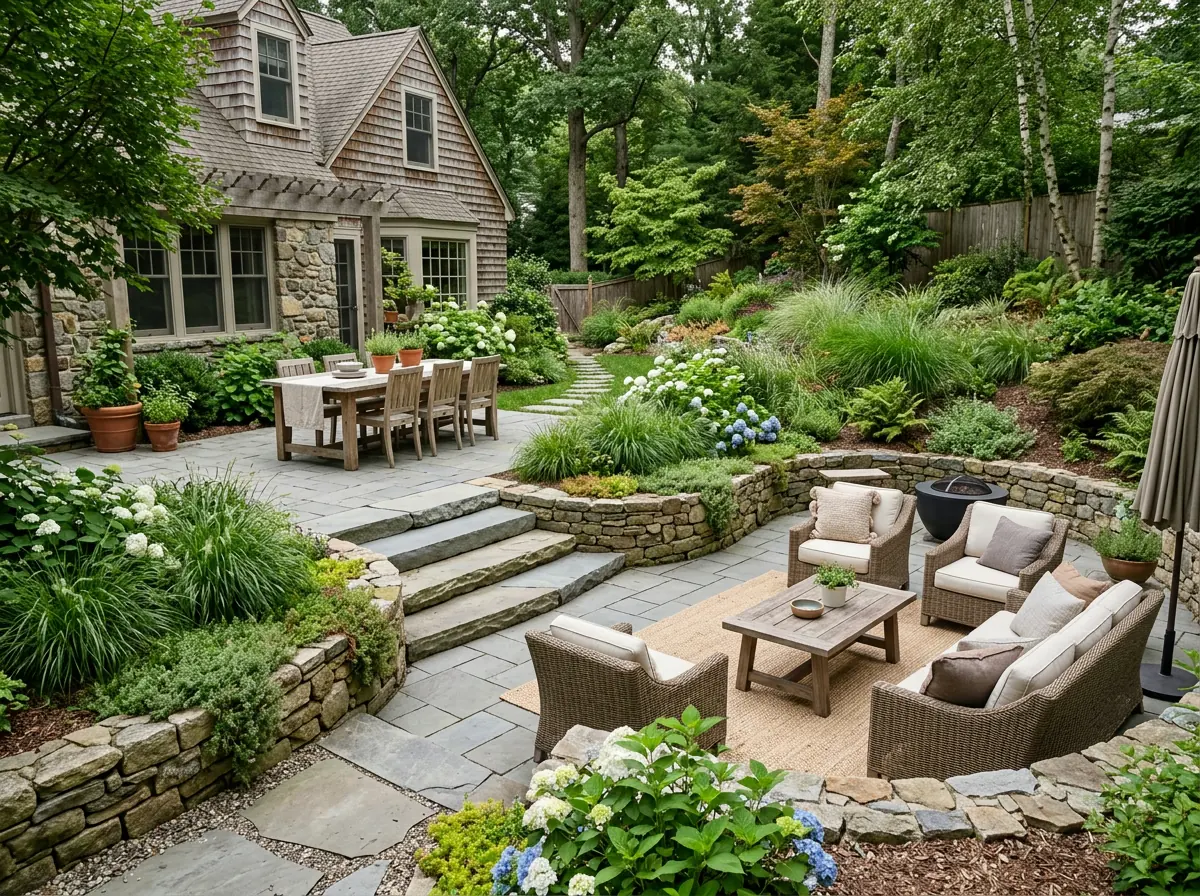
On a sloping lot, one big flat patio needs a lot of fill and a tall retaining wall. Two or three smaller levels that step down with the ground are often simpler to build, and they create separate outdoor rooms: a dining terrace close to the kitchen and a lounge a few steps lower, which feels sheltered because it sits partly below the surrounding garden.
Wide, shallow steps feel generous and turn into extra seating when friends come over. Low retaining walls around the lower level can double as benches if they are built at seat height, around 18 inches, with a flat cap. Let groundcovers, grasses and hydrangeas spill over the wall tops so the stone does not look too hard.
Tip: Have taller retaining walls designed by a professional; many towns require a permit or an engineer’s plan above a certain wall height.
8. Patio decorating ideas: an outdoor rug and layered lights
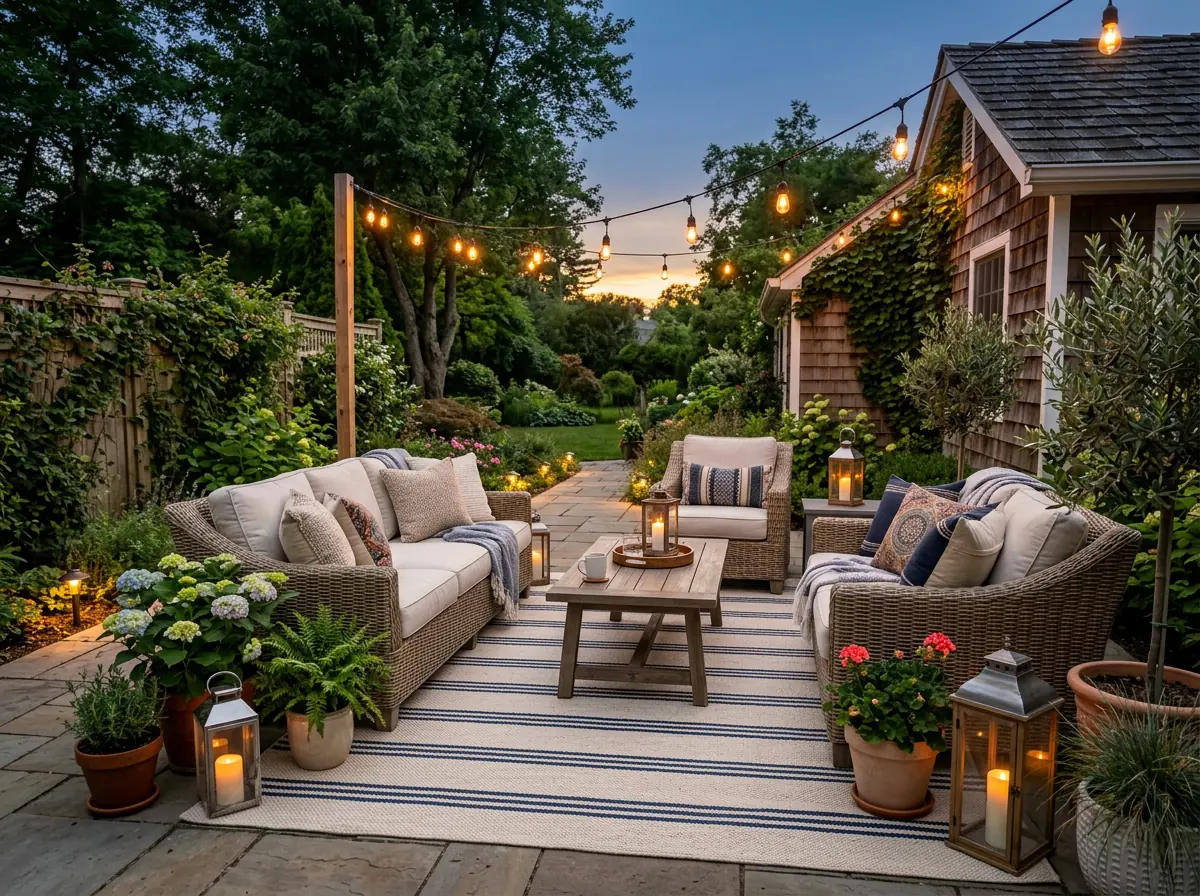
Most patio decorating ideas come down to treating the patio like a living room. An outdoor rug defines the seating area, pulls mismatched chairs together and makes stone or concrete feel softer underfoot. Choose a synthetic rug made for outdoor use, such as polypropylene, which copes with sun and rain, and size it so at least the front legs of every seat sit on it.
Light the patio in layers instead of with one bright floodlight. String lights overhead set the mood, lanterns on the table or floor add a low glow, and small path or step lights mark edges and stairs so nobody trips. Warm-white bulbs look more inviting outdoors than cool white. Cushions and throws in one or two colors from the rug finish the look.
Tip: Use outdoor-rated lights and cords on a GFCI-protected outdoor outlet, or choose solar and battery lights where there is no outlet nearby.
How to plan a backyard patio
- Decide what the patio is for first: dining, lounging or both, and for how many people.
- Measure your furniture and add room to pull out chairs and walk around it before you fix the size.
- Choose the spot by sun, shade, wind, views and distance from the kitchen door.
- Pick a material that suits your budget, climate and furniture, and plan a compacted base under it.
- Photograph your backyard and try a few garden styles on it with an AI tool before you buy materials.
- Check permits and HOA rules for pergolas, retaining walls and wiring, and call 811 before you dig.
See your backyard with a new patio
Upload a photo of your backyard, choose a garden style and see it redesigned in seconds. 2 free credits, no credit card.
Redesign my backyardBackyard patio FAQ
What is the cheapest way to build a patio?
The cheapest way to build a patio is usually a gravel patio you lay yourself: dig out a few inches, put down landscape fabric, compact a crushed-stone base, add edging and top it with pea gravel or crushed stone. The next step up is concrete pavers laid by hand on a gravel and sand base. If you hire the work out, plain poured concrete often costs less per square foot than pavers or natural stone. Reusing old bricks or broken concrete slabs as pavers can lower the cost further.
What size patio should I build?
Build a patio big enough for the furniture you will actually use, plus room to move around it. As a rough guide, a round table for four needs about 10 by 10 feet, a table for six about 12 by 14 feet, and a sofa, two chairs and a coffee table about 12 by 12 feet. For dining and lounging on one patio, plan for roughly 16 by 20 feet or more. Leave about 3 feet behind each chair so people can pull it out and walk past, and test the layout with your real furniture on the lawn first.
What is the best material for a patio?
There is no single best patio material; the right one depends on your budget, climate and how you use the space. Concrete pavers are a strong all-round choice: durable, available in many styles and easy to repair one piece at a time. Natural stone such as flagstone or bluestone looks the most natural and can last for decades, but costs more. Poured concrete is smooth and affordable but can crack, porcelain pavers resist stains and fading, and gravel is the cheapest but less comfortable for furniture. In cold climates, pavers and stone on a well-built base usually cope with freeze-thaw movement better than a slab.
Can I see my own backyard redesigned with a patio?
Yes. Upload a photo of your backyard to EasyInterior’s AI garden design tool, choose a style such as Mediterranean, Modern Landscape or Cottage Garden and you see the same yard redesigned in seconds, with new paving, planting and garden structures. Use it to compare a few directions before you get quotes or buy pavers.