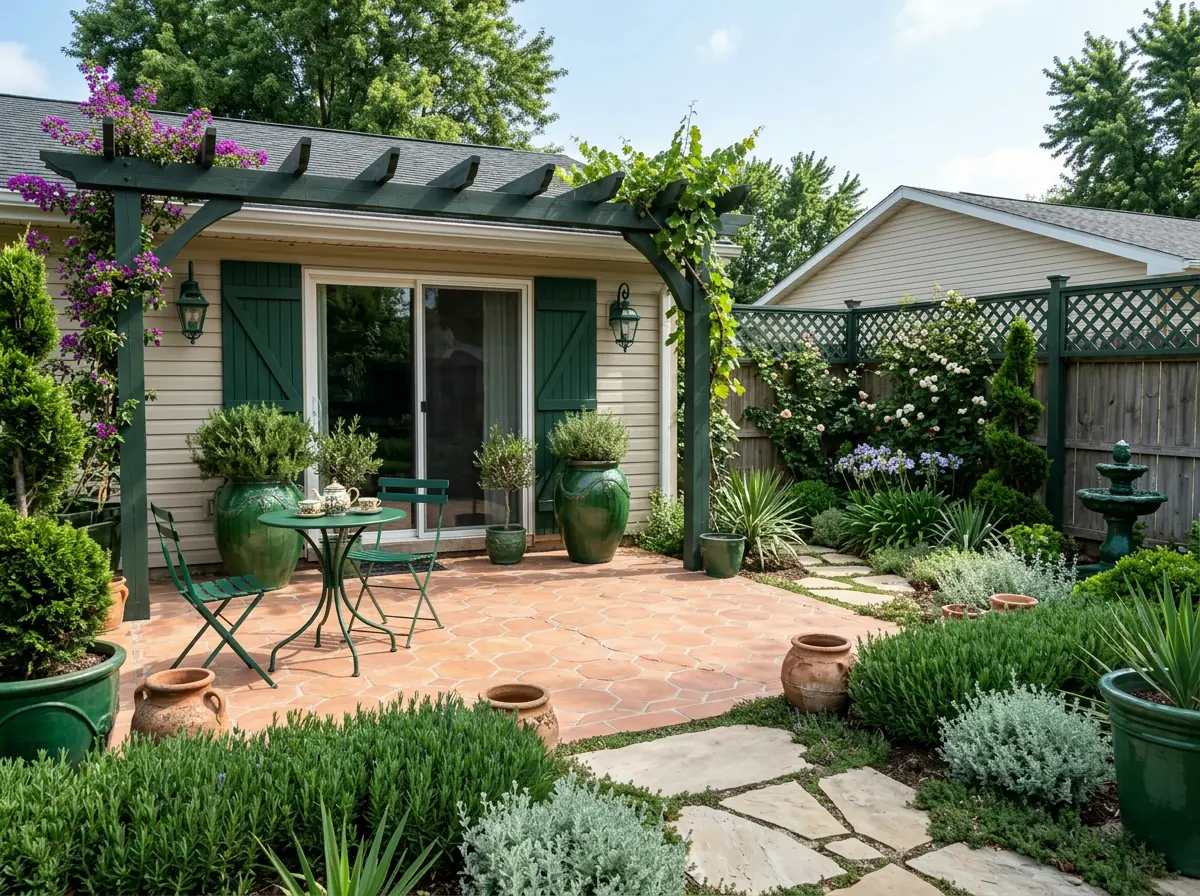
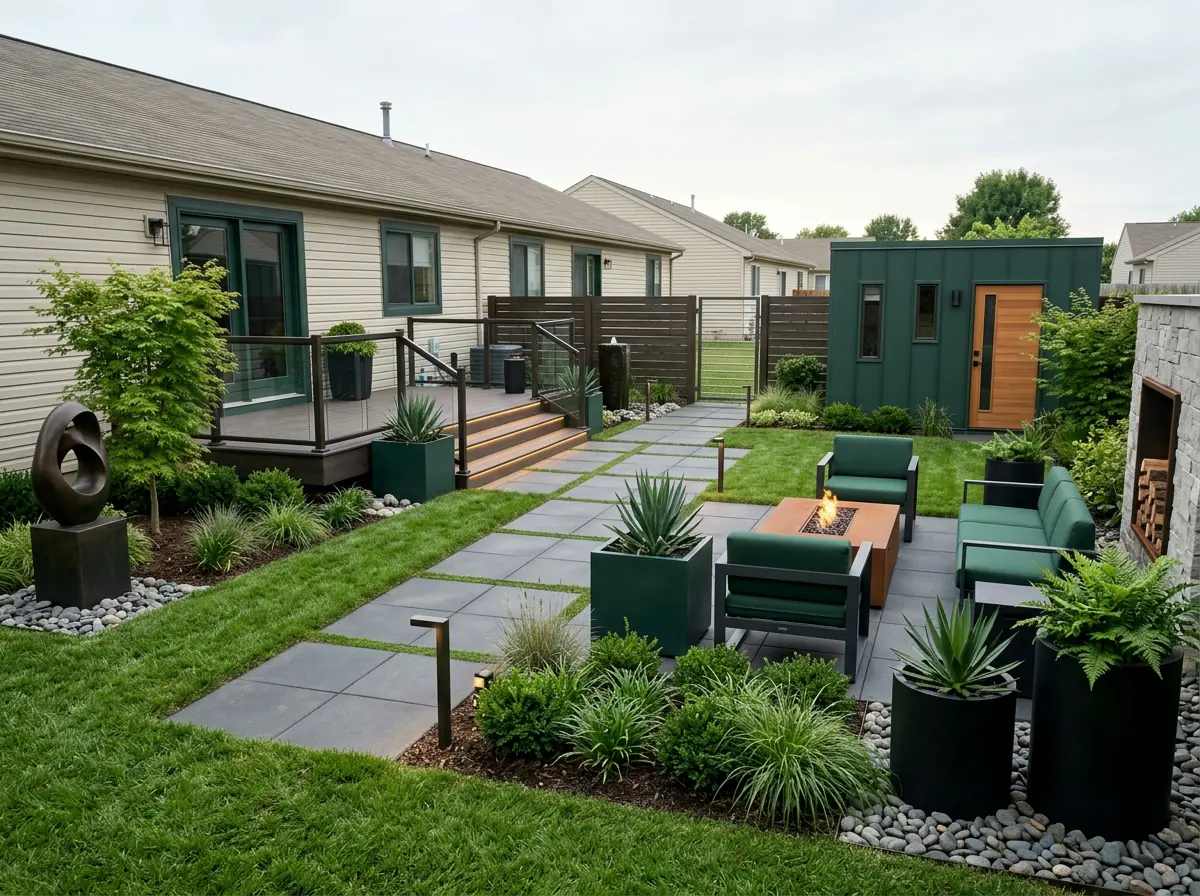
GARDEN IDEAS
Garden ideas: 8 planting designs for beds, borders and pots
Published · EasyInterior
The most useful garden ideas are about plants, not paving. A garden starts to look designed when the planting has structure, repetition and something in flower or in good leaf for most of the year, and when each bed suits its spot: sun or shade, dry or damp, flat or sloped. Get that match right and the plants do most of the work for you.
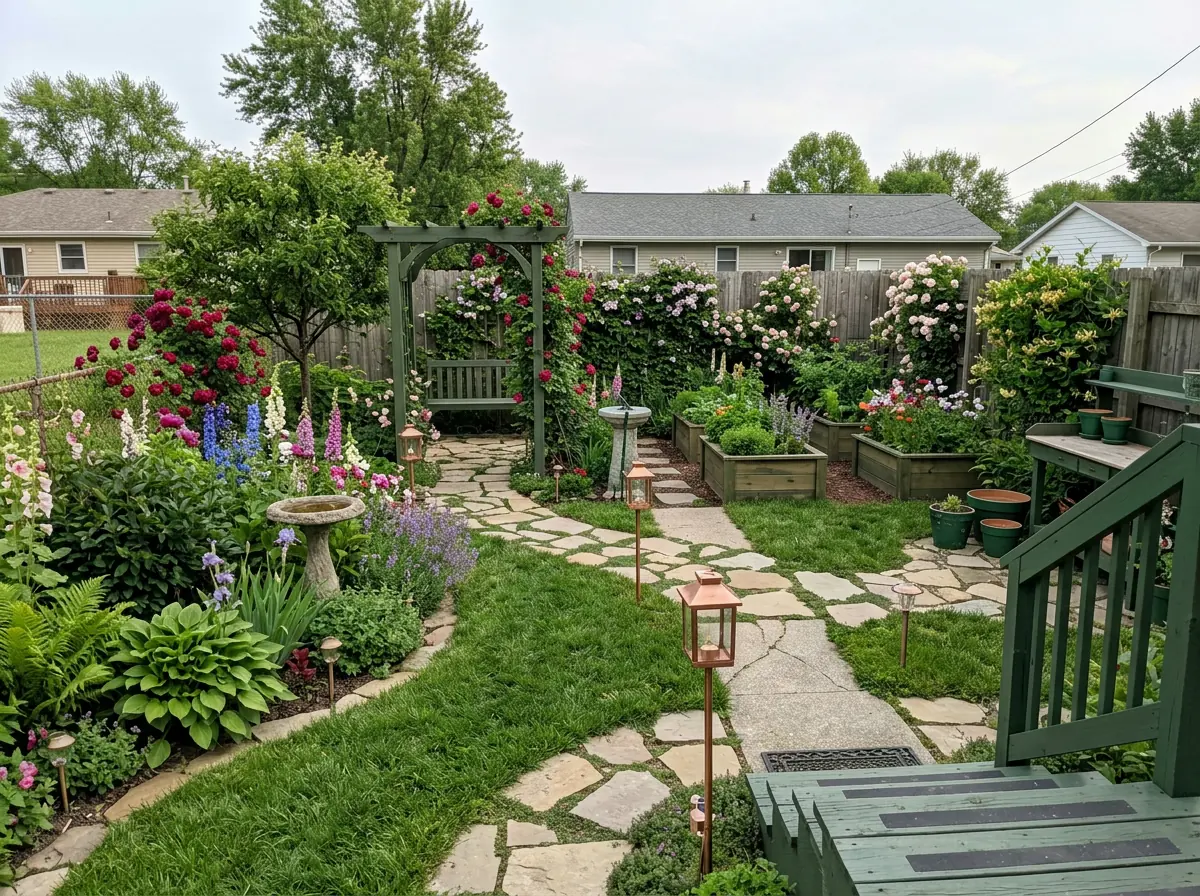
The eight garden design ideas below are planting styles you can use in an ordinary backyard: a layered flower border, a cottage garden, a pollinator bed, a cutting garden, a shade garden under a tree, a rock garden, a native perennial bed and a container garden. Start with one bed and add more over time. First, the before-and-after just below: a plain lawn-and-fence backyard turned into a cottage garden in one step.
Before and after: a plain lawn turned into a cottage garden
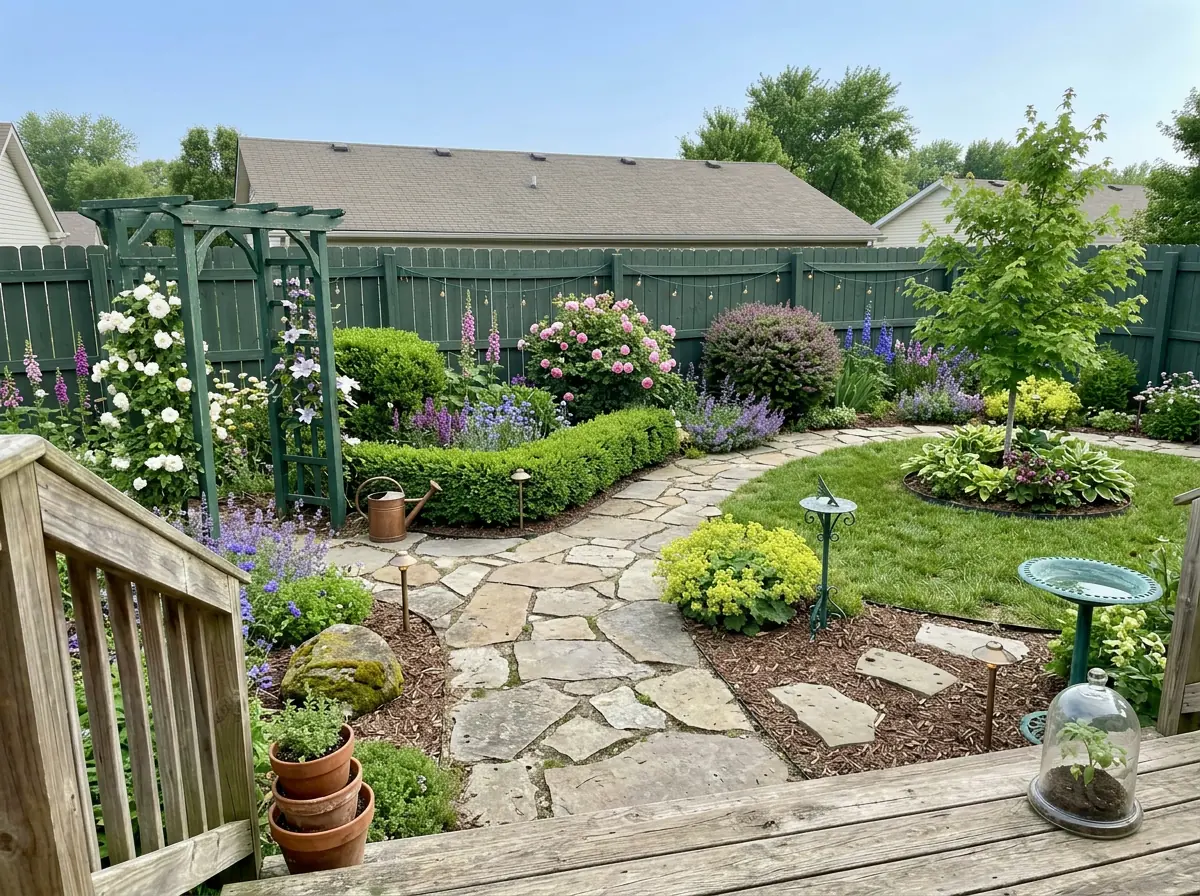
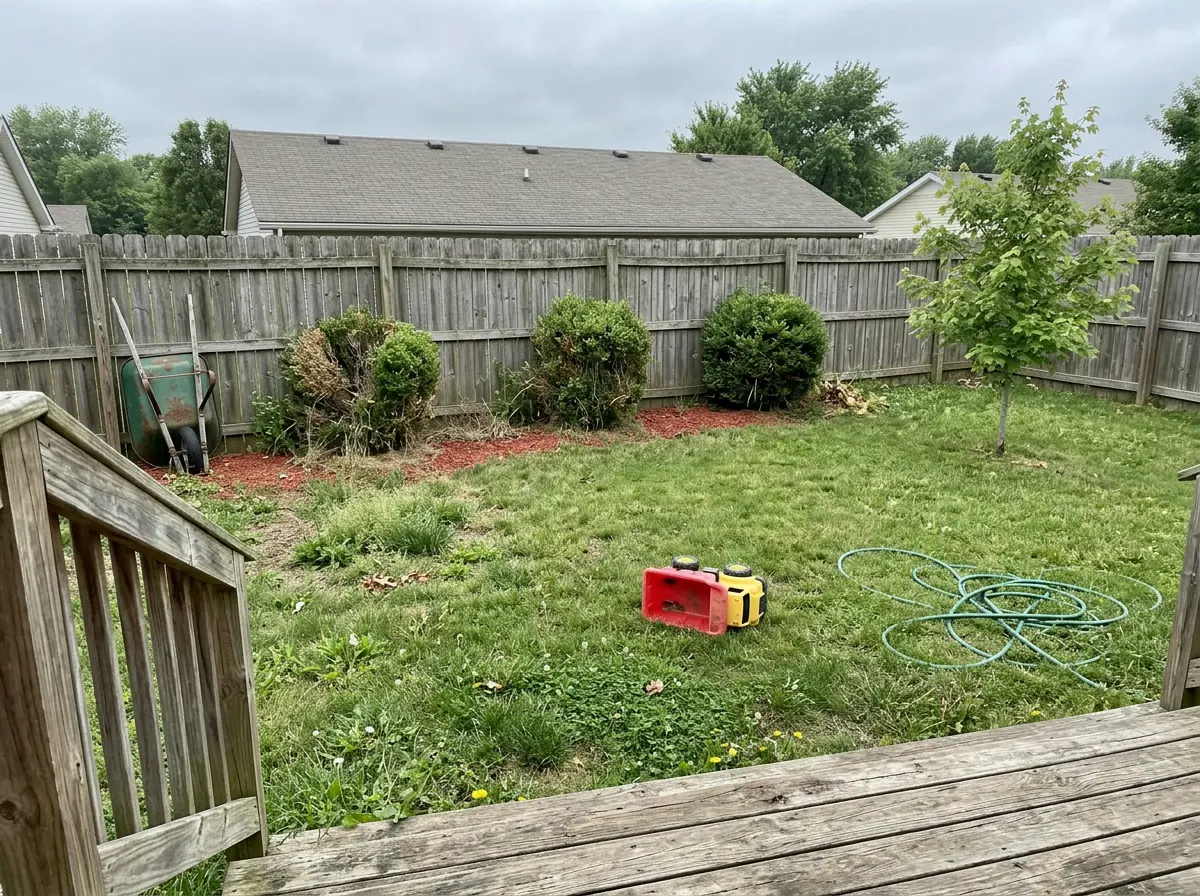
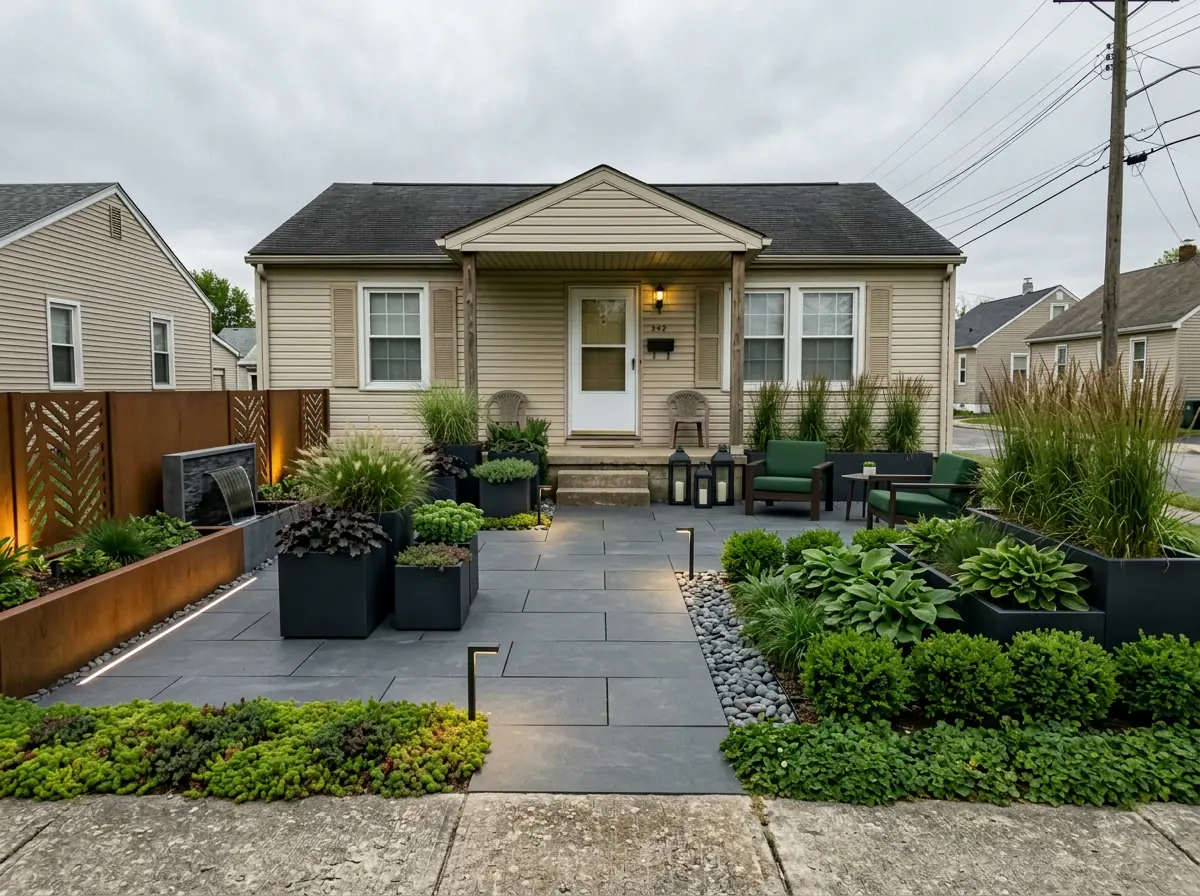
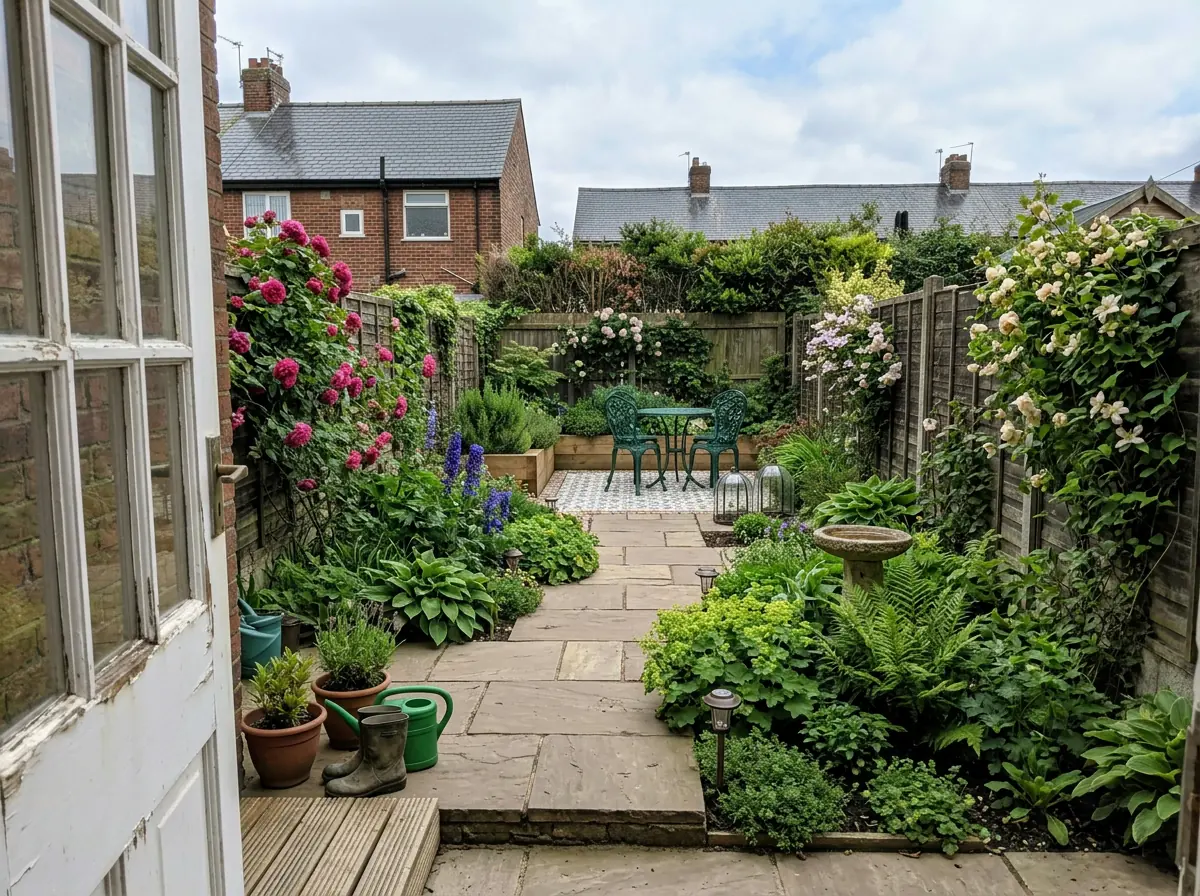
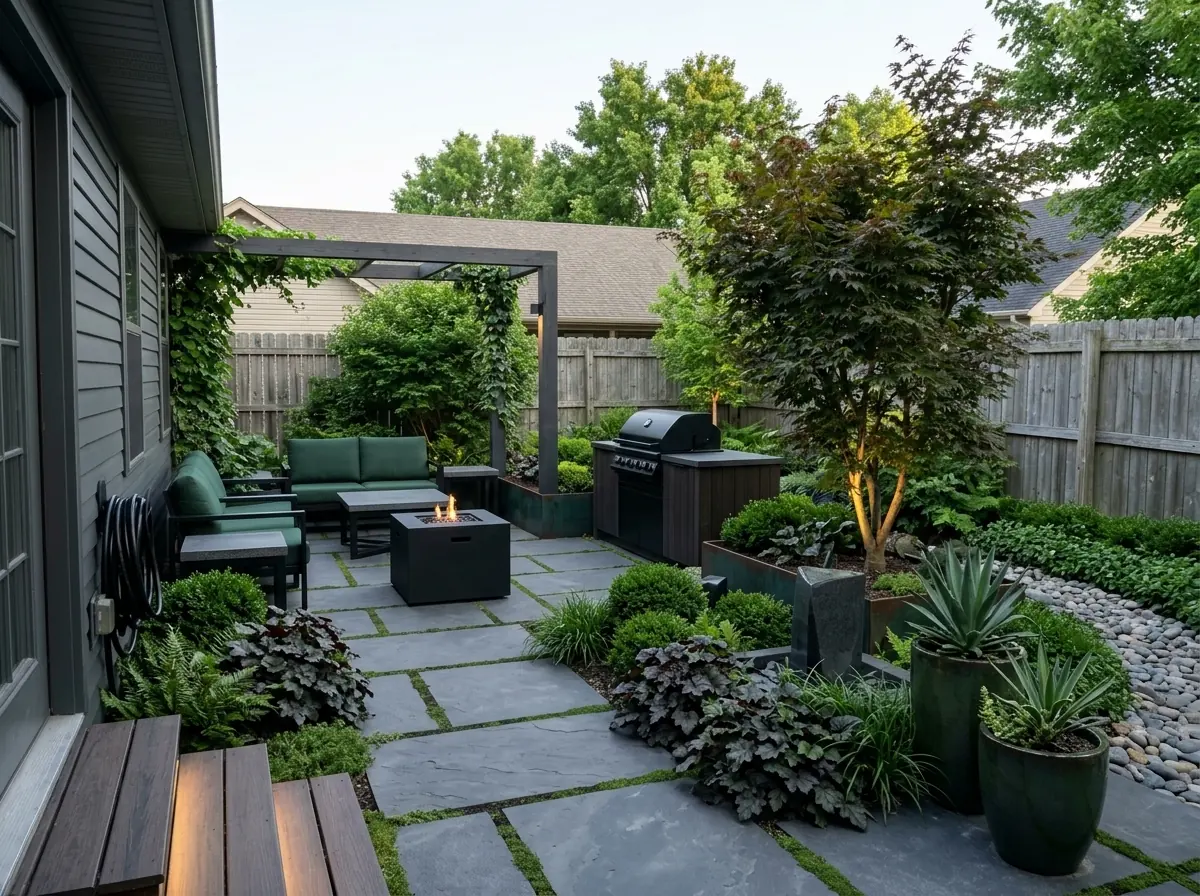
All images in this article were generated with AI. The “before” photo is an AI-generated example of a typical backyard; the “after” image was made from it with the same prompt EasyInterior’s garden tool uses. The other images illustrate ideas and are not photos of real gardens.
8 garden design ideas
1. A layered flower border
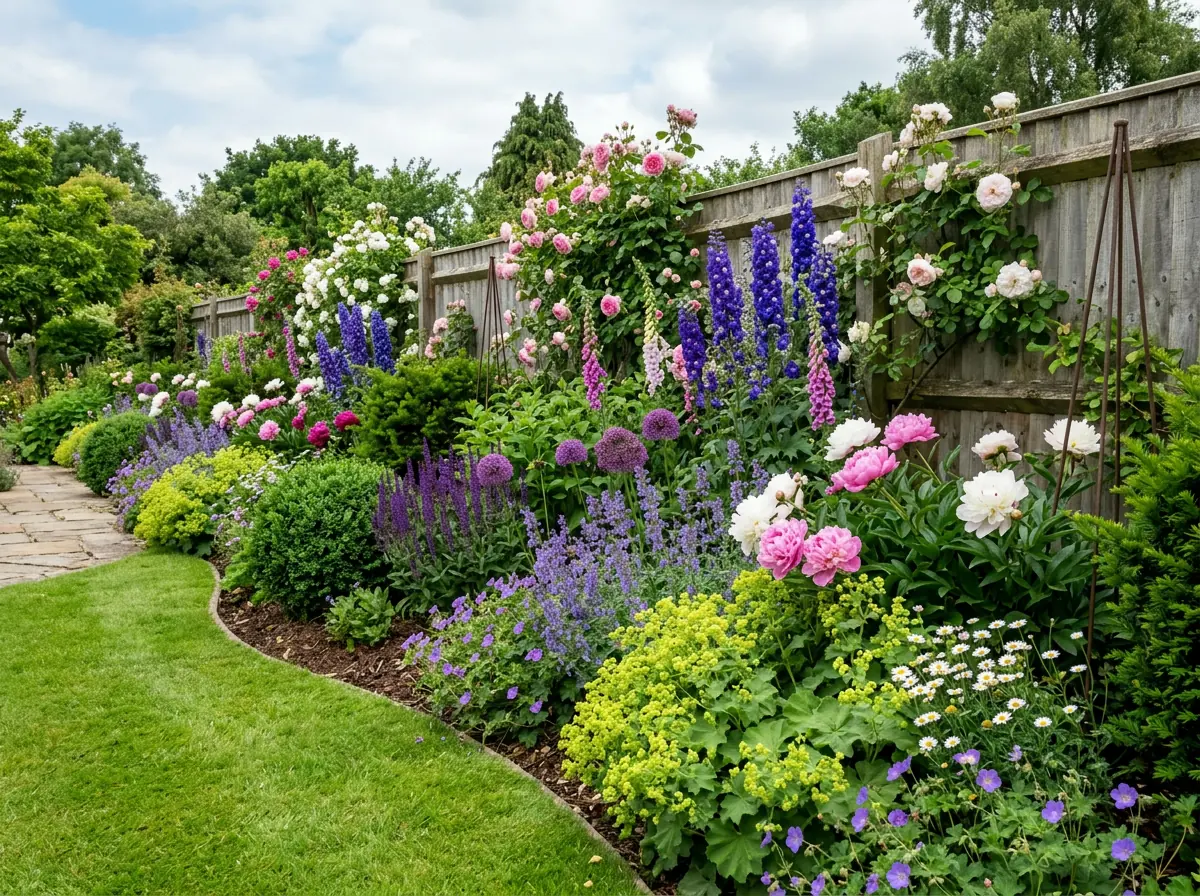
A long border along a fence is the backbone of many gardens. The classic recipe is to plant in layers by height: climbers and tall perennials such as roses and delphiniums at the back, mid-height plants such as salvia, alliums, peonies and catmint in the middle, and low, spreading plants such as lady’s mantle and hardy geraniums at the front, softening the lawn edge.
Depth matters more than length. A border 4 to 5 feet deep or more has room for three layers, while a narrow strip along a fence rarely looks full. Repeat a few plants along the whole length, include some evergreen shrubs for winter shape, and plant perennials in groups of three or five rather than one of each.
Tip: Recut the edge between border and lawn with a half-moon edger or a sharp spade a few times a season; a crisp edge makes the whole bed look cared for.
2. A cottage garden full of flowers
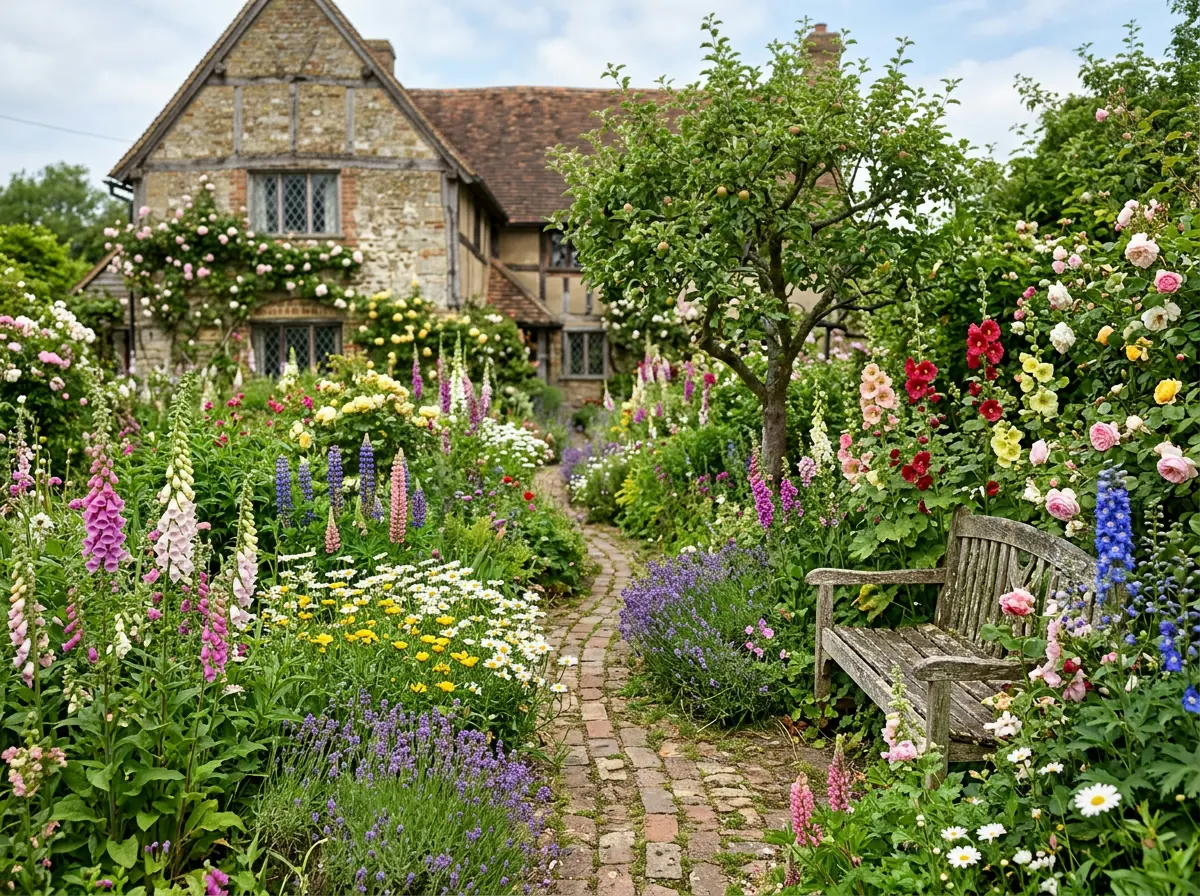
A cottage garden is planted densely and informally, with flowers, herbs and sometimes fruit mixed together and very little bare soil showing. Tall spires of foxgloves, hollyhocks and lupines rise out of daisies, lavender and roses, and plants are allowed to self-seed and lean over the path. It suits older houses, small yards and anyone who likes a garden that looks a little untamed.
Under the abundance, a good cottage garden still has a plan: a simple path of brick, gravel or stone that leads somewhere, a bench or arch as a focal point, and a few shrubs or a small fruit tree for height. Foxgloves and hollyhocks are biennials or short-lived perennials, so let some of them set seed to keep the display going.
Tip: Foxgloves are poisonous if eaten, so plant them away from where small children and pets play.
3. A pollinator garden for bees and butterflies
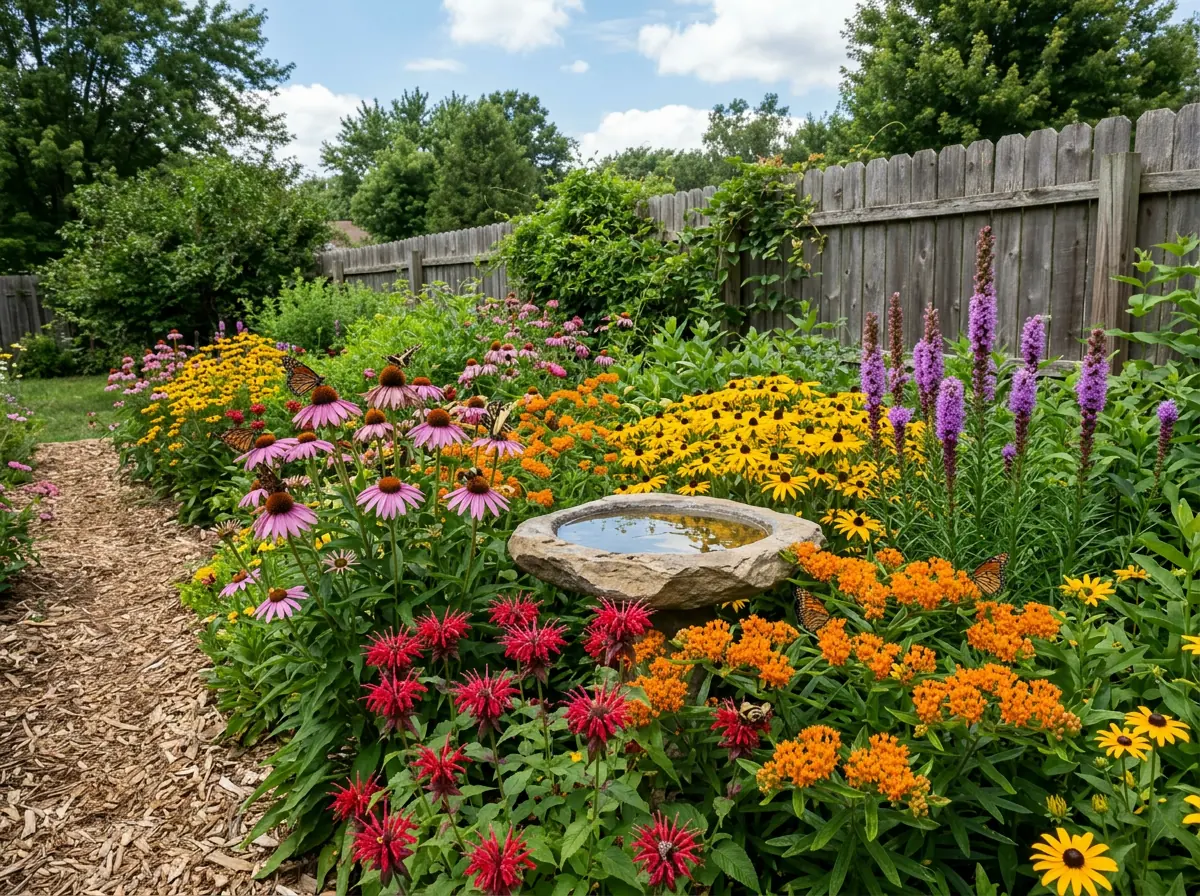
A pollinator garden is planted to feed bees, butterflies and other insects from spring to fall. In North America, native perennials do this especially well: purple coneflower, bee balm, black-eyed Susan, blazing star and butterfly weed are easy, sun-loving and long-blooming. Butterfly weed is a milkweed, the group of plants monarch caterpillars depend on for food.
Plant each flower in clumps of three or more instead of dotting single plants around, and choose plants that bloom at different times so there is always something open. A shallow bird bath or a dish of water with stones gives bees and butterflies a safe place to drink. Leave seed heads standing over winter for birds, and avoid broad-spectrum insecticides in and near the bed.
Tip: When you buy plants, ask the nursery whether they were treated with systemic insecticides, which can end up in pollen and nectar.
4. A cutting garden in rows
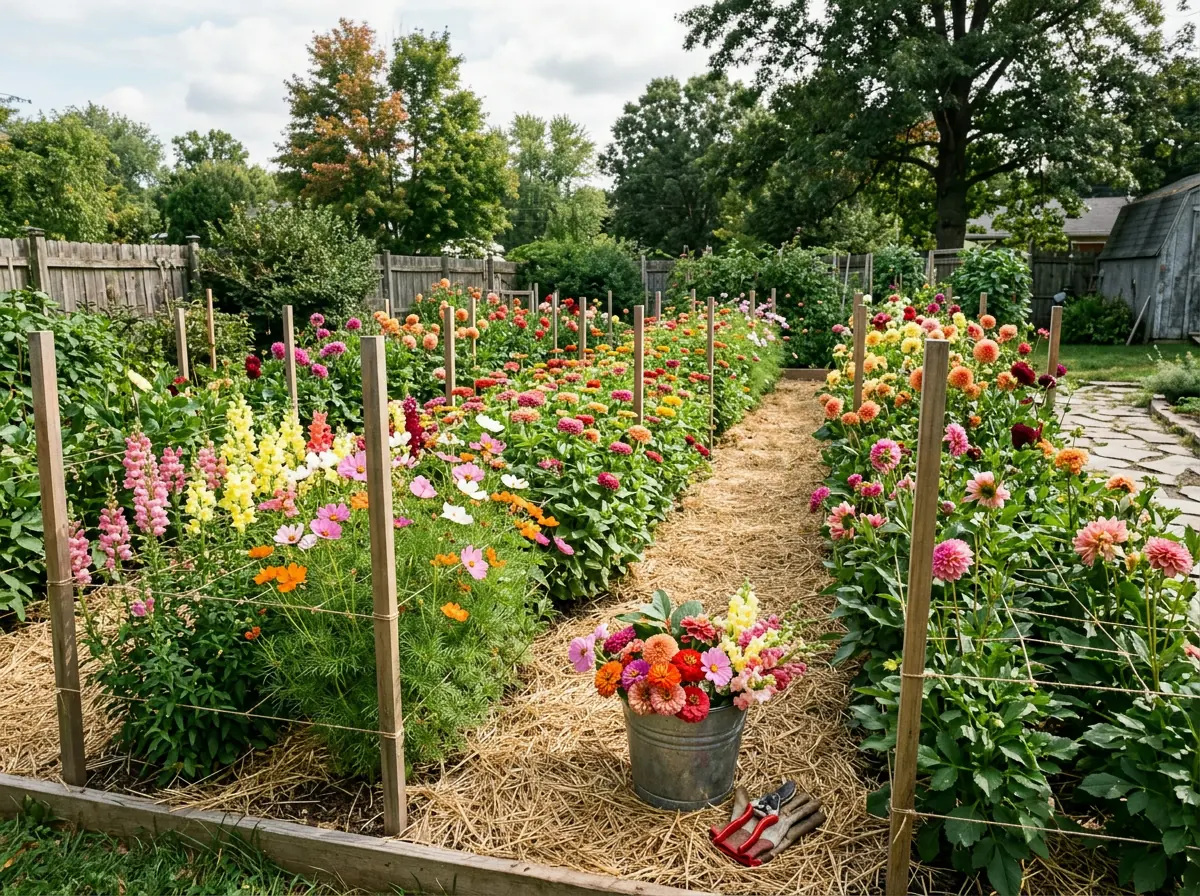
A cutting garden is grown for the vase, not for show, so you can pick armloads of flowers without leaving gaps in your borders. Lay it out like a vegetable garden: straight rows or blocks in full sun, paths between them for access, and a layer of straw or other mulch to hold moisture and keep weeds down.
Zinnias and cosmos are easy from seed and keep blooming the more you cut them. Snapdragons add spikes, and dahlias give big blooms from midsummer to frost; in cold regions their tubers are dug up in fall and stored indoors. Tall stems flop in wind and rain, so run netting or string between stakes along the rows early in the season.
Tip: Cut flowers in the cool of the early morning and put them straight into a bucket of water; they last longer in the vase.
5. Shade garden ideas for under a tree
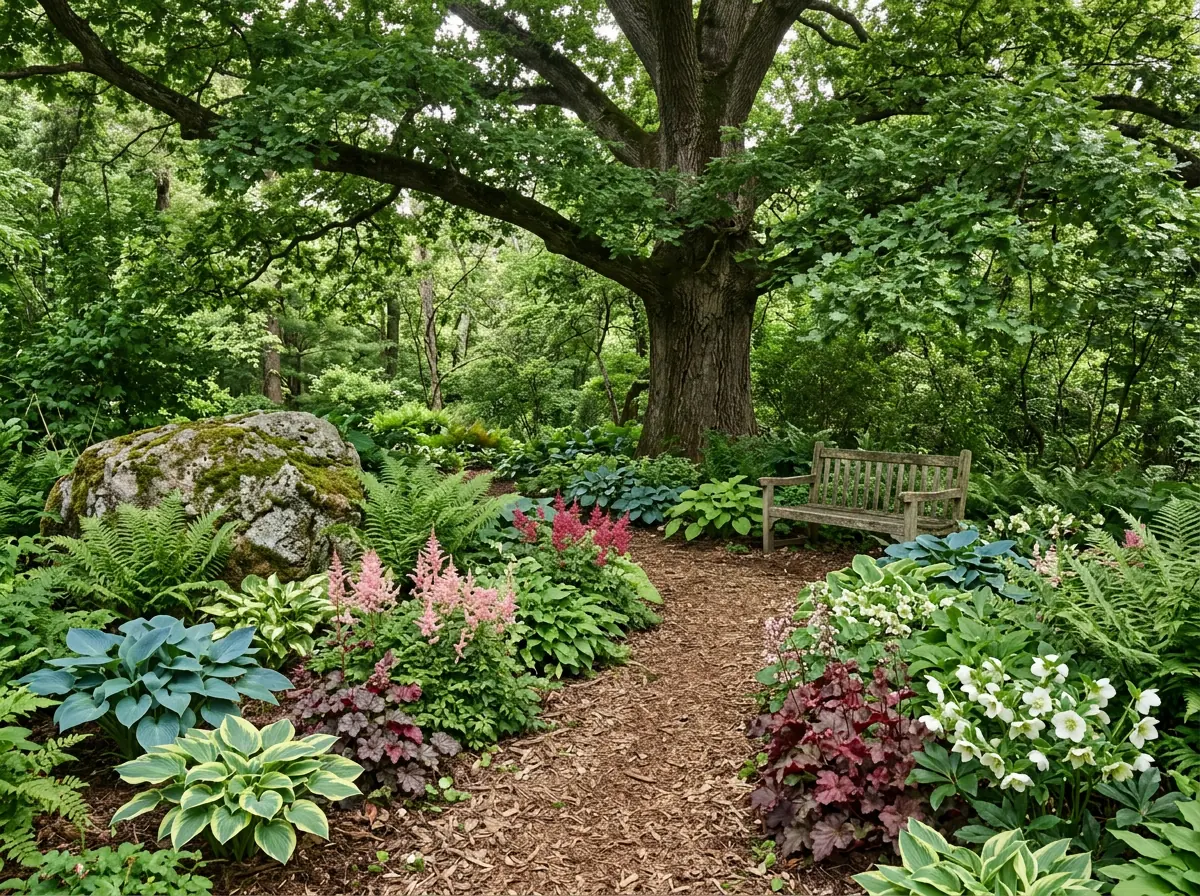
Shade is not a problem to solve but a different palette. Under trees and on the north side of a house, lawn struggles while woodland plants thrive: hostas, ferns, astilbe, heuchera and hellebores together give bold leaves, fine texture and flowers from late winter into summer. Variegated and chartreuse leaves brighten dark corners more reliably than flowers do.
Work with the tree, not against it. Do not pile soil over its roots or dig large beds under it; tuck small plants into pockets between the roots and top the bed with a few inches of shredded bark or leaf mulch, kept clear of the trunk. Dry shade under trees is harder than damp shade, so water new plants regularly in their first year.
Tip: Deer and slugs love hostas; if either is common where you live, lean more on ferns, hellebores and other plants they tend to leave alone.
6. A rock garden on a slope
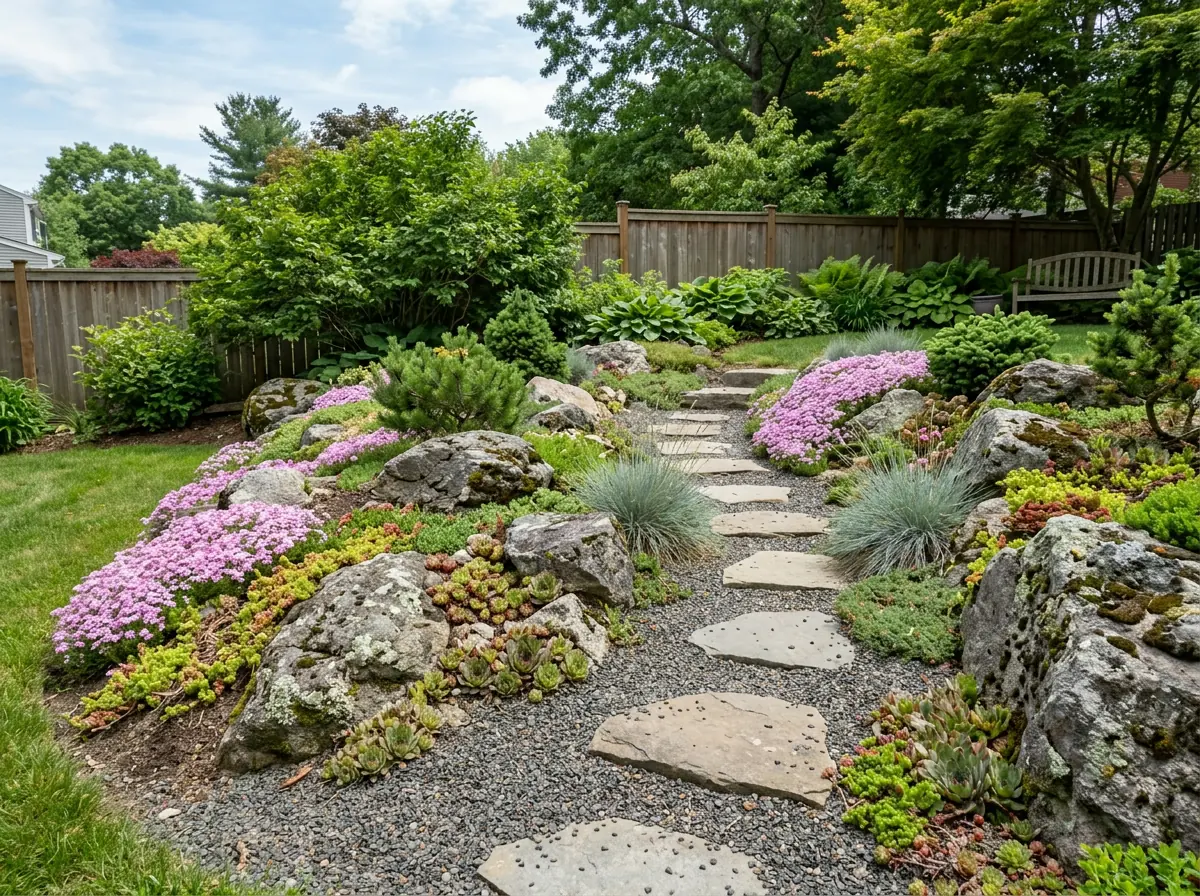
A slope that is awkward to mow can become a rock garden. Set large weathered boulders partly into the ground, with a third or more of each one buried, so they look like natural outcrops rather than stones dropped on top, and group them instead of spacing them evenly. Between the rocks, plant low, drought-tolerant plants that like sharp drainage.
Creeping phlox gives a sheet of color in spring, while sedums, hens and chicks, blue fescue and dwarf conifers keep the garden interesting the rest of the year. Most rock garden plants rot in heavy, wet soil, so mix grit or gravel into the planting holes and finish with a gravel mulch, which keeps crowns dry and weeds down. Flat stepping stones let you weed without trampling plants.
Tip: Buy boulders from a local stone yard so their color and type match the rock of your region; they will look more natural.
7. A native perennial bed with grasses
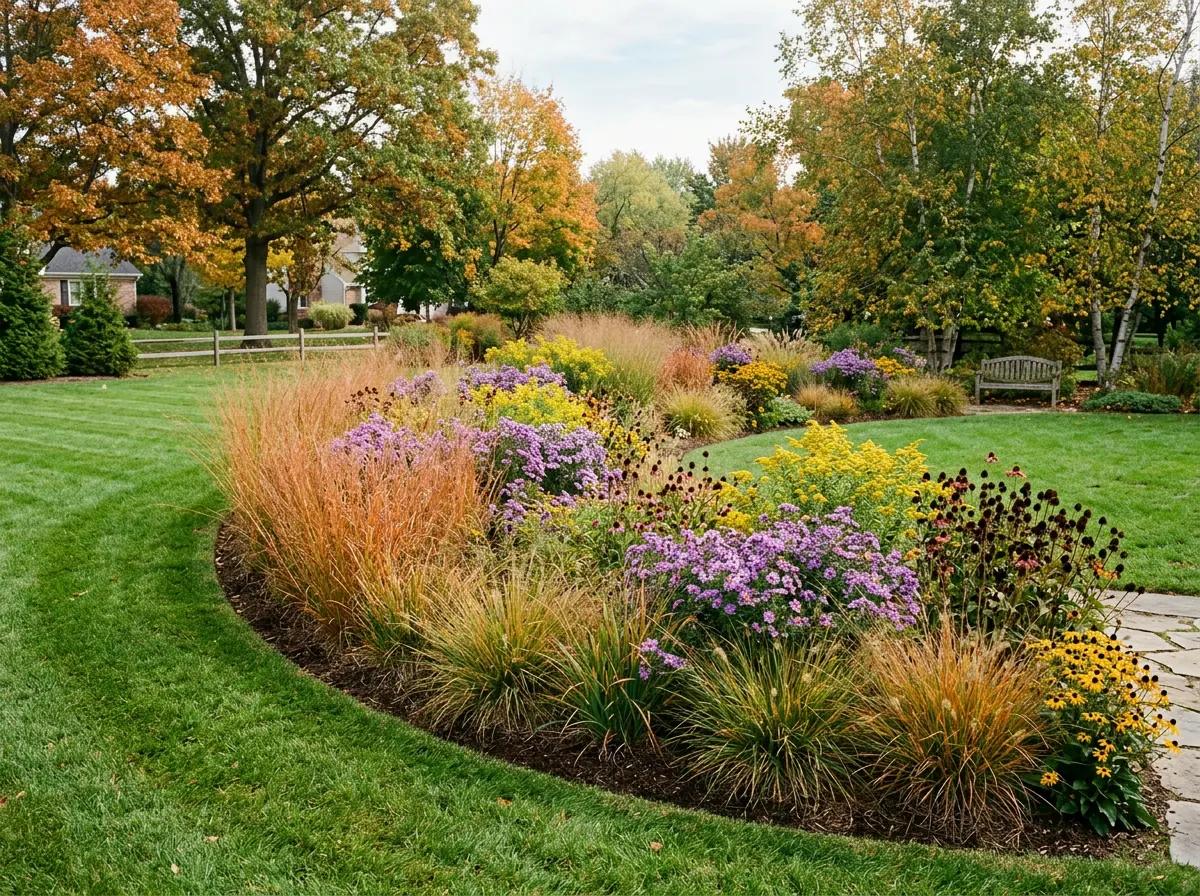
A native perennial bed borrows from the prairie. Clumping grasses such as little bluestem and prairie dropseed form the base, and flowering perennials such as asters, goldenrod, coneflowers and black-eyed Susans grow up through them in drifts. Once established, plants native to your region are adapted to its rainfall and winters and generally need less watering and feeding than many imported ornamentals.
The look depends on repetition and a neat frame. Plant each species in groups and repeat them across the bed, and keep a crisp mown edge or a path around it so the planting reads as intentional, not overgrown. This style peaks in late summer and fall, and the grasses and seed heads stay attractive through winter if you wait until spring to cut them back.
Tip: Goldenrod is often blamed for fall hay fever, but its heavy pollen is carried by insects; ragweed, which blooms at the same time, is the usual culprit.
8. Container garden ideas for steps and patios
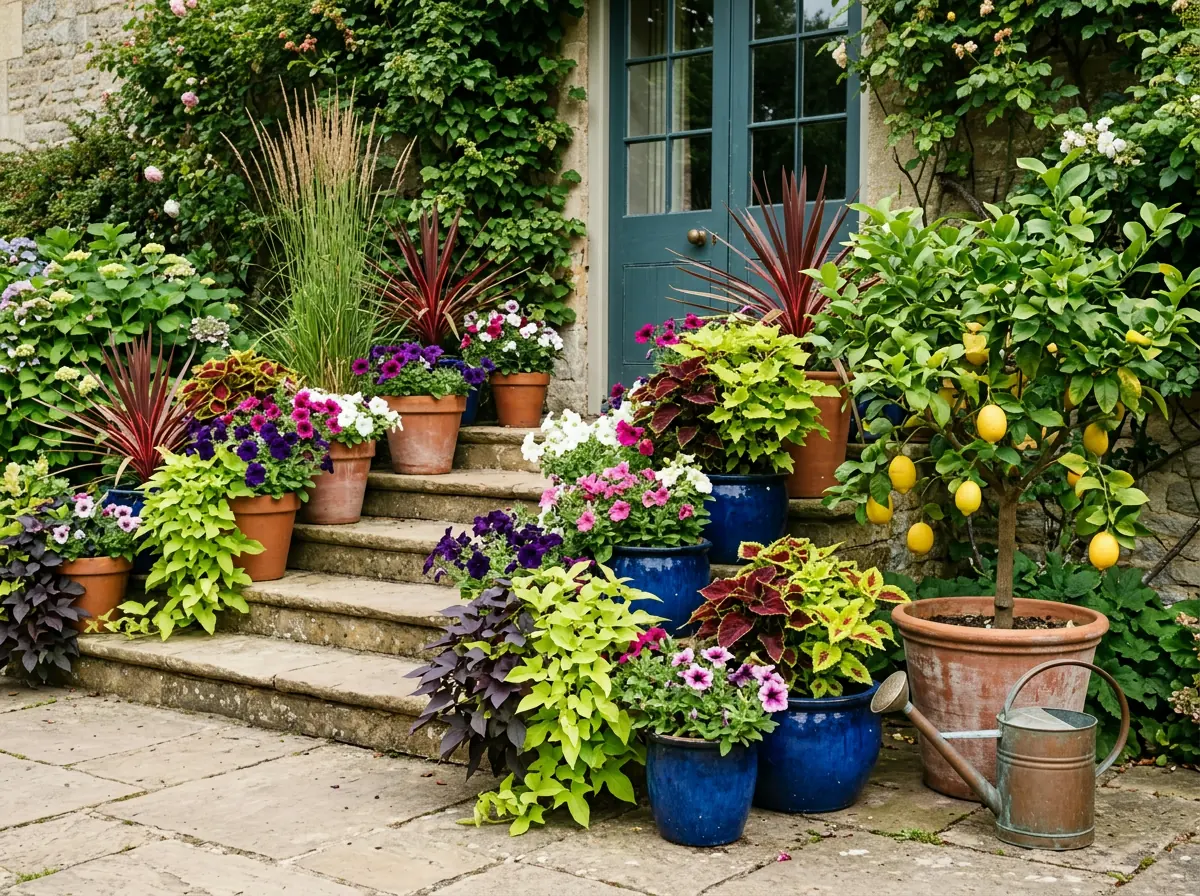
Containers bring planting to places without soil, such as steps, patios and balconies, and let you change the display every season. The simple formula for a full-looking pot is thriller, filler and spiller: one tall plant such as a grass or cordyline, mounding plants such as petunias or coleus around it, and a trailing plant such as sweet potato vine to spill over the rim.
Group pots in odd numbers and different heights, and repeat one or two pot colors so the collection looks planned. Every container needs a drainage hole and potting mix rather than garden soil, and in summer most need water daily or close to it; bigger pots dry out more slowly than small ones. Frost-tender plants such as citrus can summer outdoors and move inside for winter.
Tip: Mix a slow-release fertilizer into the potting mix at planting time and feed again in midsummer, since frequent watering washes nutrients out of pots.
How to plan your garden design
- Watch how many hours of direct sun each bed gets, and note dry, wet and windy spots.
- Look up your USDA hardiness zone and choose plants rated for it.
- Make beds deep enough for layers, ideally 4 to 5 feet or more.
- Plant in groups of three or five and repeat key plants across the garden.
- Photograph your yard and try a few garden styles on it with an AI tool before you buy plants.
- Improve the soil before planting, mulch afterward and water new plants regularly through their first season.
See your garden redesigned
Upload a photo of your yard, choose a garden style and see it redesigned in seconds. 2 free credits, no credit card.
Redesign my gardenGarden ideas FAQ
What does the 70/30 rule mean in gardening?
The 70/30 rule is a planting guideline: make about 70 percent of a garden permanent structure, such as evergreen shrubs, hedges, trees and long-lived perennials, and use the other 30 percent for seasonal color, such as annuals, bulbs and showy perennials. The structural plants keep the garden shaped and green in every season, while the smaller seasonal share adds color you can change from year to year. It is a rule of thumb, not a fixed formula, and some gardeners use the same 70/30 split for native versus non-native plants.
How can I make my garden look nice without much money?
You can make a garden look much better for little money by tidying the edges, mulching and filling beds with plants you grow or divide yourself. Cut crisp edges between lawn and beds, pull weeds and spread mulch; some tree services give away wood chips. Grow zinnias and cosmos from seed, divide overgrown perennials such as hostas and daylilies to fill gaps, and swap plants with neighbors. Spend on a few larger shrubs for structure, and repeat a small number of plants instead of buying one of everything.
What are the easiest plants for a beginner garden?
The easiest plants for a beginner garden are tough perennials and fast annuals suited to your climate. In sun, black-eyed Susans, purple coneflowers, daylilies, catmint and sedum are forgiving in much of the US, and zinnias, cosmos and marigolds are easy to grow from seed. In shade, hostas, ferns and heuchera are reliable. Check that each plant is rated for your USDA hardiness zone, give it the right amount of sun and water it well through its first season.
Can I see my own garden redesigned?
Yes. Upload a photo of your backyard or garden to EasyInterior’s AI garden design tool, choose a style such as Cottage Garden, English Garden or Wildflower Meadow and you see the same space redesigned in seconds. Use it to compare planting styles before you dig new beds or buy plants.